

Gallery Tour
Charlottenburg
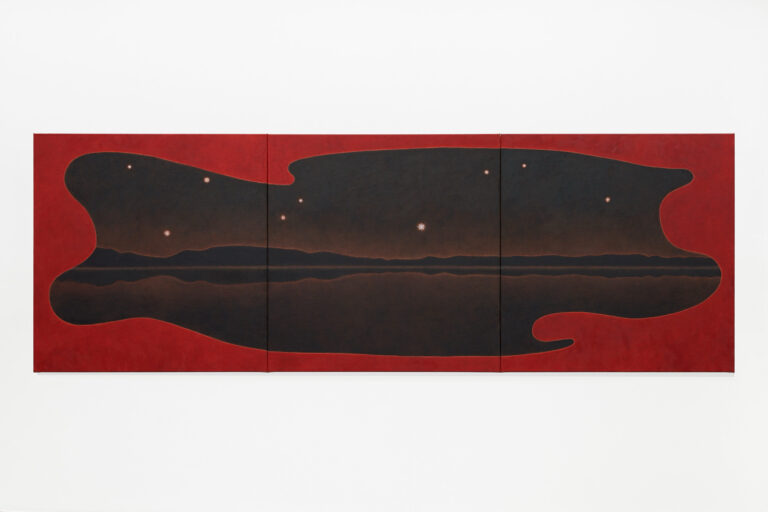
Caroline Bachmann
An American Lake Étoiles nuit, 2026
Oil on canvas
80 x 240 cm
Courtesy of the artist and Meyer Riegger
Photo: Oliver Roura
The Charlottenburg tour begins at Meyer Riegger on Schaperstraße with a view of the shimmering surface of Lake Geneva in Wisconsin, USA. Caroline Bachmann has painted it again and again, in different light and from different angles. For her new series “The Lake and the Sun”, the Swiss painter traveled to the namesake of her own Lake Geneva, on whose northern shore she lives when she is not in Berlin. For five days she circled the lake, sketching water, landscape and sky by day and by night, later building up these impressions on canvas layer by layer with translucent oil paint. Each painting is completed by an asymmetrical painted border that makes the blue of the water shimmer even more intensely.
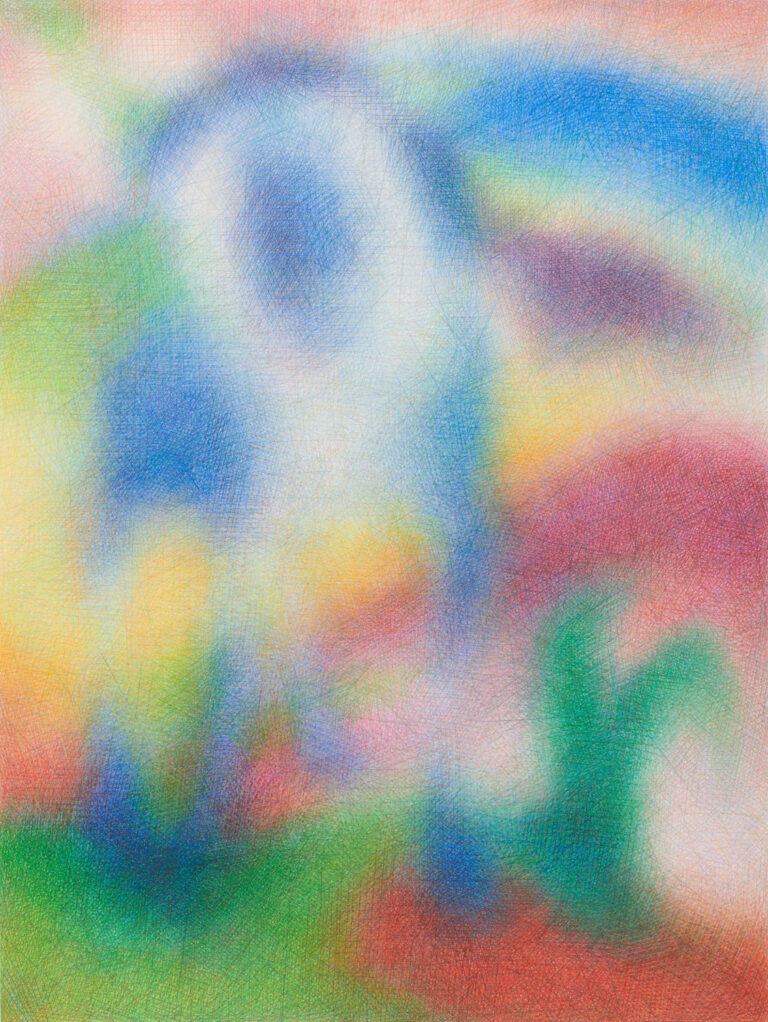
Slawomir Elsner
Blaues Pferd I, 2021 (after Franz Marc, 1911, Städtische Galerie im Lenbachhaus und Kunstbau, München)
Coloured pencil,
12 x 84,5 cm
Copryright: Slawomir Elsner Courtesy: Galerie Friese
Not far away on Meierottostraße, the Polish-born, Berlin-based artist Sławomir Elsner makes his debut at Galerie Friese with a body of work dedicated to the horse. Using his signature hatching technique, he draws on well-known motifs from art history and everyday culture. This time his sources include Manet’s “Horsewoman, Full-Face (L’Amazone),” Raphael’s Saint George and Franz Marc’s “Blue Horse.” The way Elsner works his colored pencils from light to dark recalls the methods of the Old Masters, though the effect is something quite different: the meticulous marks render his pictures blurred, ambiguous, strange. The drawings are accompanied by his “Nocturnes,” near-abstract watercolors of constellations.
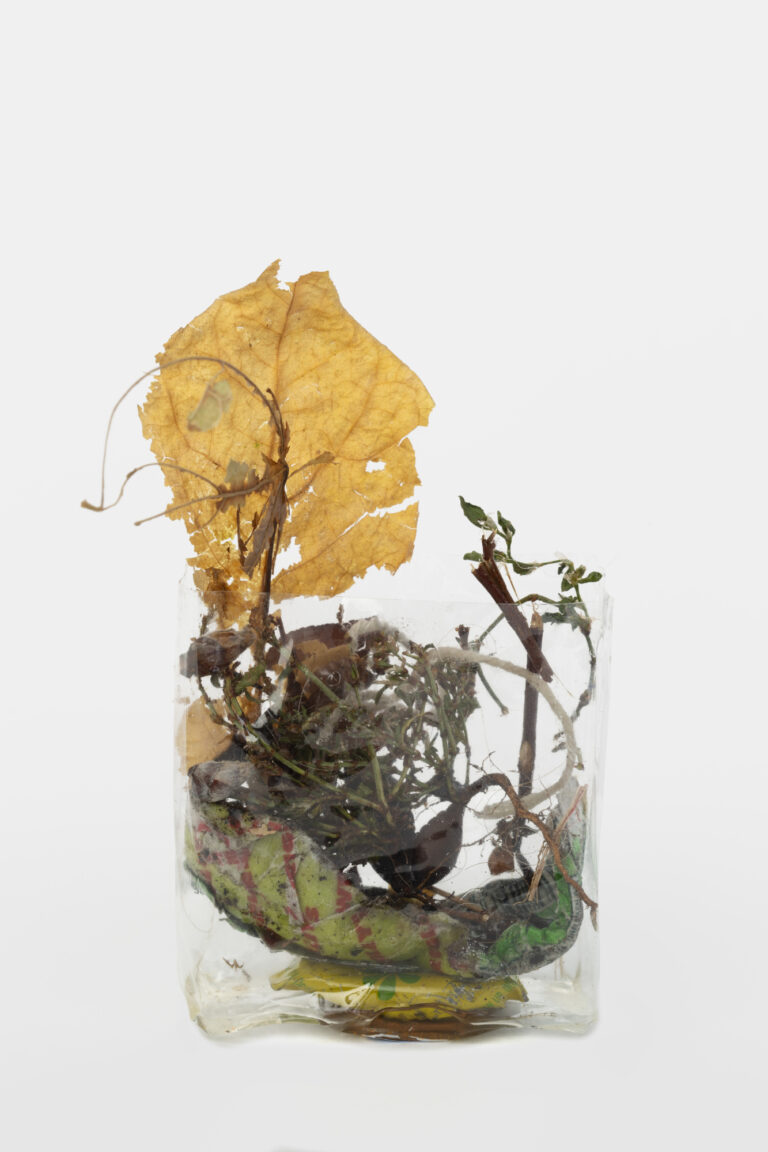
Yuji Agematsu
Zip: 01-01-2024–12-31-2024, 2024 (detail)
Mixed media in cigarette pack cellophane wrapper
Photo: Reggie Shiobara
Courtesy of Yuji Agematsu and Galerie Buchholz
Would Yuji Agematsu even have appreciated the short walk to Galerie Buchholz? The artist, born in 1956 in Kanagawa, Japan, roams the streets of his adopted home New York day after day, on walks that vary in length. Since 1996 he has been collecting whatever crosses his path: carelessly discarded things, objects others would call trash, leaves, twigs, feathers, small trophies of everyday life. In the cellophane sleeves of cigarette packs he arranges his finds into wondrous formations, poetic miniature sculptures, a material diary. One year of “Zips” — as the artist calls his ongoing series — is on view in Agematsu’s first solo exhibition in Germany: 366 works from 2024. These are accompanied by an installation of projected 35mm slides that Agematsu took thirty years ago, in 1994, on the streets of Marseille.
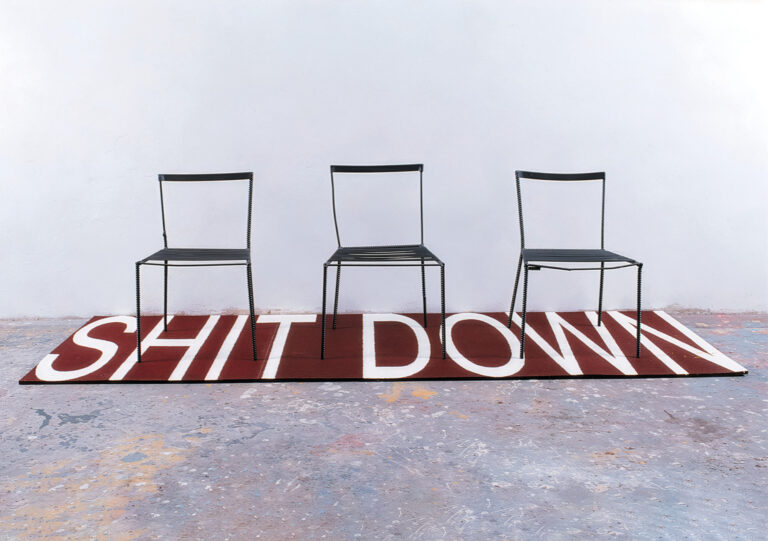
Franz West
Madley II, 1996-2003
Courtesy Galerie Crone, Berlin Vienna, and Galerie Thoman, Innsbruck Vienna
Next door at Crone, sculptures and objects by Franz West meet works by Bruno Gironcoli. West had studied under Gironcoli at the Academy of Fine Arts in Vienna in the 1970s, and the two remained closely connected for the rest of their lives, making this exhibition at Crone their first ever duo show. Together, the two exceptional Austrian artists reveal as much in their differences as in what they share: in subject matter, in their handling of materials and surfaces, in warmth and accessibility, and in the symbolic charge of form and shape.
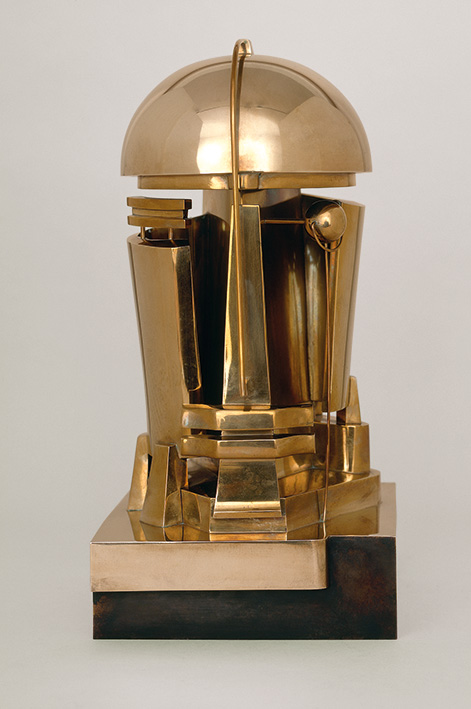
Rudolf Belling
Skulptur 23, 1923
Polished brass
42cm high
Courtesy: Kunsthandel Wolfgang Werner
© Archiv Rudolf Belling, Krailling / 2026, VG Bildkunst, Bonn
Photo: Lars Lohrisch, Bremen
Thirty-five years ago, Wolfgang Werner opened the Berlin branch of his art dealership on Fasanenstraße, alongside his long-established premises in Bremen. The gallery marks the anniversary with iconic works by two artists who have been shown there repeatedly from the very beginning: Willi Baumeister and Rudolf Belling. Among Baumeister’s works on view, alongside other pieces from the 1940s, is the oil painting “African Spirits,” with which the painter was represented at the first Documenta in 1949. Belling is represented by three sculptures: “Dreiklang” (1919), “Organic Forms” (1921) and “Skulptur 23” (1923), which were first introduced to a wider public in 1924 at the artist’s major solo exhibition at the Nationalgalerie in Berlin.
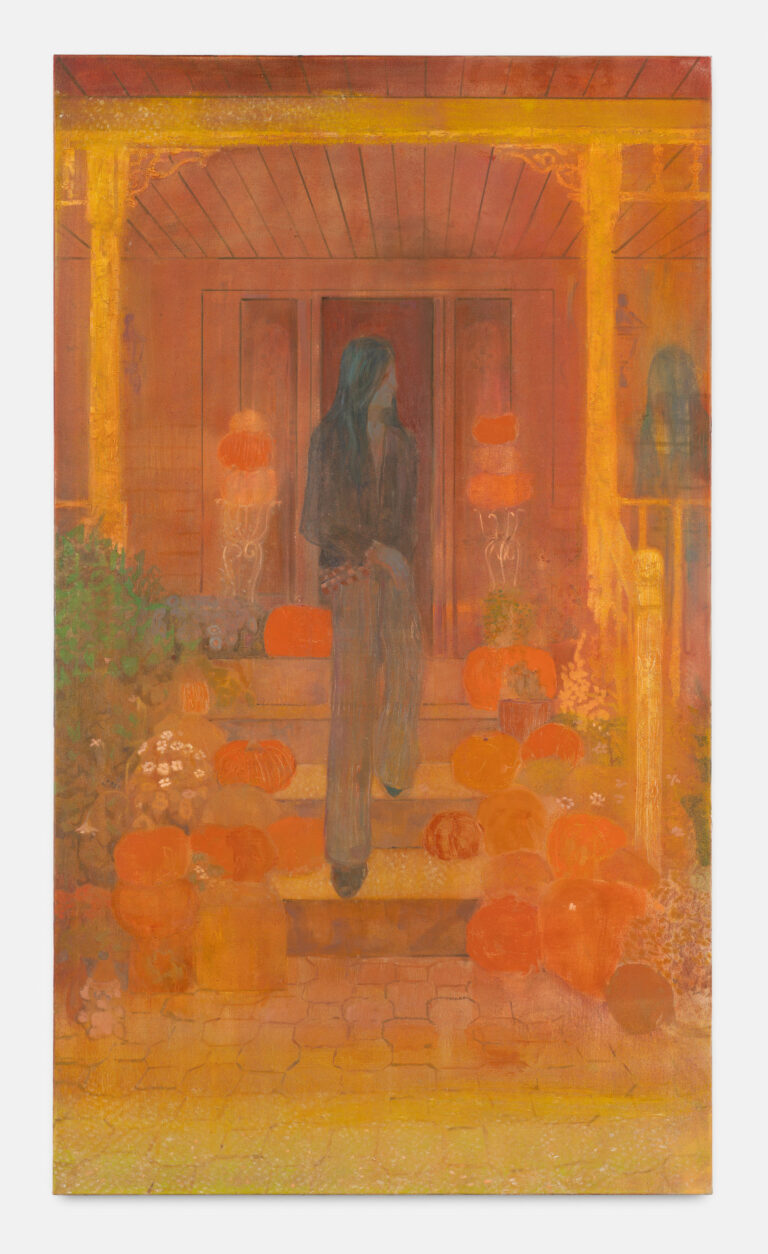
Travis MacDonald
Suspicious Minds, 2026
Oil on canvas
190 x 110 cm
Courtesy: the artist and Contemporary Fine Arts
CFA comes to this Gallery Weekend with not one but two Berlin debuts. Travis MacDonald, a New Zealander born in 1990 and now based in Berlin, thins his oil paint with water and builds his images in layers so fine they seem to float behind a transparent veil. His work brings Félix Vallotton to mind, though with quieter colors and a contemporary setting — almost, at least: the figures he paints, alone or in groups, feel strangely displaced in time. Music is often where he starts, something his titles reflect.
The second exhibition at CFA is by the French artist Julien Heintz. He too paints figuratively, though his subjects dissolve into little more than outlines, like memories that are slowly fading. The figures he portrays are obscure historical personalities, witnesses to turning points and upheavals, to events both large and small. At CFA, Heintz shows a series of oil paintings and pastel drawings on paper.
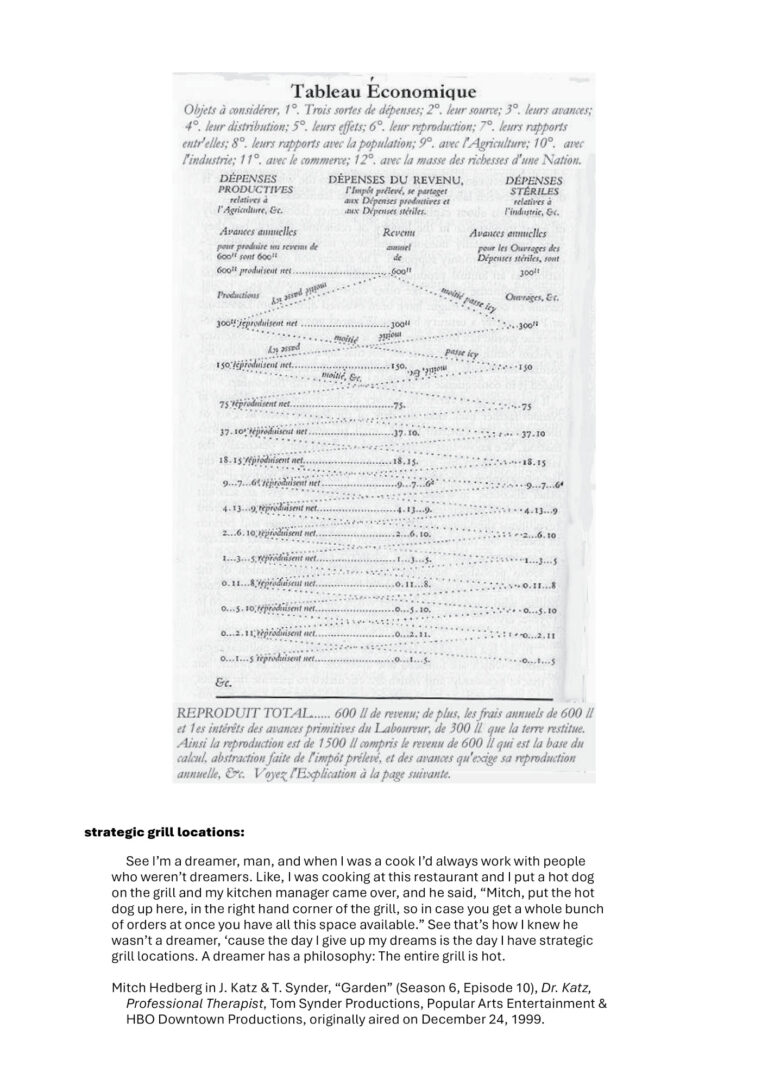
Sam Pulitzer
Courtesy of the artist and Lars Friedrich, Berlin
Hidden away on the first floor of an old apartment building on Kantstraße, Lars Friedrich shows new works by Sam Pulitzer. The American artist works with the three-part form of the emblem, comprising lemma, icon and epigram, as codified by the Italian jurist and humanist Andrea Alciato in the sixteenth century. The result is a cycle of 35 counterfactual statements, each illustrated and defined, one leading to the next and the last looping back to the first.
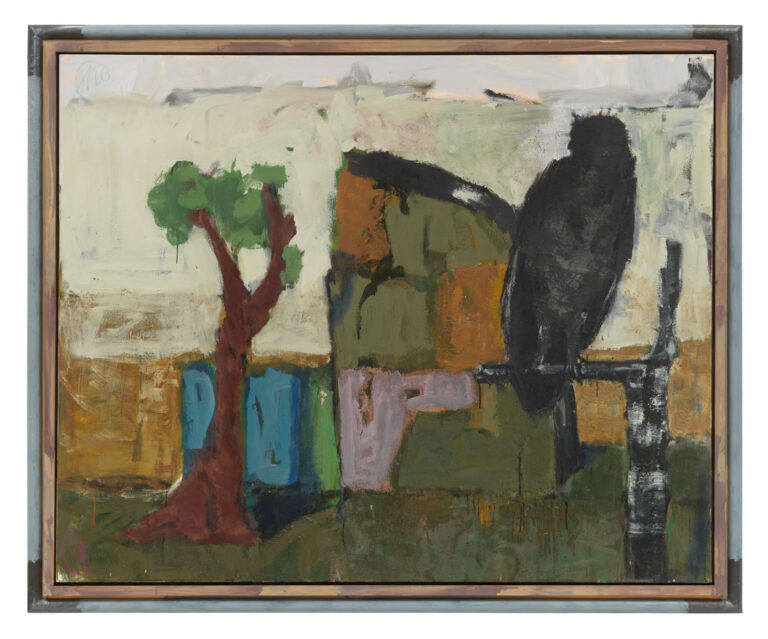
Markus Lüpertz
Haus der Athene, 2025
Mixed media on canvas
160 x 200 cm
© VG Bild-Kunst Bonn, 2026
Photo: Jens Ziehe, Berlin
The gallery Michael Werner has worked with Markus Lüpertz for nearly sixty years. In 1968 it presented the painter’s first Berlin exhibition on Kantstraße, and it now celebrates his 85th birthday with a show bearing the programmatic title Die Überwindung der Moderne (“The Overcoming of Modernity”), on view at the gallery’s current Berlin location on Hardenbergstraße. The recent paintings explore what defines Lüpertz’s artistic sensibility: his sustained interrogation of painting itself, his engagement with the central concepts of modernism, and the creation of a pictorial language entirely his own, one that reorders the traditions of painting on his own terms.
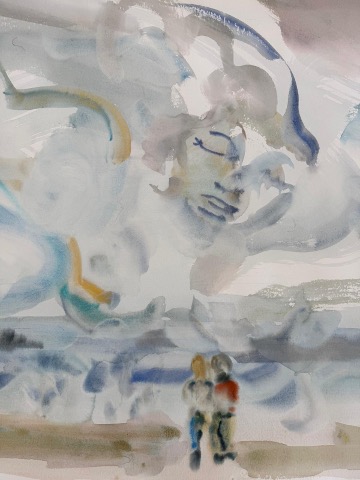
Sophie von Hellermann
Watercolor on paper (detail), 2026
Photo credit Wentrup, courtesy the artist.
Rainer Maria Rilke, whose death centenary falls in 2026, explored captivity, self-alienation and isolation in the most celebrated of his thing poems. For “The Panther,” the poet entered the mind of a big cat at the Jardin des Plantes in Paris, inspired in part by a plaster cast he had seen in Auguste Rodin’s studio. It is this poem that prompted a new body of work by Sophie von Hellermann on view at WENTRUP, as literature and film, mythology and history so often give her work its direction. In what might be described as an imagined dialogue, von Hellermann allows poetic landscapes and scenes to grow through a blend of intuition and calculation, using pure pigments and broad brushstrokes on unprimed canvas, and often beyond its edges. For her, painting is like writing or speaking, a form of communication, an invitation to step into her world behind the “thousand bars”.
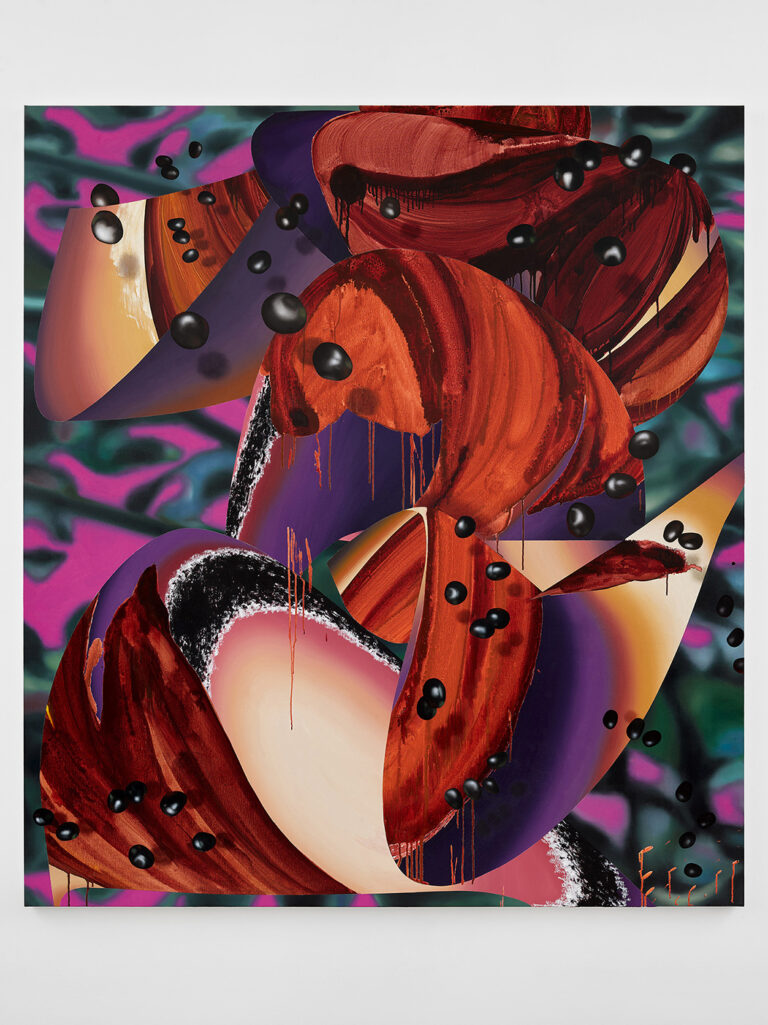
Vivien Zhang
Tectonic Bloom, 2026
Acrylic and oil on linen
200 x 180 cm
© Vivien Zhang, courtesy the artist and Galerie Max Hetzler Berlin | Paris | London | Marfa.
Photo: Jack Hems
Altogether different, yet equally compelling, is the painting of Vivien Zhang, on view at Max Hetzler’s space on Goethestraße. Born in Beijing in 1990, Zhang grew up in China, Kenya and Thailand, studied in London, where she lives and works. All these places, along with experiences of migration and cultural difference, shape her art. She has titled her new exhibition with new paintings and works on paper Field Conditions. A number of the works are inspired by flowers: Zhang engages with botanical classification systems, selecting flowers categorized as false (pseudo) or related (affinis) versions of other plants. Working in acrylic and oil, the resulting paintings often resemble fragmented patterns. In her butterfly paintings, she combines the mimicry of the glass wing butterfly’s wings with the “Butterfly” world map, a projection that attempts to render the shapes and sizes of the continents and oceans as accurately as possible in the abstracted form of a butterfly.
Nature is equally central to the new works by Darren Almond at Max Hetzler on Bleibtreustraße. The willow tree, its branches trailing characteristically into the water and the play of light that results, is the central motif he explores across a series of variations. The British artist, born in 1971, works across a wide range of media, including photography, film, installation and sculpture. In Between the Lines, painting becomes his medium of choice as he searches for images of the seasons and the eternal cycle of nature.
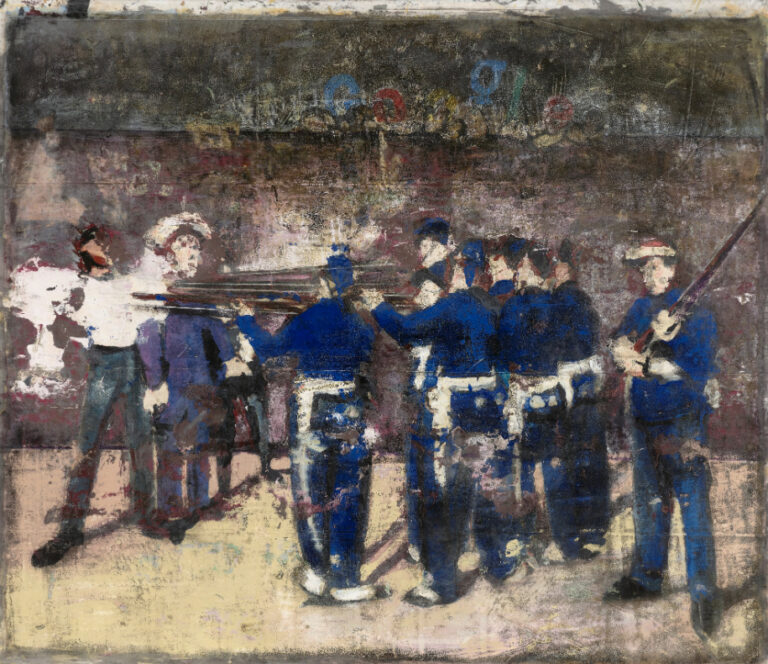
Tatjana Doll
RIP Elite, 2018
Oil on canvas
270 x 315 cm
Photo: Jörg von Bruchhausen
Galerie Michael Haas, which has been based in its elegant premises on Niebuhrstraße for almost as long, also celebrates its 50th anniversary this year. For Gallery Weekend the gallery devotes a solo exhibition to Jean Dubuffet, encompassing both paintings and drawings by the French painter, printmaker and boundary-crosser. A wide-ranging group show, extending into the storage spaces of Kunstlager Haas, explores the legacy of another French artist: Édouard Manet. D’après Manet brings together gallery artists and guests including Almut Heise, Gregor Hildebrandt, Martha Jungwirth, Albert Oehlen, Lydia Pettit, Daniel Richter and René Wirths.
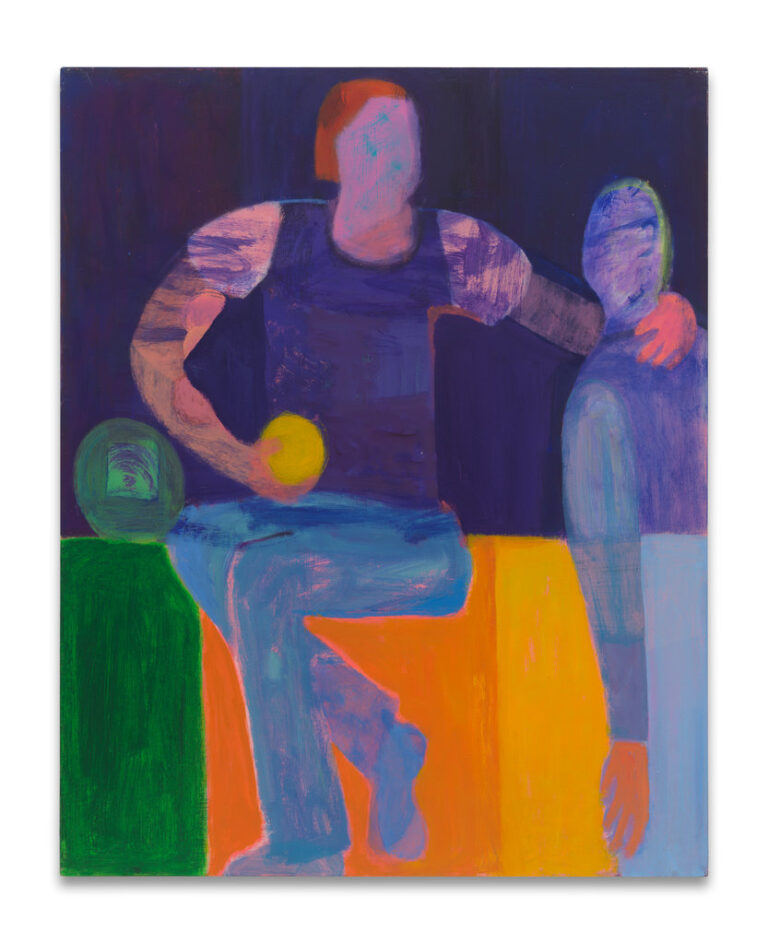
Katherine Bradford
The Inheritance, 2025
Acrylic on canvas
152.5 x 122 cm
© Katherine Bradford; Courtesy Haverkampf Leistenschneider, Berlin
Photo: Jens Ziehe
The title Alltag — Everyday Life — is a little misleading. What Katherine Bradford captures in her vivid, expressive paintings at Haverkamp Leistenschneider (Perspectives) has little to do with the ordinary. Her figures inhabit dreamlike scenes charged with something strange and ambiguous, with echoes of Abstract Expressionism and Color Field painting alongside very contemporary questions of identity and gender. Five shadowy figures in uniform cluster under an oversized hat; two women wade through moonlit water, lost in thought. Bradford’s paintings ask questions they refuse to answer.
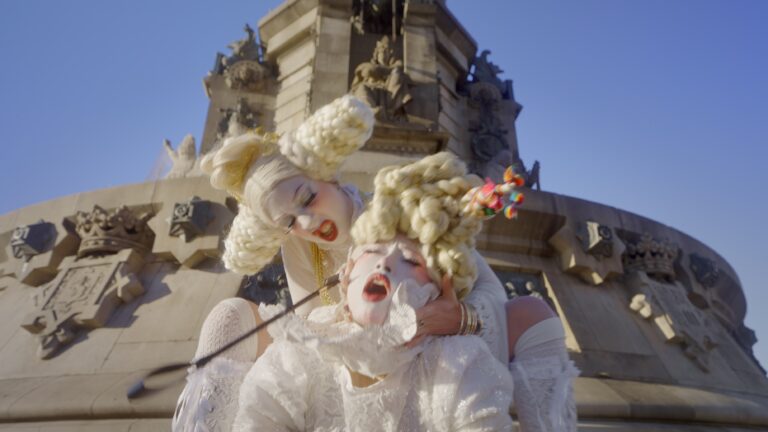
Wynnie Mynerva
El Amor en los tiempos de colonialismo, 2026
Video
Duration: 6 min 34 sec
Courtesy the artist, Société, Berlin and Gathering London / Ibiza
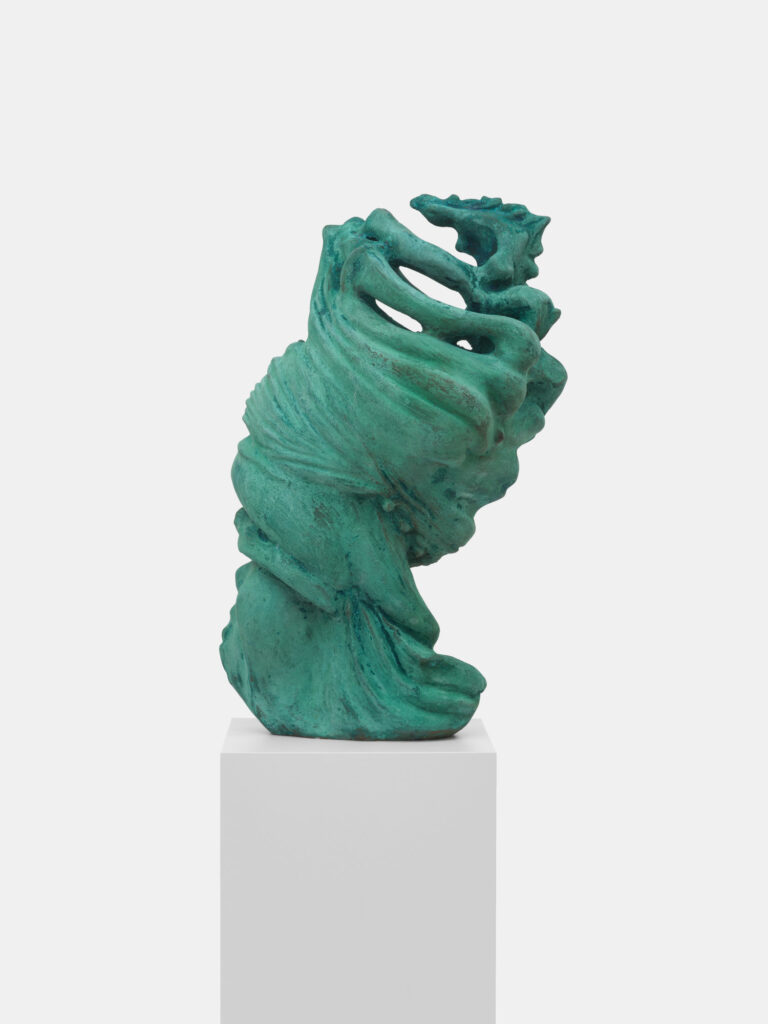
Edi Rama
Untitled, 2026
Bronze
34 x 38 x 62 cm
Courtesy of the artist and Société, Berlin.
Photo: Trevor Good
At Société on Wielandstraße, Wynnie Mynerva makes the power of love her subject. Born in Lima and identifying as non-binary, Mynerva starts from personal experience to ask universal questions about coexistence, intimacy and the bonds between individuals and societies. Working in painting and photography, and proceeding from a consideration of colonial history, experiences of migration and the achievements of sexual liberation, Mynerva explores how human identity is constituted through connection to others.
Société also presents sculptures by Edi Rama for the first time. Their origin is simple: abstract drawings the artist, who has been Prime Minister of Albania since 2013, makes during meetings with ink, felt-tip pens and chalk in diaries and on scraps of paper. Via 3D printing these are translated into space, the forms for the bronze sculptures then shaped by hand. Also new is Rama’s first large-scale outdoor sculpture, to be installed in the gallery garden.
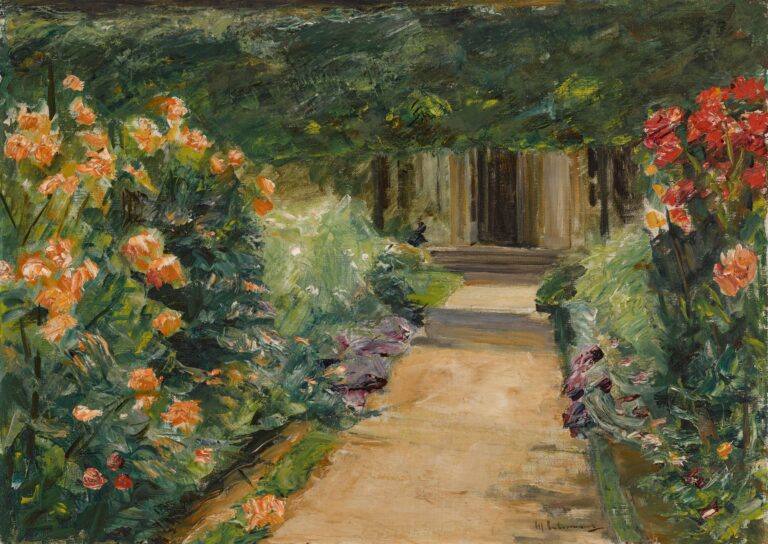
Max Liebermann, Garten in Wannsee [Garden in Wannsee], 1924.
Oil on wooden panel
54.2 x 75 cm [H x W]
Courtesy Bastian Gallery
A fitting final stop is a visit to Galerie Bastian in Dahlem, where paintings by Max Liebermann are on view, in which his garden at Wannsee itself becomes the subject. The artist purchased a plot of land there in 1909 and commissioned Paul Otto Baumgarten to build a neoclassical country house; he designed the garden together with Alfred Lichtwark. In more than 200 works, he captured the changing effects of light and nature. Unlike Claude Monet, he did not strive to transform perception, but to render nature in a poetically realistic way—making these works an important contribution to the later development of Impressionism.