

Gallery Tour
Schöneberg
Tiergarten
Petrit Halilaj
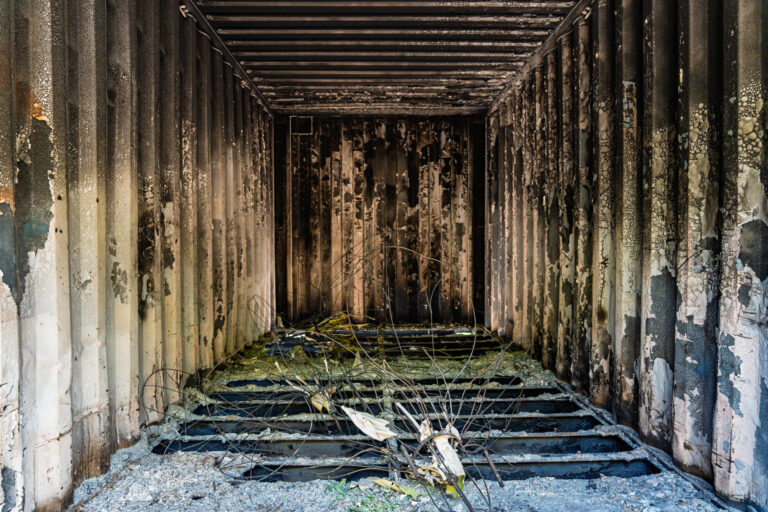
View inside one of the charred and graffitied steel shipping containers housing ‘Syrigana’ props, Syrigana, 2025
Courtesy of ChertLüdde, Berlin and Petrit Halilaj
Photo: Esad Duraki
ChertLüdde is as good a place as any to begin, and Petrit Halilaj – fresh from his large-scale show at Hamburger Bahnhof – presents the charred remains of containers and stage elements from his recently staged opera, rebuilt after a violent attack in Kosovo by Serbian nationalists. Halilaj and his team were forced to repair them frantically ahead of the performance, and these leftover fragments are testament to a practice that moves between personal history and collective memory.
Miriam Umiń,
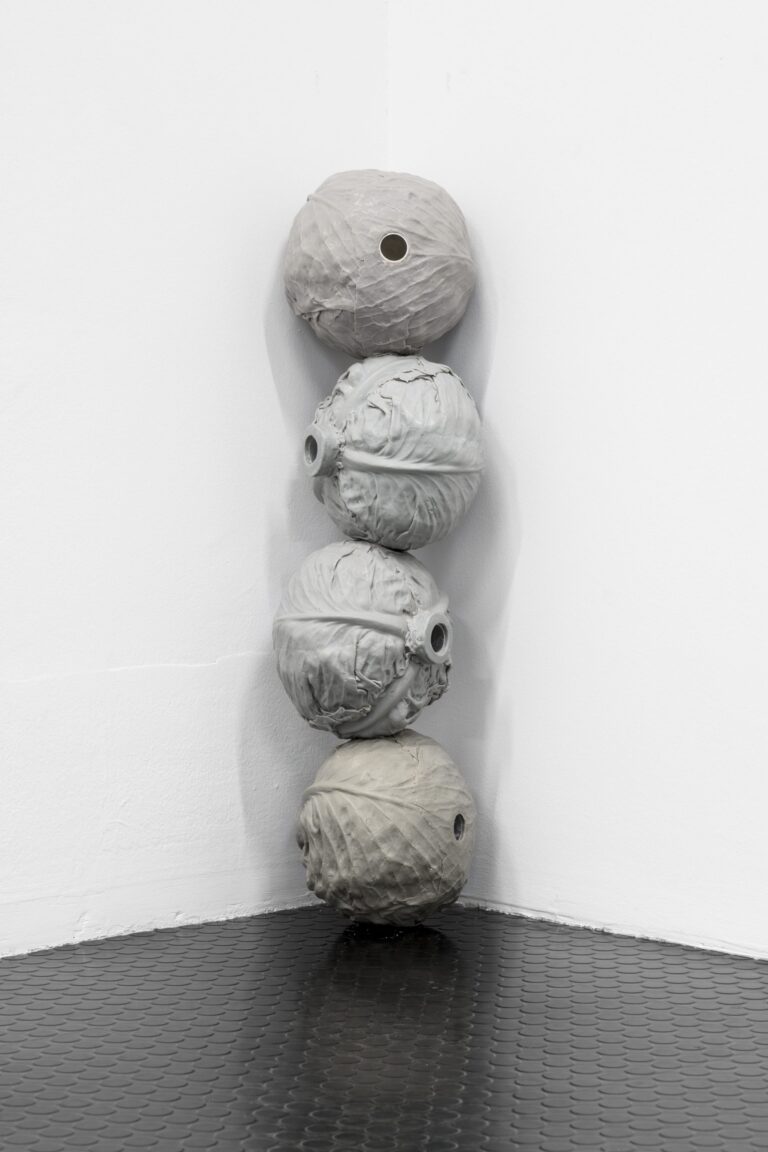
In Praise of Cabbage, 2024
25 x 25 x 20 cm (unit size)
Moulage, plaster, aluminum
Courtesy: Galerie Noah Klink, Josefine Reisch, Miriam Umiń
Photo: Julian Blum
More shipping containers appear at Galerie Noah Klink, just a short walk away across the boutiques of Crellestraße. In the joint exhibition “Proxy Proxy”, Miriam Umiń and Josefine Reisch make a playful examination of visual culture. Berlin-born Reisch combines mythological figures with overly familiar viewpoints, and in one painting, shipping container doors form the backdrop to her mermaids and figureheads – seducing the viewer with the potency of the already seen. Also catch Miriam Umiń’s “mum-sized” olive oil sculpture, which may well be one of the best things you’ll see all weekend, a quiet highlight of the weekend.
Candice Breitz
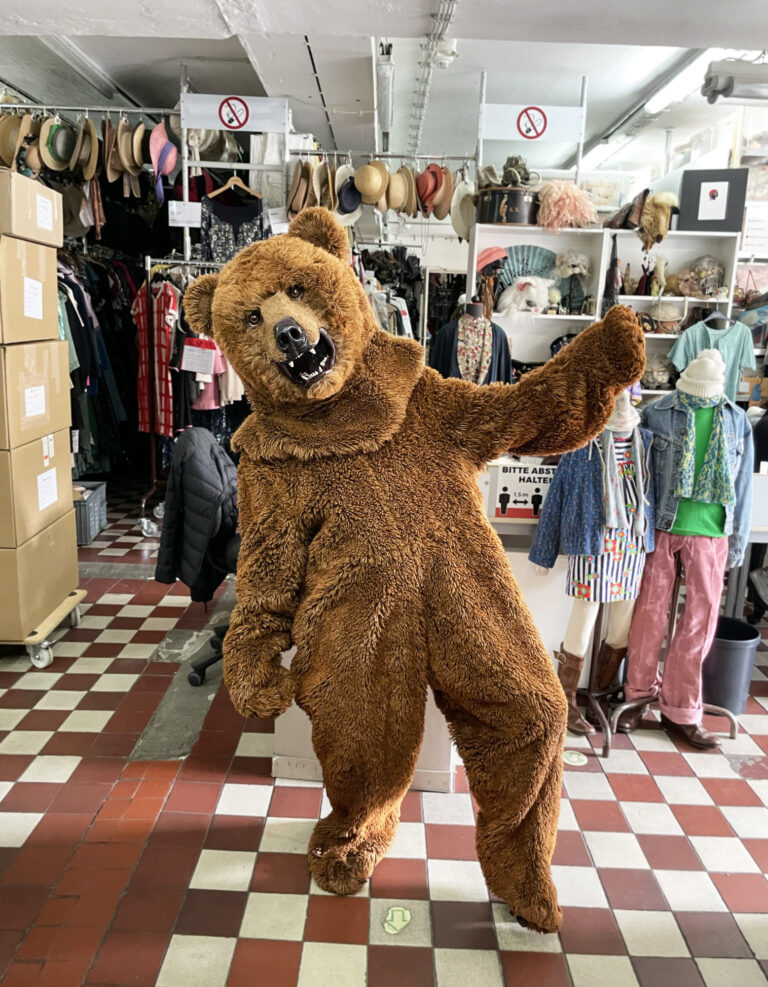
Private Dancer, 2026
Courtesy: artist and KOW, Berlin
Then on to a cluster of galleries around Kurfürstenstraße, with KOW first up, presenting the South African artist Candice Breitz. Never afraid to confront institutional hypocrisies and the pressures shaping artistic production, Breitz remains characteristically forthright in the exhibition “Hot Potato”. Alongside homages to Mark Wallinger and John Baldessari, the gallery’s street-facing window is turned into a stage for Private Dancer, a weekend-long performance by the artist herself, transforming the storefront into a vitrine for passing crowds.
Ketuta Alexi-Meskhishvili
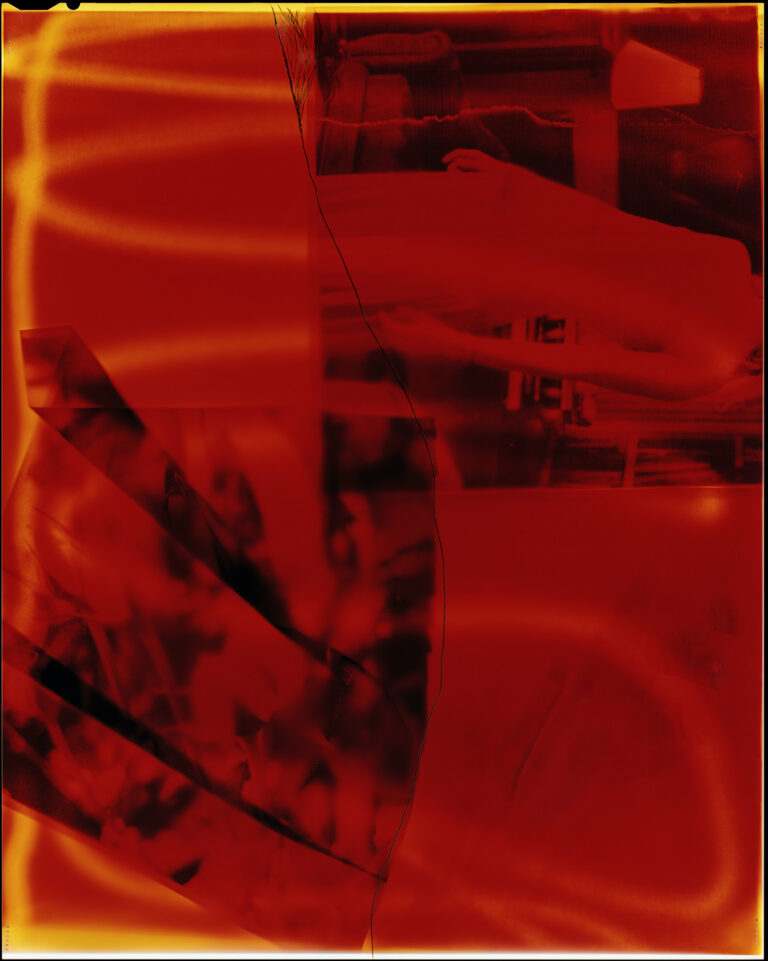
G-Hands, 2026
Dye Sublimation on Aluminium
125 x100
Courtesy: Galerie Molitor, Berlin.
Directly opposite, the hyped Georgian American artist Ketuta Alexi-Meskhishvili is showing within the concrete surrounds of Molitor. Merging analogue and digital techniques, her works resist fixed readings, questioning photography’s capacity to depict reality – whether in impressions of flowers or artificial eggs suspended in goo. Traces of the works’ own making often remain visible, emerging through layered compositions that are left deliberately open. Also catch the artist talk at the Neue Nationalgalerie on Friday, 1 May 2026 at 5 PM.
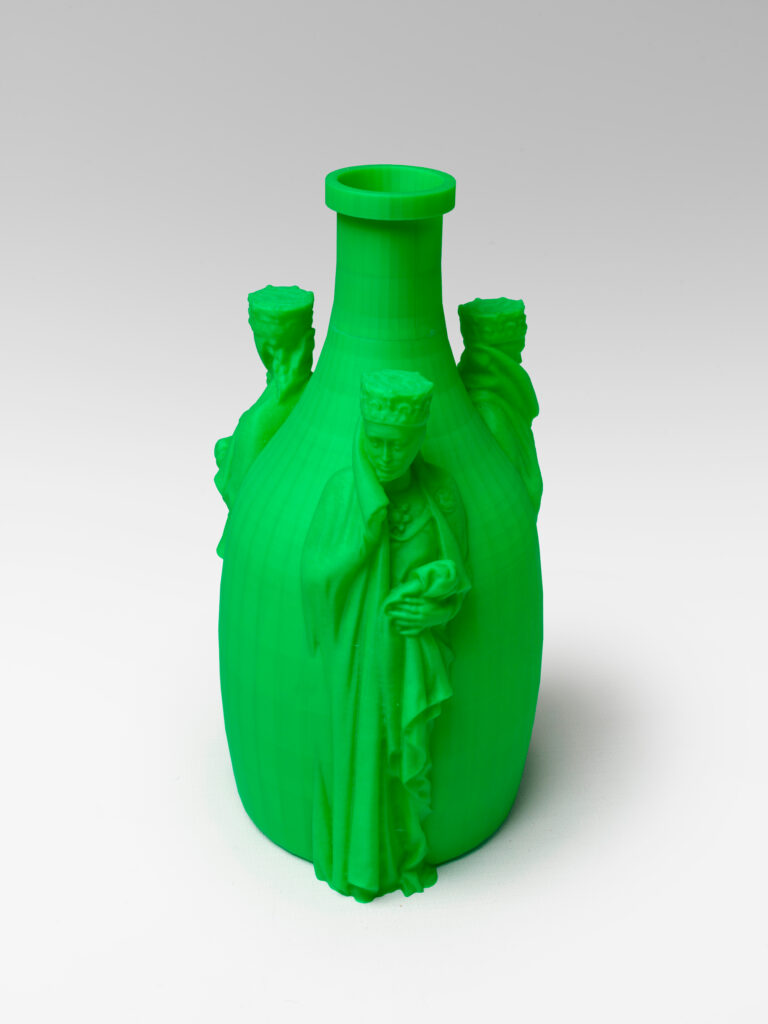
Markus Selg
THE WORK Xenia´s Legacies (vase_1 green), 2024
PLA Filament
31 x 17 x 17 cm
Courtesy: artist & Galerie Guido W. Baudach, Berlin
© Markus Selg 2024
Photo: Roman März
Into Pohlstraße for the powerhouse group exhibition at Galerie Guido W. Baudach, bringing together an array of established figures: Tamina Amadyar, Hinako Miyabayashi, Thomas Helbig, Markus Selg and Andy Hope 1930. Titled “Auto-Paragone”, the exhibition revisits the Renaissance-era competition for supremacy between painting and sculpture. It’s a startling selection, pairing the resonant watercolours of Afghan German painter Tamina Amadyar with contemporary artists like Markus Selg, whose computer-generated works – such as his arthropod fossils – read as copies without an original.
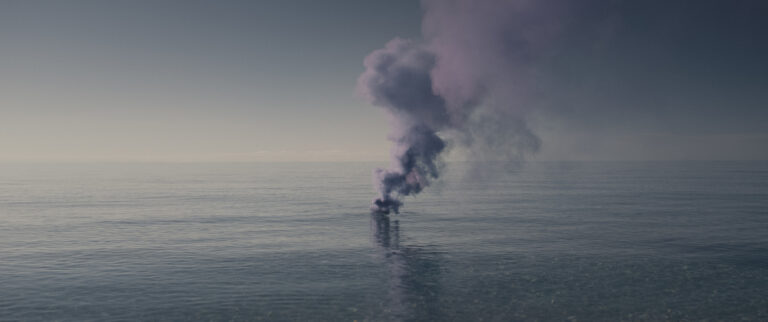
Elisa Giardina Papa
She Flickered In and Out of History, 2026
Video installation, 18 minutes
Still from the video
Courtesy of the artist and Galerie Tanja Wagner, Berlin.
On the other side of the street Galerie Tanja Wagner is showing Elisa Giardina Papa’s “A Naked-Eye Blue”. This new video installation tells the remarkable story of an island that suddenly emerged in the Mediterranean following a volcanic eruption, triggering a volatile dispute over sovereignty among European powers. What follows is equally preposterous – and worth finding out yourself. The Italian artist has carved out a distinct niche, engaging her research-based practice with lost or forgotten forms of knowledge, gently ridiculing hegemonic demands for order and legibility.
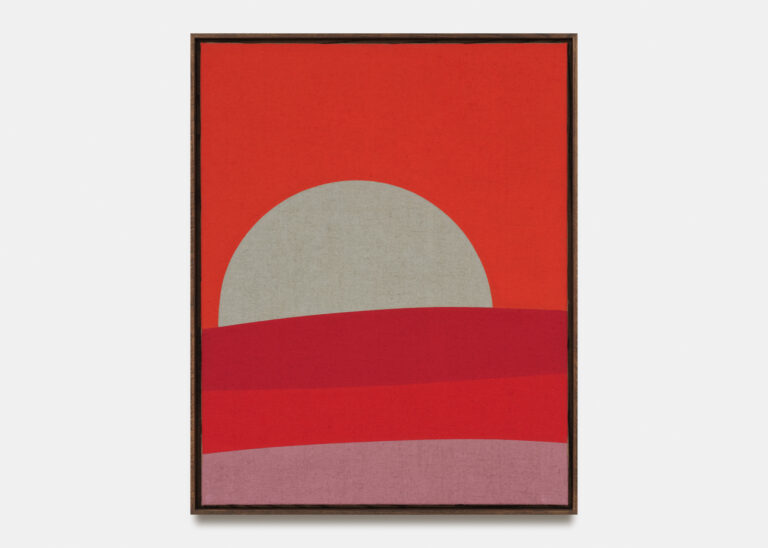
Antonio Ballester Moreno
Red Orange, 2025
Acrylic on jute
92×73 cm
Courtesy: artist and Tanya Leighton Berlin and Los Angeles
Photo: Gunter Lepkowski
Back across Potsdamer Straße and into Kurfürstenstraße at the dependably strong Tanya Leighton, Spanish artist Antonio Ballester Moreno will be on view, coinciding with his solo exhibition at Museo CA2M in Madrid. The painter works with a highly stylised, conceptual language that at first appears serenely simple – vivid colours, near-childlike imagery – but these elemental compositions mask a far more deliberate and considered structure, forming a sustained meditation on the material presence of landscape, reduced to forms that are quietly compelling.
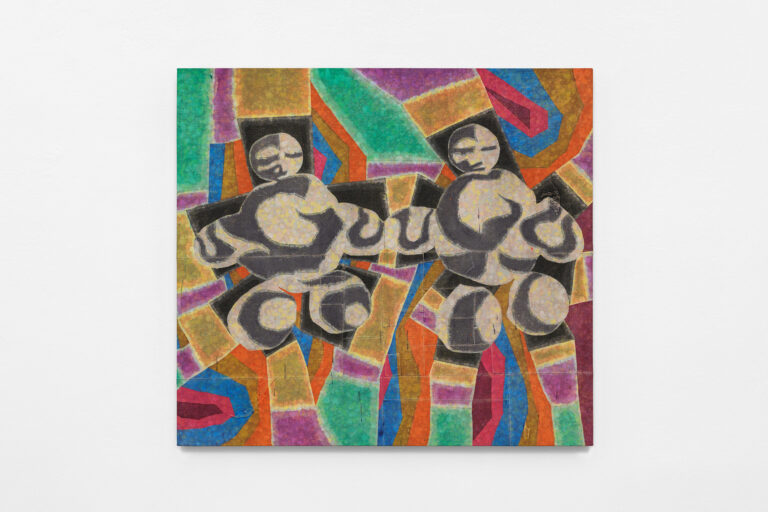
Lukas Quietzsch
Untitled, 2023
Gouache on canvas
100 × 110 cm
Courtesy: artist and Schiefe Zähne, Berlin
Photo: Julian Blum
It seems remarkable that Schiefe Zähne has been around long enough to stage a third solo exhibition with Lukas Quietzsch, whose latest exhibition, “appeal to individualism”, playfully undermines the visual codes of painting, nibbling at the very limits of representation. Full of competing abstract energies, but with moments of figurative dalliance, the works are tantalisingly suggestive, their meanings never quite fixed. The Liechtenstein-born painter is gaining increasing attention, certainly one to watch.
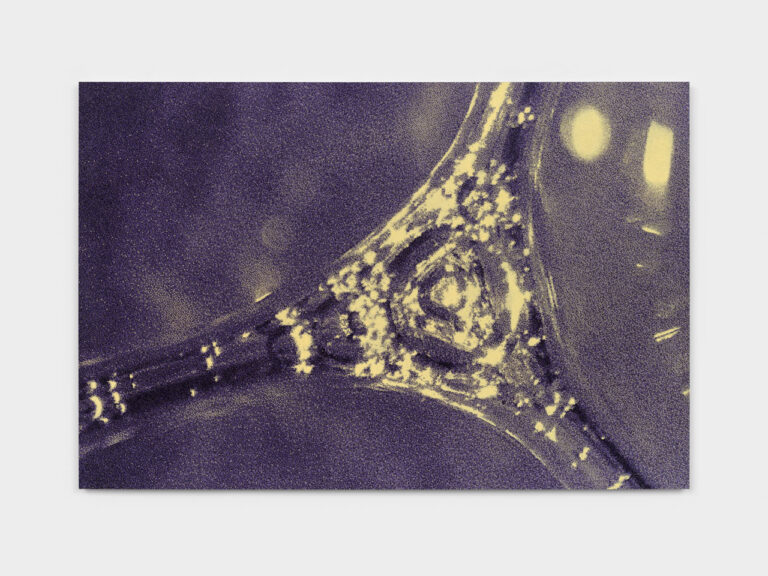
Tauba Auerbach
Foam, 2026
Acrylic on Dibond panel
122 x 183 cm
Courtesy the artist and Esther Schipper, Berlin/Paris/Seoul
Photo © Steven Probert
© the artist / VG Bild-Kunst, Bonn 2026
Then on to the flurry of galleries in the Mercatorhöfe – a bazaar of established blue chips and up-and-comers. Take the small elevator up to Esther Schipper (or the stairs if you’re not exhausted already), where they are showing two US-born artists, the San Franciscan Celeste Rapone and the Chicago-based Tauba Auerbach. The former’s paintings are anatomically implausible, but in their multiplane confidence conjure a delicious sense of longing and millennial empowerment. Alongside, Auerbach’s paintings use experimental processes and cross-disciplinary craft to reveal patterns found in natural phenomena, creating visceral work on the edge of coherence and disintegration.
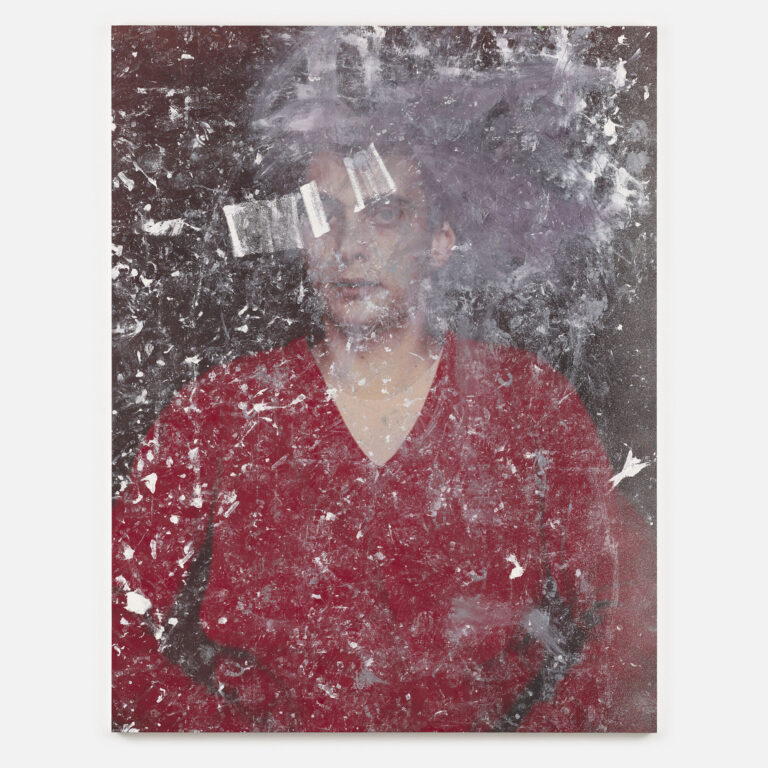
Rudolf Stingel
Untitled, 2016
Oil on canvas
335 x 258 cm
© Rudolf Stingel
Courtesy the artist and Galerie Max Hetzler Berlin | Paris | London | Marfa.
Photo: def image
Next door, Max Hetzler presents an impressively arrayed group show curated by Blau International editor Cornelius Tittel. Under the aphoristic thematic – “The most fascinating surface on earth is that of the human face” – the exhibition brings together an expansive selection of self-portraits, from established figures such as Martin Kippenberger and Tracey Emin to younger, closely watched artists like Lorenzo Amos, who uses the palimpsest of his studio walls to turn self-portraiture into a reflection of existence. The face emerges as a site of contest, where identity is staged, fractured and subtly altered, even reflecting the viewer’s own face back.
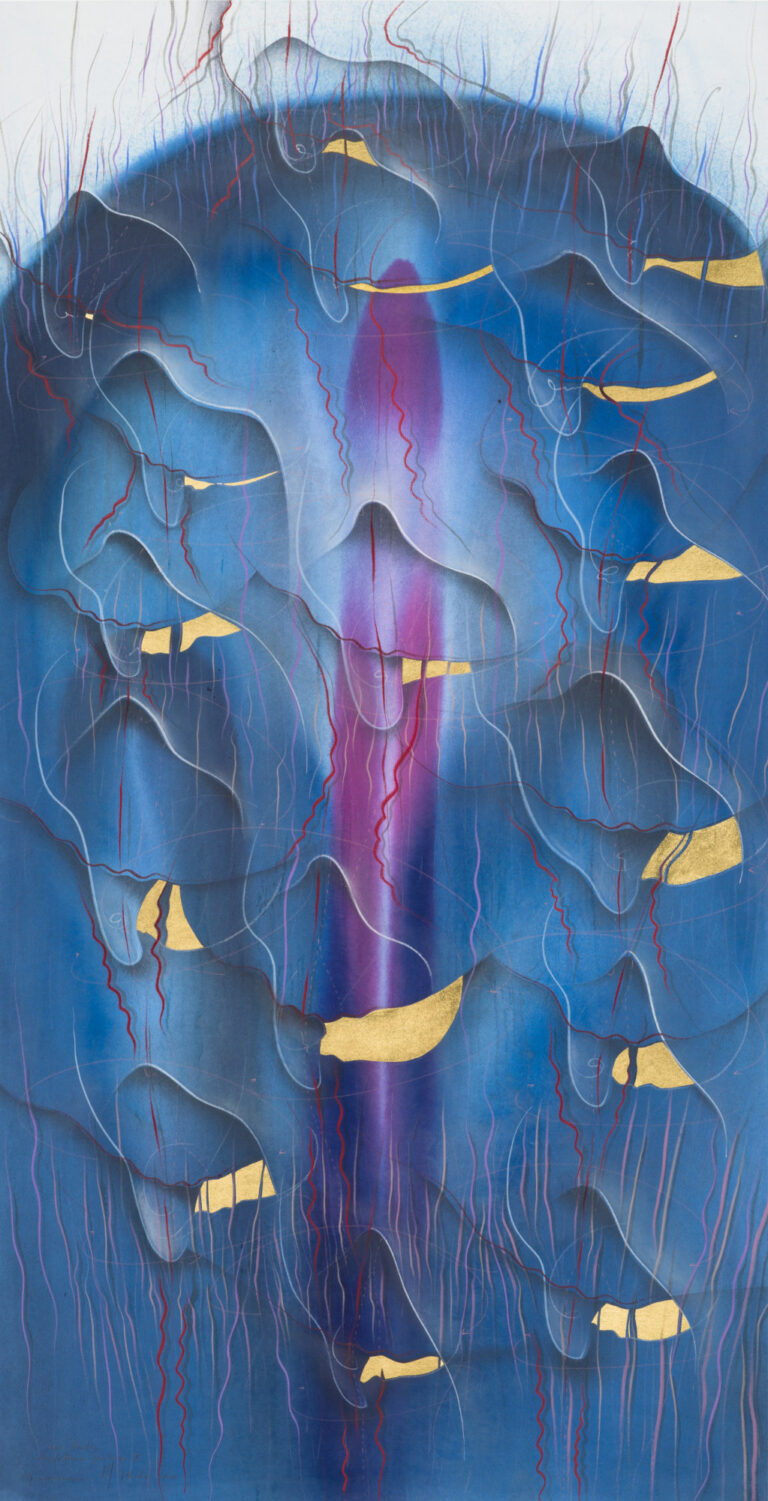
Jorinde Voigt
Non-Fiction (Confidence Spectrum) II, 2026
Gold leaf, ink and pastel on paper, framed
137.9 x 70.3 cm (unframed)
© Jorinde Voigt / VG Bild-Kunst
Courtesy Galerie Judin, Berlin
Photo: Roman März
Right beside them, the grand space of Galerie Judin will be showing Jorinde Voigt, her first exhibition with the gallery, and it whets the appetite to imagine her expansive, intricate canvases in the double-height space. Visualising patterns and perceptions, Voigt’s new series combine her usual conceptual rigour with a visceral immediacy. Over at Bülowstraße, in Die Tankstelle – the former modernist petrol station turned gallery – there’s the first solo exhibition with Adam Lupton. The Canadian-born, Berlin-based painter has restricted himself to a reduced palette, constructing composed scenes of contemporary life. His paintings layer collage and stamping techniques into textured surfaces that are witty and whimsical, like afternoon daydreams.
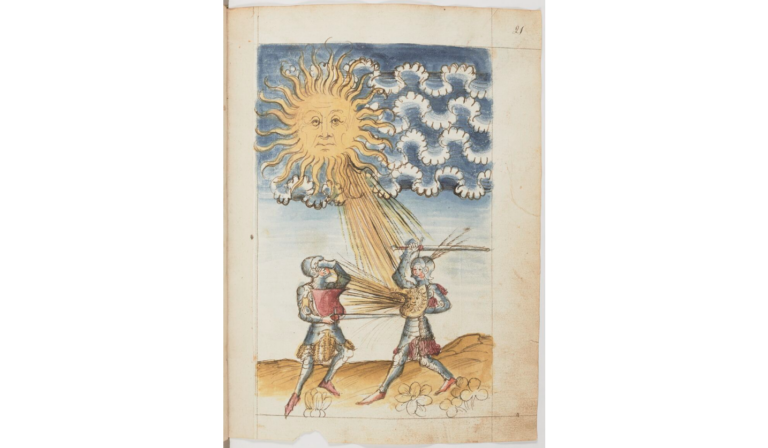
José Montealegre
Bellifortis Konrad Kyeser – Feuerwerkbuch von 1420
Courtesy: the artist and Galerie Thomas Schulte, Berlin
Across the Hof, Galerie Thomas Schulte will present its second exhibition with the Costa Rican artist José Montealegre. Now based in Berlin, the multidisciplinary artist shows sculptures and works on paper exploring how totems of power are constructed and reshaped. Often referencing weaponry, armour and instruments of force, the works, through a charged density of allusion, reflect a moment in which competing histories and interpretations increasingly shape how power is understood. Although it’s difficult with so much to see, this is a show that rewards prolonged engagement.
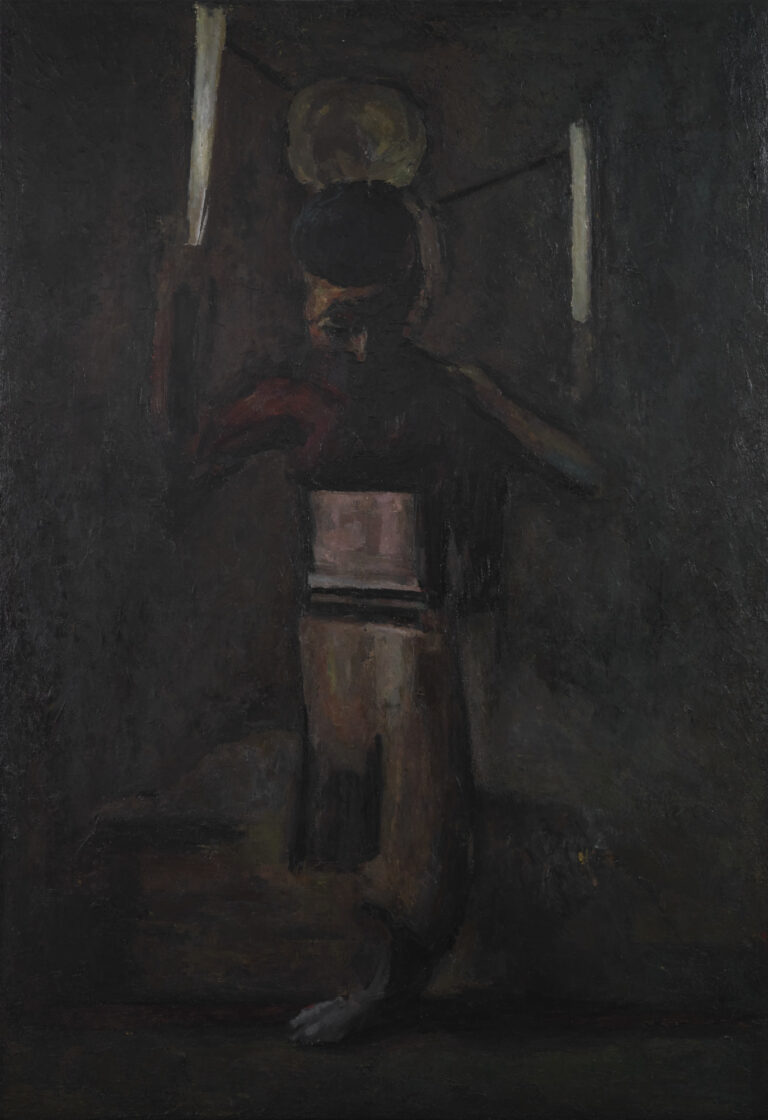
Qiu Ruixiang
Untitled, 2023-2026
Oil on Canvas
210 x 145 cm
Courtesy: Hua International and the artist
Photo: baiyang
Up the stairs and immediately above, Hua International presents “BREATHE. AS IN. (SHADOW)”, a joint exhibition by Chinese-born Qiu Ruixiang and German-born Peter Welz. An unlikely but sumptuous pairing made possible by the gallery’s intercontinental breadth and its sister space in Shanghai. The exhibition brings the two artists together in response to a poem by the US poet Rosamond S. King. Working through breath as a structuring device, Ruixiang turns inward, while Welz extends the body through moving image, where identity dissolves and re-forms in shadow. Together, the works hinge on shifts of rhythm, duration and presence.
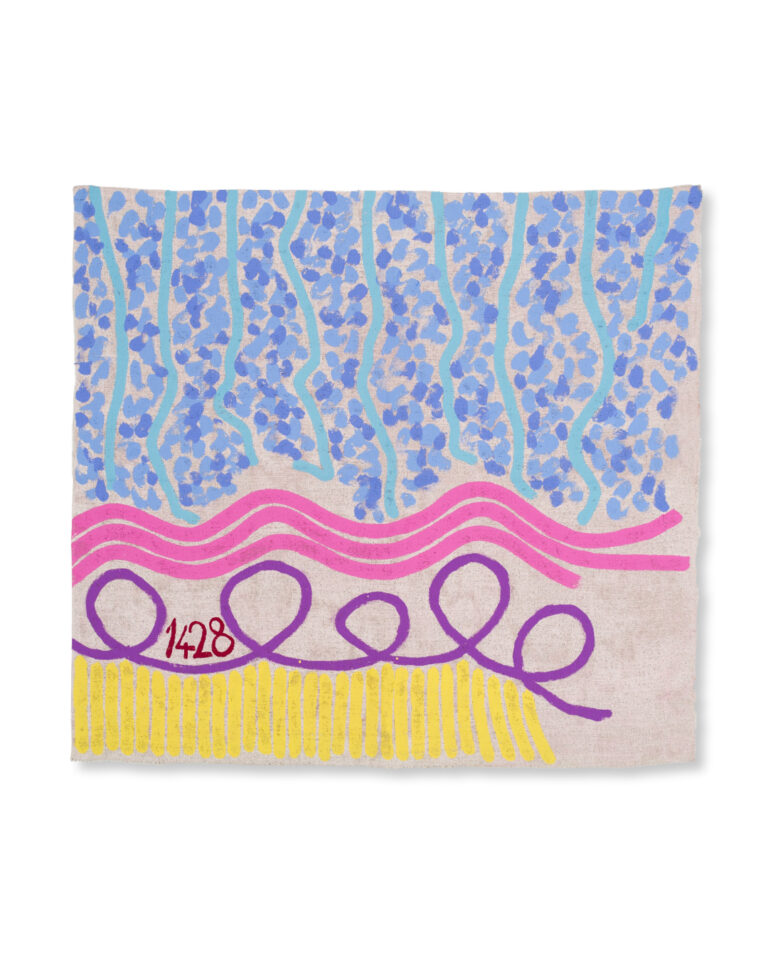
Giorgio Griffa
Tre linee con arabesco n.1428, 1994
Acrylic on canvas (prepared)
85 x 93 cm
Courtesy: Fondazione Giorgio Griffa
Also, in the Hof Walter Storms gallery – founded in Munich and now also based in Berlin – presents the internationally acclaimed Giorgio Griffa, who was the subject of a major retrospective at Centre Pompidou in 2022. Griffa paints directly onto raw, unprimed canvas – often working on the floor – tracing sequences of numbers, dots and fragments of text across its grainy surface. The resulting compositions, at once restrained and lyrical, are pinned loosely to the wall, recalling the aching lightness of Italian fresco.
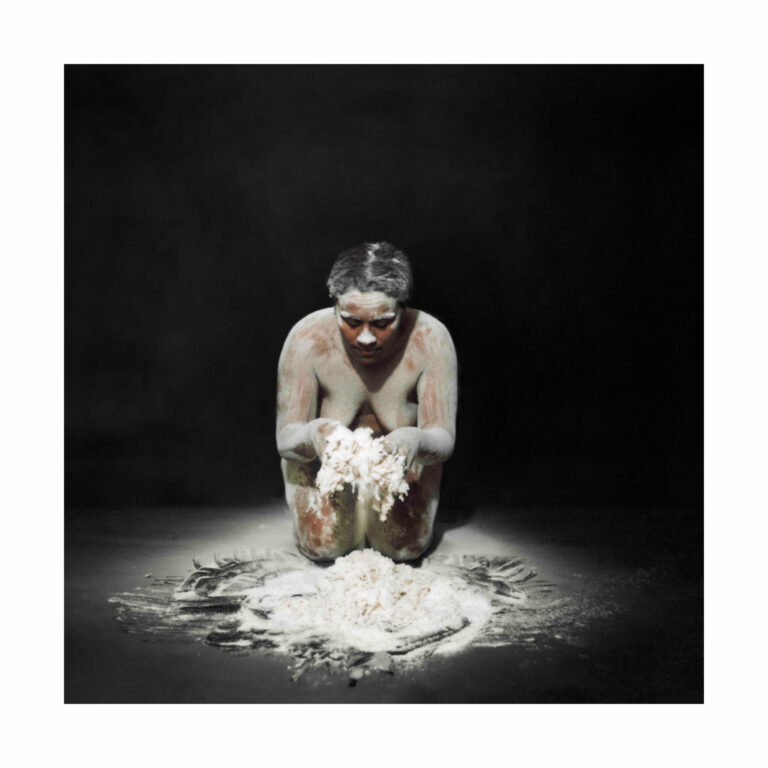
Berni Searle
Still. (Print #6), 2001
Digital print on Plexiglass
120 x 120 cm
Courtesy: the artist and PSM, Berlin
Then on to the elevated cluster of galleries on Schöneberger Ufer, with PSM showing the multidisciplinary South African artist Berni Searle, whose work can later be seen at the Venice Biennale. The upcoming exhibition, titled “Light, as a Feather”, brings together two series of recent work in which self-representation and collective identity are explored through materials such as sugar, feathers and flour applied directly to the artist’s skin. Searle often works with these light, translucent substances, setting them against their heavier sociopolitical histories – foregrounding the body as a site where histories of labour, migration and cultural exchange surface.
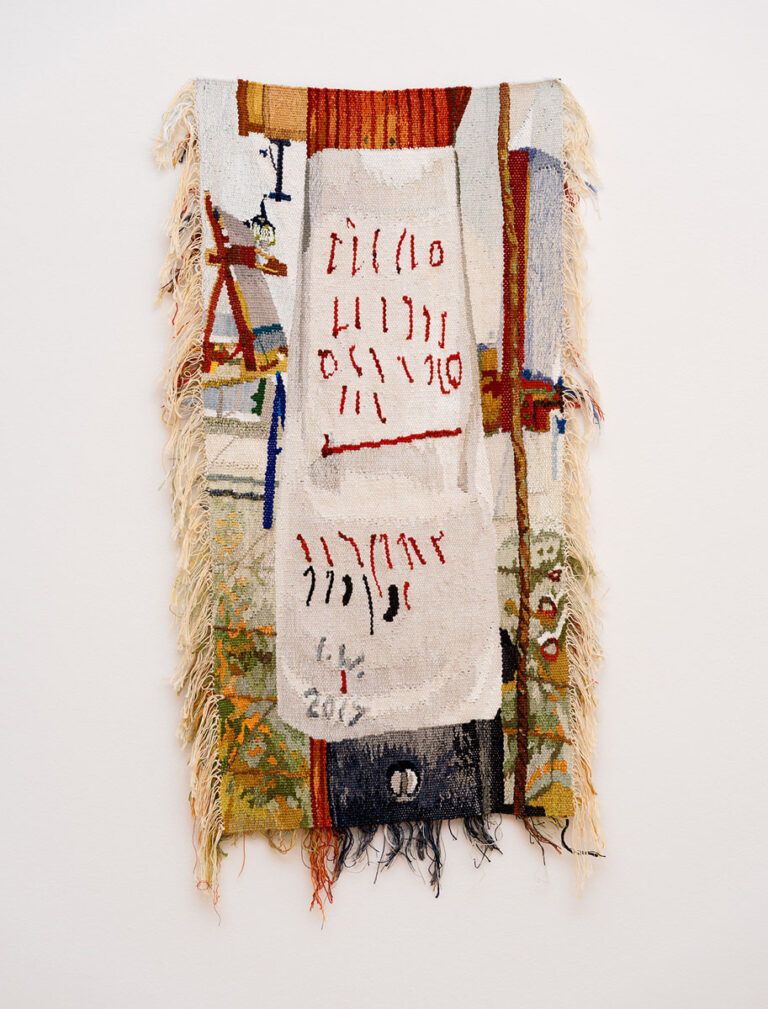
Ingrid Wiener
Daheim, 2017
Wool, silk, cotton
100 x 50 cm
Courtesy the artist and Galerie Barbara Wien
Photo: Nick Ash
Over at Barbara Wien, the Viennese-born artist Ingrid Wiener presents her third exhibition, “Gobelins, Films and Dreams”. Bringing together her “dream drawings”, films, records and tapestries, the latter depict recurring motifs such as household pipes, rendered with a dry, diagrammatic clarity that forms a potent mix of the domestic and the symbolic. The exhibition also includes a film by her husband, Oswald Wiener, on the making of the works, alongside archival material connected to her long-standing collaboration with Dieter Roth – reflecting Barbara Wien’s close ties to this wider cultural lineage.
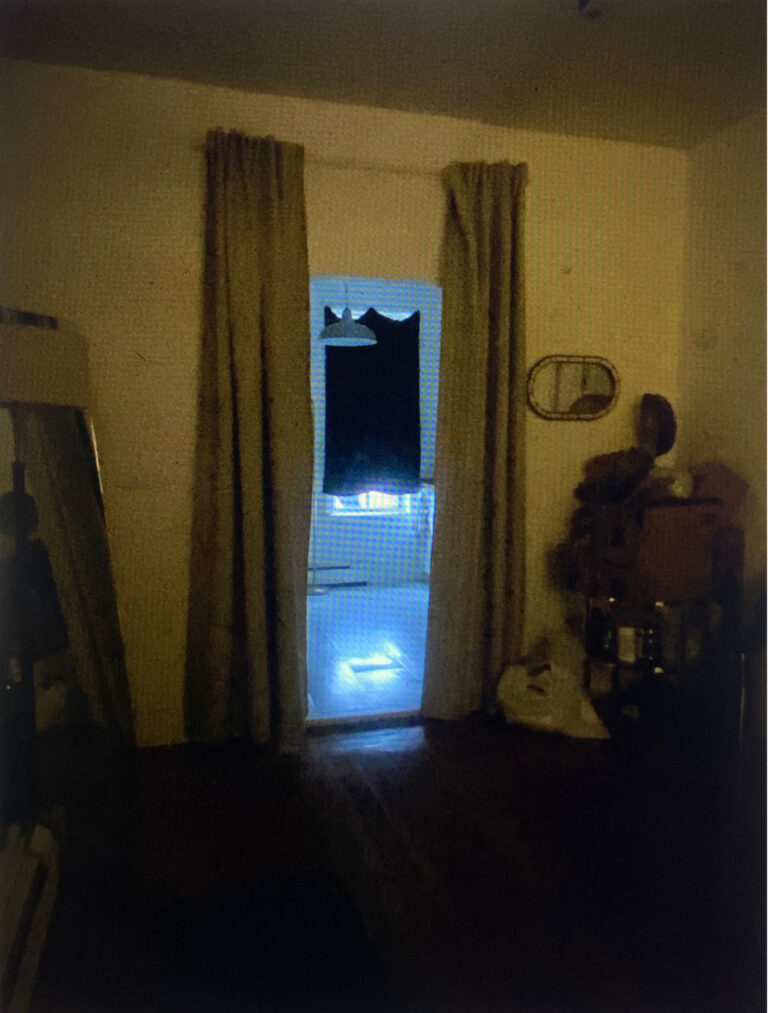
Adam Gordon, 2026
Courtesy the artist and Galerie Isabella Bortolozzi, Berlin
Finally, at the dedicated art shrine that is Galerie Isabella Bortolozzi, the young US-born painter Adam Gordon presents the exhibition “Months Turn to Years”. The exhibition holds together as a single organism, with each work contributing to a subtle tension between presence and absence – that palpable instability is what makes it so compelling. Building his images through often unseen layers and underpainting, Gordon makes process integral to the final work. With a masterful control of layering, staging and perception, this new body of work carries a distinct psychological charge, perfectly attuned to the gallery’s programme.