Galleries Map
EN
/
DE
Menumenu icon
menu icon
EN
/
DE
  • Journal
    • News
    • Gallery Weekend 2026
    • Gallery Weekend 2025
    • Exhibitions
    • Artists’ Insights
    • Gallery portraits
    • Berlin Perspectives
    • Gallery Tours
  • Galleries
  • Map
  • Current Exhibitions
  • Podcast
  • About
  • Partner
  • Newsletter
  • PRESS
  • Archive
  • Contact
  • Instagram
  • Pinterest

GALERIE THOMAS SCHULTE

WEB MAIL CALL DIRECTIONS

01 May –
06 Jun 2026

GALERIE THOMAS SCHULTE
01 May –
06 Jun 2026

Walid Raad
Like a rubber rung on a ladder
Opening – 1 MAY 2026, 6-9 pm
At Charlottenstrasse 24

GALERIE THOMAS SCHULTE

01 May –
06 Jun 2026

GALERIE THOMAS SCHULTE
01 May –
06 Jun 2026

Jonathan Lasker
Double Play
Opening – 1 MAY 2026, 6-9 pm
At Charlottenstrasse 24

GALERIE THOMAS SCHULTE

01 May –
06 Jun 2026

GALERIE THOMAS SCHULTE
01 May –
06 Jun 2026

José Montealegre
Drastic Measures
Opening – 1 MAY 2026, 6-9 pm
At Potsdamer Strasse 81b

GALERIE THOMAS SCHULTE

Walid Raad
Like a rubber rung on a ladder

1 MAY until 6 JUN 2026
Opening – 1 MAY 2026, 6-9 pm

At Charlottenstrasse 24

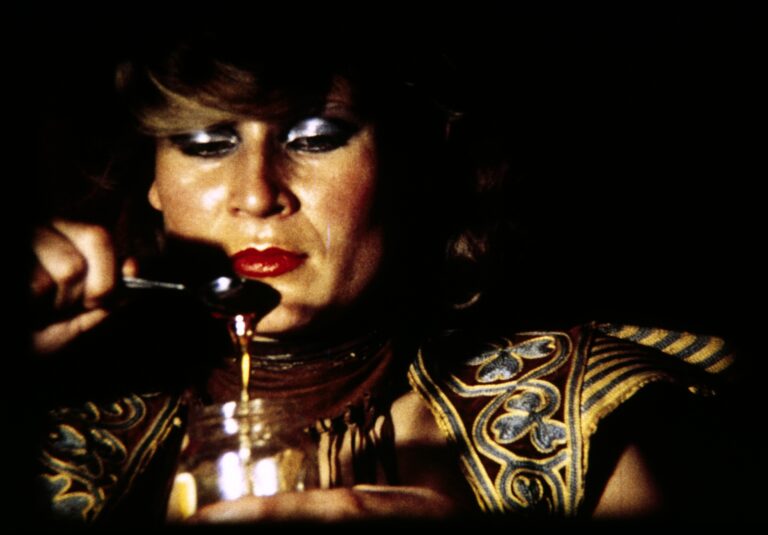
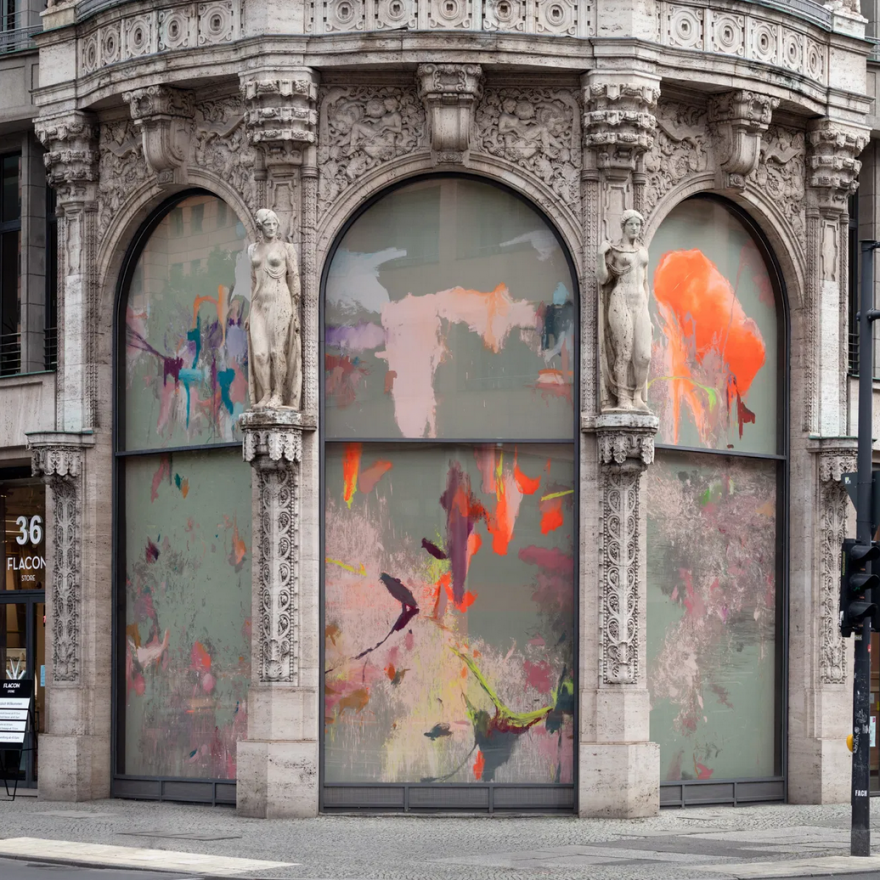
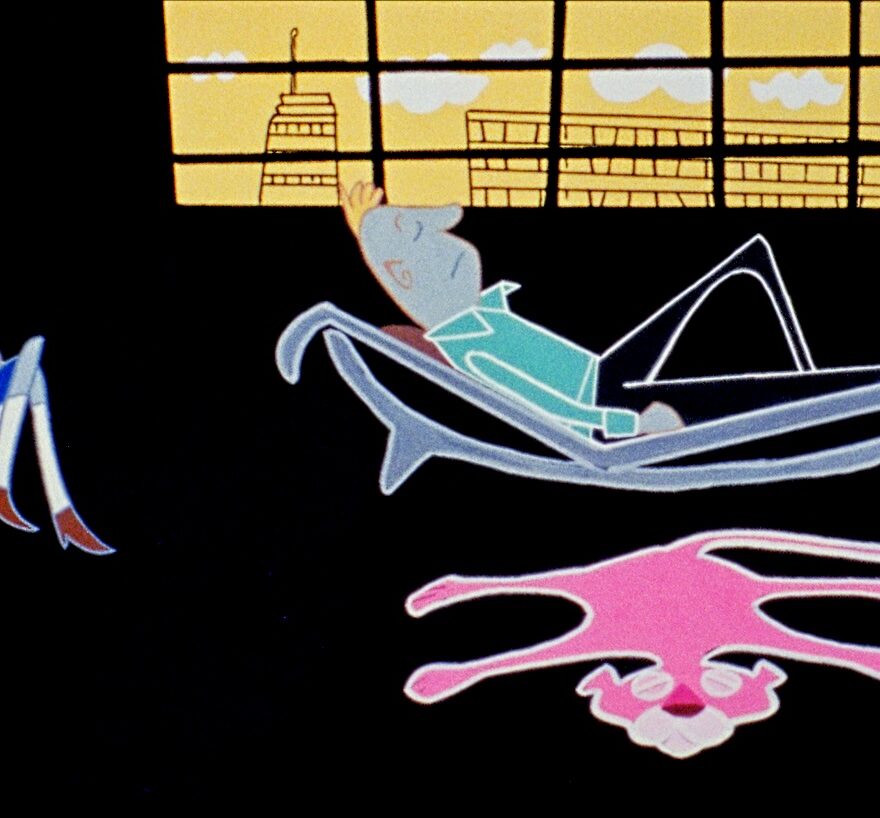
With Like a rubber rung on a ladder, Galerie Thomas Schulte presents a solo exhibition by Walid Raad in its street-facing Corner Space and adjacent Window Space. The two installations, which largely consist of fragmentary and composited wall-based elements, activate and visually connect interior and exterior.

Walid Raad,
“Arafat”, 2025

Courtesy: artist & Galerie Thomas Schulte

As in much of Raad’s practice, his artworks engage the stories and forms made possible by events of extreme violence.  These stories and forms are always a blend of the personal and collective, the found and the created. His long term art project, The Atlas Group (1989 – 2004) explored the history of car bombs in the Lebanese wars, kidnapping and captivity narratives, the renaming of Lebanese waterfalls, as well as the color coding of bullets by ammunition manufacturers, among others.

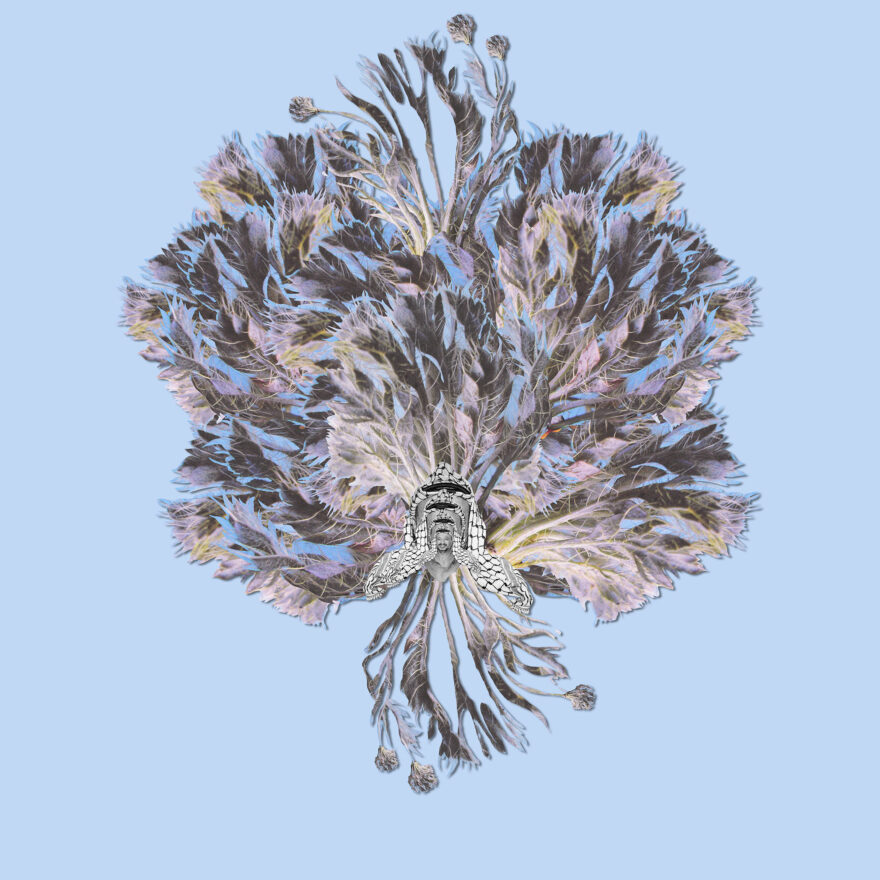
Better be watching the clouds again and again sprawls over two adjacent walls in the front window space. Though it may appear cheerful at first glance, its title hints at something ominous, an attempt to catch the unpredictable, a potential warning. The scattered flowers of different species and all varieties of color, with their own symbolic and geographic affiliations and displacements, form a landscape in bloom that slowly gives way to deeper ambiguity. The flowers frame the faces of dozens of black-and-white figures dressed in formal or military attire—highlighting and obscuring the presence of global political and military leaders of the last century. One narrative that has been associated with iterations of this work concerns Fadwa Hassoun, a fictional officer in the Lebanese Army trained as a botanist, who, during the war—an ongoing point of departure in Raad’s practice – assigned flowers as code names to politicians.

These identities, both doubled and concealed, are devoid of further context or indication. The colorless photographs, ostensibly belonging to the past yet enduring, contrast with the vibrancy and fragility of the flowers—fully alive, fully present. The photomontaged figures hover before the wall, casting varied shadows that create a gap, opening a space. Further shadows are inserted into the image, between head and flower, flower and body, adding an imaginary dimension that contributes to a heightened realism, while emphasizing a constructed nature. In juxtaposition with the flowers that disguise and subsume them, the politicians’ bodies become a kind of shadow themselves.

Walid Raad,
“Breznev”, 2025

Courtesy: artist & Galerie Thomas Schulte

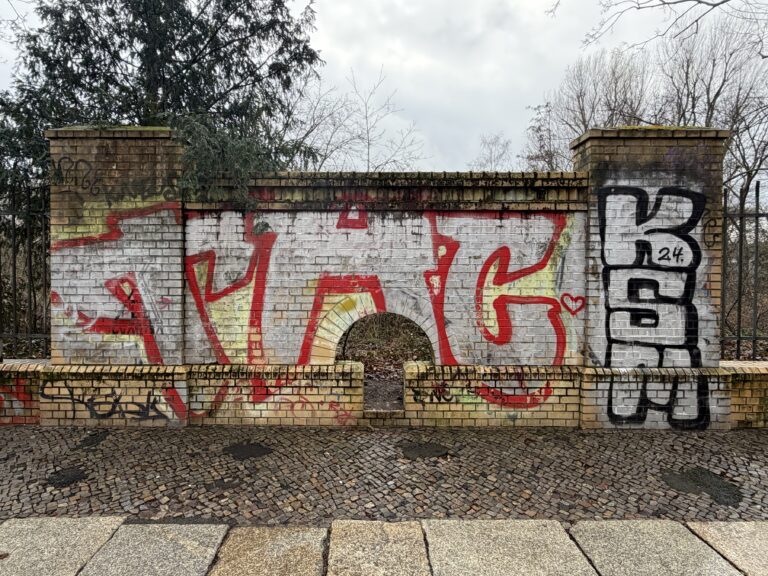
The installation in the Corner Space is similarly colorful and enlivened, as bursts of handwriting, like celebratory fireworks, at turns playful and threatening, are graffitied onto the walls. Through these apparently ephemeral, marginal gestures, Festival of (In)Gratitude: Love Notes brings the gallery’s interior to meet the external facades of the street outside. The writings in various scripts and languages, including English, Russian, Arabic, Hebrew, and French, disrupt and overlay one another. Referencing soldiers’ graffiti on bombs, the chaotic, layered inscriptions stage aggressive demonstrations of nationalist, imperialist, and violent sentiment that may slyly appear otherwise at times: signed with hearts and “xoxo”, with mention of gifts. In the embattled landscape contained within the frame of the gallery’s windows, bombs are simulated (“Boom, Boom”)—shouting loudly through an echoing silence. A central element within the installation is an overturned vintage Volkswagen Beetle—flipped on its back like a helpless insect, as though by excessive, explosive force. Cars and their engines have appeared elsewhere in Raad’s work in the context of war, engaging, for example, with the history of the car bomb during the Lebanese Wars. Here, the VW Beetle may also point to other references: its production as a military vehicle in Nazi Germany; its pop-cultural status as the “Love Bug”; the moniker “flying Volkswagens” given to the heavy artillery shells fired by the U.S. on Beirut in the 1980s.

Again and again in Raad’s work, a singular moment or reference is stretched, transformed and mutated through overlaps, gaps, and palimpsest. Here, 1983 Beirut folds into 2026 Beirut, Tehran, Gaza City, Tel Aviv, the Western Front, and the Eastern Front; the historical world into the natural world; “Run Romel Run” into “America Loves Israel.” How can we not be “out of breath yet”?

Text by Julianne Cordray

With special thanks to Sfeir-Semler Gallery for their kind cooperation.

Jonathan Lasker
Double Play

1 MAY until 6 JUN 2026
Opening – 1 MAY 2026, 6-9 pm

At Charlottenstrasse 24

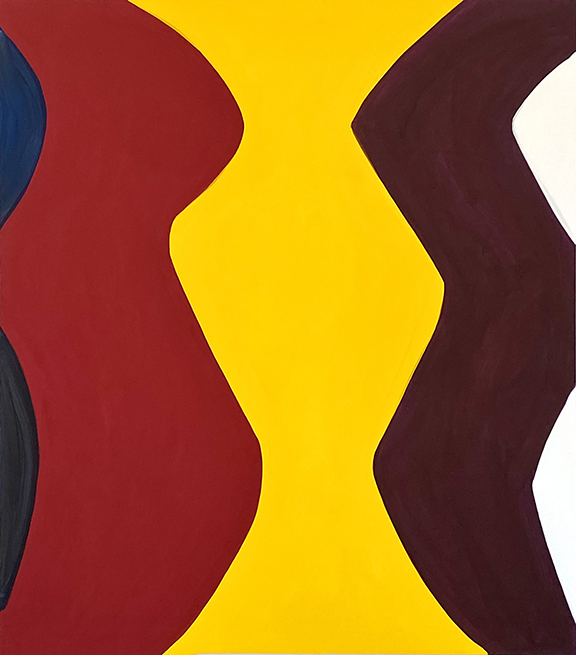
Jonathan Lasker’s paintings are pictures in every sense. From the start of his practice in the 1970s, between the emphatically non-representational, pared-down objecthood of Minimalism and an increasingly dematerialized, conceptual turn, his work grappled with contradiction in a redefining moment for painting. While studying at the California Institute of the Arts, he initiated an analytical engagement with the medium, posing painting as a question of picturing, both in its construction and perception – opening up a line of critical inquiry that continues to inform his work today.

Jonathan Lasker,
“Double Play”, 1987

Courtesy: artist & Galerie Thomas Schulte

Lasker’s response to the moment developed into the ‘80s through an expansion of pictorial space. Taking up the intuitive gestures and formal structures of abstraction, his paintings introduce perspective through implied recession. In layerings and interplays of color and form, illusionism is eluded, even as its references are used to generate space. Varied elements of pictorial representation collectively suggest a picture, at times conjuring landscapes or interiors, depths to be moved into, while standing for themselves. Through them, scenes are continuously restaged, positions restated. A ground for complex exchange is offered, a reappraisal of the nature of the picture, its function, its relation to the world and to us – situated somewhere between conceptual and concrete.

Doubles, dualities, and recurrences often run through Lasker’s decades-spanning painting practice. In Double Play, a solo exhibition presented at Galerie Thomas Schulte, this is brought to the fore in a selection of Lasker’s large, bold paintings from the mid to late 1980s, alongside recent works distilled to small formats on white grounds. They unfold through contrasts: in forms and their shadows, silhouettes, or negative spaces; they take shape in inversions, outlines, and amplifications. At times, more systematic doublings form a shaky field of tension, becoming geometric patterns that wobble or shift.

The early works featured here are rooted in a period in which Lasker’s self-reflexive, conceptual approach to painting began to coalesce. It was during the mid ‘80s that Lasker developed his ongoing working method of composing detailed painted oil studies, which are then transformed and scaled to the dimensions and medium of large paintings. More than a duplication of a single image, this deliberate process brings two into coexistence, each carrying marks of distinct origin — from the expressively intuitive to the precisely controlled. As the artist has described: “a mark in two speeds”.

Throughout, collections of marks and objects are assembled like vectors: graphical elements, quasi-biological carriers with the potential to mutate, or relational points in space. In Cultural Promiscuity (1986), visual repetition occurs primarily within the image’s patterned ground. The painting’s title gestures towards Lasker’s idiosyncratic visual vocabulary, which, through continual recursions, reinventions, and changing relations that escape direct reference, draws on contrasting styles of Modernist abstraction, traditional pictorial forms, and broader visual culture. Here, two yellow structures, like sets of double windows, stand at different depths within the image: one echoes the other, so close up in the foreground that its bottom edge is cut off. A similar form, more haphazardly composed of deep green lines, is multiplied to constitute the background from edge to edge, becoming smaller towards the top right corner, receding into space. The figural quality of this off-kilter, grid-like arrangement is heightened through its yellow counterparts, which in turn appear more structural. Another element occupying this space is a rough ‘H’ shape with two horizontal bars. It is made up of layered, clashing strokes in muddy primary colors. Perhaps more than the transparent forms, it seems to open into the ground, as something behind.

Even in synthesis, marks, lines, and colors retain a singular, movable demeanor, announced in intersections and overlaps as much as in gaps. Through repeated motions, shapes are created that in turn repeat, referring to each other and effectively back to themselves. In Return The Favor (1986), what could be seen as a figure ascending a staircase and casting its shadow on the adjacent wall, may alternatively seem like a puzzle piece that has picked up velocity as it leaves its space and slides forward in the picture plane. Against contrasting pink, the solid green shape oscillates between a mark of displacement, an opening to be returned to, or one of two concurrent states that only exist side by side.

Where the earlier works are characterized by floating movement and expansiveness in their layered, active grounds, the recent works presented here convey a sense of standing in place, even if restlessly so. The primary object in each is a lookalike of the others — perhaps a single character set in and responding to changing scenes. Nearly as large as the surfaces they occupy, like a zoomed-in view of a larger painting, the objects in these small works are more bounded in terms of space. At the same time, they press forward, as though about to step beyond the bright white space of the picture.

The elements in these later works have a particularly firm presence. They are set apart from the earlier paintings here, though, at times, we may sense their beginnings — in a certain combination of colors, a certain quality of marks. The central objects are iterations of a form that has become more fixed in recent years, though its white body and wavering black outlines call back to the loose forms of some of Lasker’s earliest paintings. Their figural appearance, vaguely resembling a head with a snout, like a cartoon character, is enhanced by an inclination to read the works as portraits. In the lower right of each, this form is partially hidden behind an impastoed object that builds the picture plane outward — cross-hatched lines in primary colors, a flattened bubble-gum slab that is also head-like, and a looping black scribble. These sets of figures bring the different objects that make up Lasker’s painterly world into close correspondence, like a one-on-one conversation.

A kind of double vision occurs: the central figure is defined by a dual black outline, or a line and its shadow — achieving a buzzing, exhilarating effect. Where lines entwine, crossing over or under each other and jutting out in places like barbed wire, another layer declares itself. The space that opens between them may belong to the figure or to the ground — a subject that doubles as an object, and vice versa. In the exhibition’s titular work, Double Play (1987), a form that could be a land mass seems to face its own partially hidden reflection, as though peeking outward through the slats of window blinds. Perhaps it offers a view to an inverse world — closely formed yet distantly held by the act of looking. Even so, the connection between the two proves a porous one, like a being in two places at once.

Text by Julianne Cordray

José Montealegre
Drastic Measures

1 MAY until 6 JUN 2026
Opening – 1 MAY 2026, 6-9 pm

At Potsdamer Strasse 81b

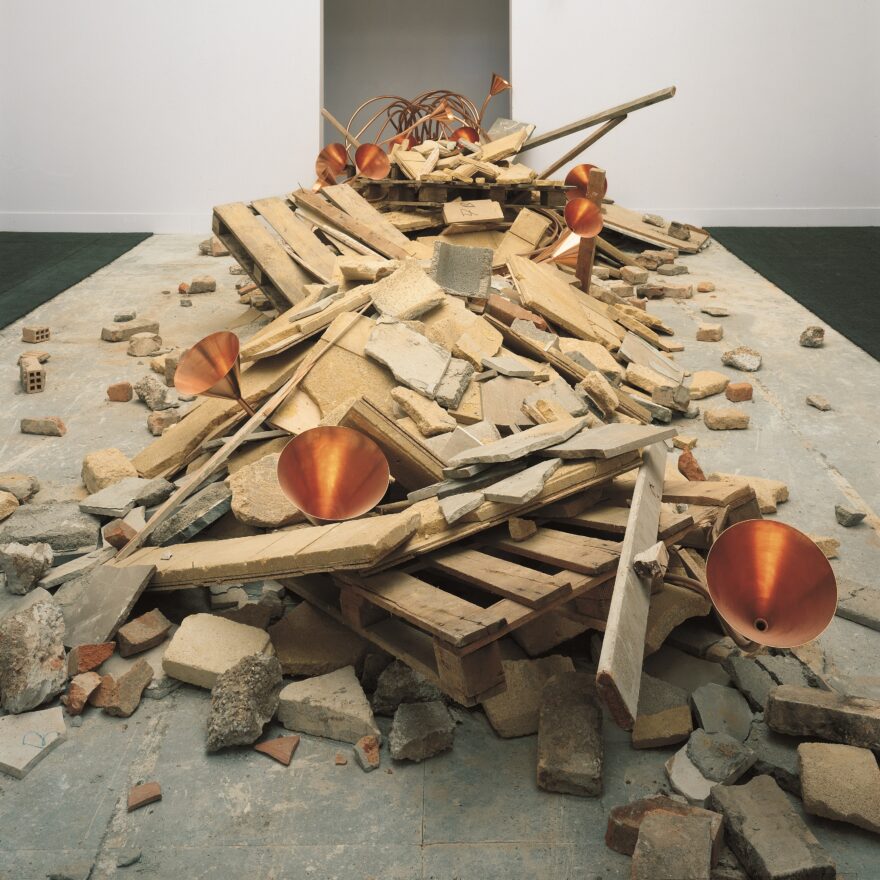
Through a close interrelation between material, craft, and corporality, José Montealegre’s work probes knowledge systems and canonical histories to draw alternative narrative references out of their gaps and traces. His second solo exhibition at Galerie Thomas Schulte, Drastic Measures, presents sculptures and works on paper, which, through varied materials and their corresponding processes, carry remnants and insinuations of force. The works collectively reflect on historical instruments of power and authority, intervening in and destabilizing these persisting structures through the simulation and reproduction of their means.

Konrad Kyeser,
“Bellifortis”

Objects are positioned precariously, composed of fragile vestiges, or placed low to the ground, hovering slightly. The repetitions and transfers between them engage the seductive power of art, forging a connection to strategies and narratives around protection and threat. Through weaponry and armor, displays of strength or their surrounding structures, art’s role in constructing spaces is called into question—both holding protective capacity, as a potential refuge, and acting in complicity by giving shape to unfolding systems of power.

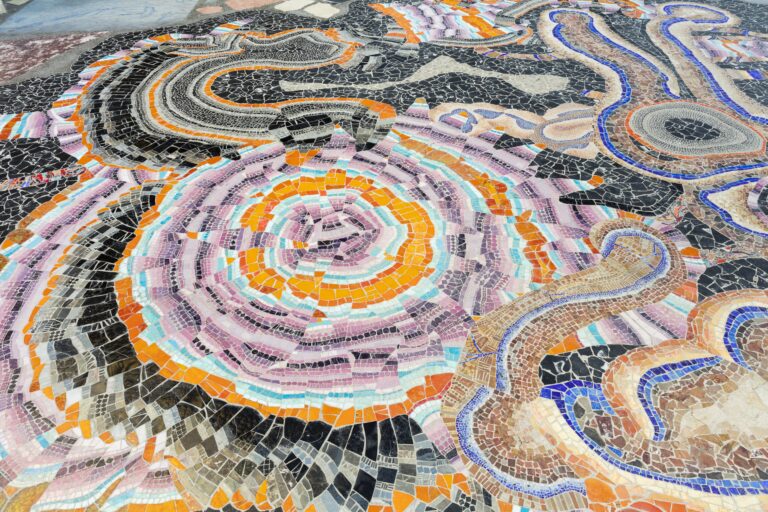
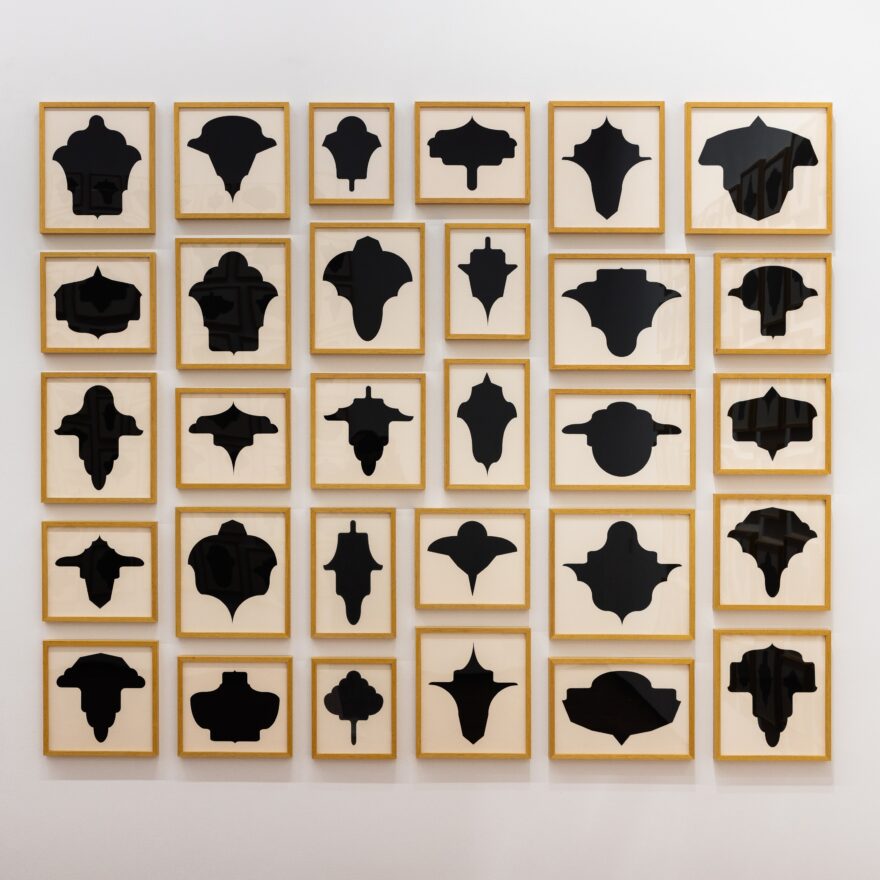
In two series of works mounted to the wall, such duality is brought to the fore through the act of dismantling embedded in their creation. With the titles Shatterfields and Break Lattices, Montealegre introduces two words into his artistic vocabulary: a break and a shatter. A break is the intentional separation of material—by scoring and then snapping glass sheets, the material is coaxed into breaking in a specific way. On the other hand, a shatter is a material separation along its own internal fault lines. The two diverge in the specific gesture of infliction and the shape of its impact. The square ceramic tiles in Shatterfields are broken and rearranged through a spontaneous act, like a sudden drop, differing in each instance but always generating unpredictable, irregular cracks. The pieces are then reassembled onto a rectangular ground, but do not fit back together. A wholly new order is formed of overlaps, gaps, and jagged edges. Break Lattices undergo a highly controlled process of precisely measured motions that push the material of glass to its limits. The translucent sheets retain their original shape, size, and composition, even as methodically drawn cuts reconstitute them as grids. Imposed fault lines are negotiated against the natural structure of the material, ensuring that it doesn’t fully splinter into unwieldy shards. Breaking is systematic—an exertion of pressure that allows fissure, but only to an enforceable extent.

Finely controlled lines produced by force and repetitive motion recur in the works on paper. Montealegre uses a technique of projection—a process of transferring drawings to the wall in preparation for fresco painting. Here, the drawings are encased in glass with molten tin edges, contained, while giving the impression of being part of the wall, leaving traces and shadows. The technique involves hammering powdered pigment through a stencil, composing images in tentative dotted lines, like perforations—as though ready to be torn. Among the repeating and melding motifs are illustrations from historical manuscripts, including plants, or military technology from Bellifortis (Strong in War)—an early manual on the art of war—alongside images of the artist’s own invention. One small image depicts a pattern of geometric forms that fan outward like a flower, or a pinwheel, the dotted lines sharpening its blades into a serrated edge.

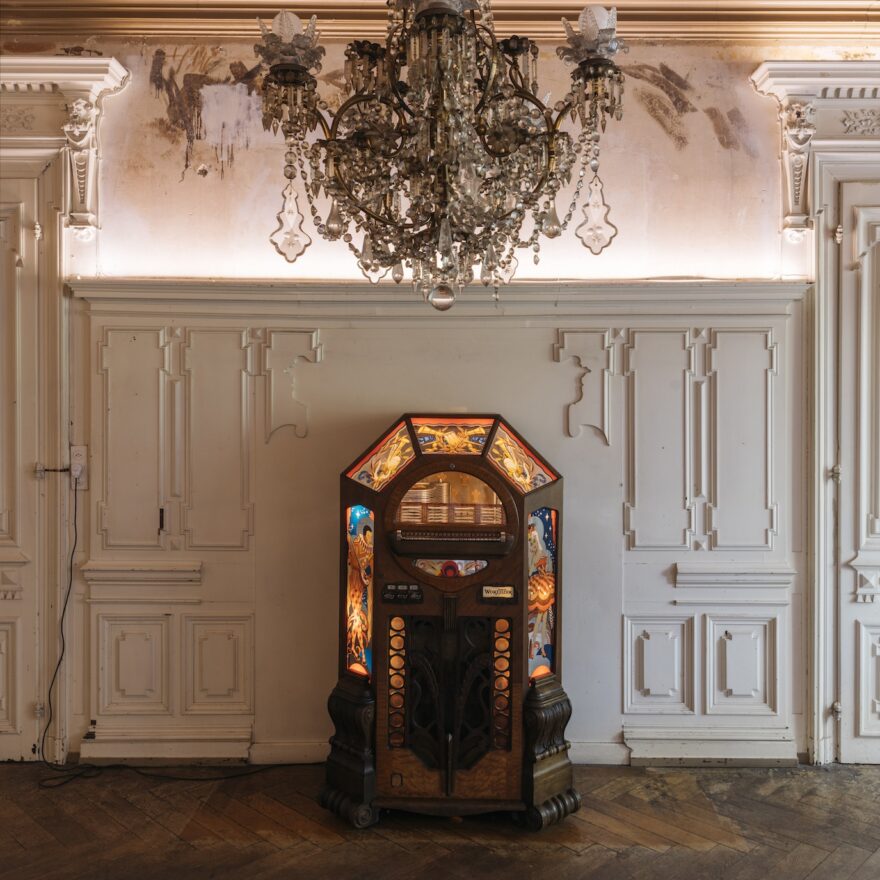
A subtle visual connection materializes in the sharp edges of another work: a bust of armor. The hammered steel sheets, measured to the artist’s own body, suggest a potentially dangerous confinement. Hollowed out, it is left headless as it assumes an empty posture—arms raised, holding a flute as though to play it, a flail hanging from its tip. It recalls the story of the Pied Piper of Hamelin, who, upon the town’s refusal to pay for his musical services as promised, used his magical pipe to lure away its children. Dating back to the medieval period, what has become a widespread legend and reference point in art and literature, is thought to harbor truths of an actual historical event—possibly a metaphor for death or an allusion to colonization. Here, the flute is rendered powerless, a simulacrum, ​​whose futility is compounded by the figure’s absence of a head, at the same time as it enacts a kind of material seduction. In another work, a faint procession of small skeletal figures, dried white clay shaped to their wire frames, seems to march along to this imperceptible tune.

Montealegre frequently interjects fictionalized stories to undermine the authority of those that have been prescribed or instilled with authenticity, including his own. Here, he destroys tiles from his past sculptural installations, reusing and transforming their fragments in altered patterns and spatial orientations. Elsewhere, a historical military instrument of corporal punishment, a cat o’ nine tails, takes shape from materials and elements typically found in his studio. A 15th-century-style copper armor, again approximating the dimensions of his body, lies horizontally, close to the ground. Heart-shaped locks holding some of the armor’s plates together add to a sense of claustrophobic constriction, while amplifying its decorative or symbolic presence. Now only a shell, cast off, it is held together by remnants of another story. What is left is a ghostly ruin, or, perhaps, a counter proposal—a structure still to be fleshed out.

Text by Julianne Cordray

GALERIE THOMAS SCHULTE
Charlottenstrasse 24
10117 Berlin

+49 (0) 30 2060 8990
Galerie Thomas Schulte
Potsdamer Strasse 81B,
2nd floor,
10785 Berlin
READ ON
GALERIE THOMAS SCHULTE
Bikini on Mars
by Michael Müller
GALERIE THOMAS SCHULTE
Walking into the distance
beyond imagination
GALERIE THOMAS SCHULTE
Rebecca Horn
Die Neuerscheinung
GALERIE THOMAS SCHULTE
Portrait
Galerie Thomas Schulte
GALERIE THOMAS SCHULTE
In conversation with...
Richard Deacon
GALERIE THOMAS SCHULTE
In conversation ...
Jonas Weichsel & Michael Stoeber
GALERIE THOMAS SCHULTE
Gallery Night 2024
Rebecca Horn, Allan McCollum, Cosima zu Knyphausen
Gallery Weekend Berlin 2025
Galerie Thomas Schulte presents
Lena Henke; Jonas Weichsel; Marina Adams
Artists' Insights
Studio visit with Marina Adams, Lena Henke & Jonas Weichsel by Galerie Thomas Schulte
GALERIE THOMAS SCHULTE
Julian Irlinger; Dan Walsh
GALERIE THOMAS SCHULTE
James Gregory Atkinson
Gallery Weekend Berlin 2026
Galerie Thomas Schulte presents
Walid Raad; Jonathan Lasker; José Montealegre
Subscribe to newsletter
Yes, I would like to receive the newsletter of Gallery Weekend Berlin.
Information on the revocation and processing of data is provided in our privacy notice.
Ich möchte den Newsletter bitte auf Deutsch lesen. / I would like to receive the newsletter in German.
  • PRESS
  • Archive
  • Contact
  • Instagram
  • Pinterest
  • Imprint
  • Privacy Policy
menu icon