Marieta Chirulescu
1 MAY until 30 MAY 2026
Opening – 1 MAY 2026, 6-9 pm
On the surface of it Marieta Chirulescu is a materialist. Although her work incorporates the inkjet printing of scanned images, she never uses it to open windows onto other planes, other places. Nor does she have – or has she ever had – much truck with the digital evangelism of many of her contemporaries. She emerged in the late 2000s when this technique was seen as a state-of-the-art panacea, rendering painting newly relevant for the information age.
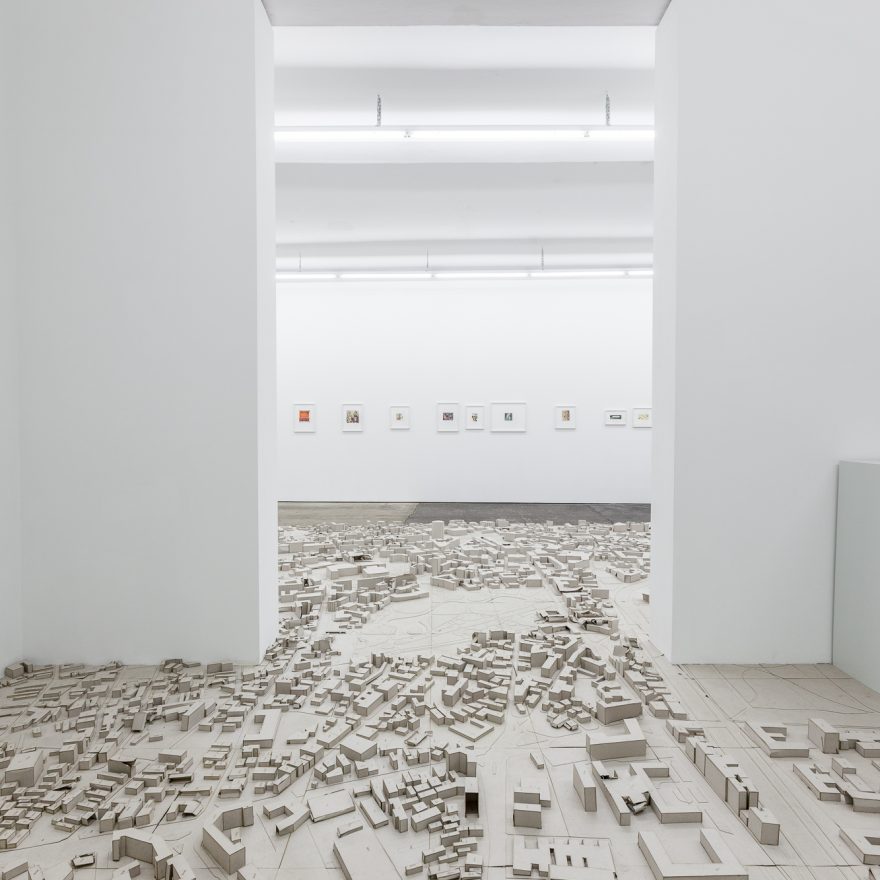
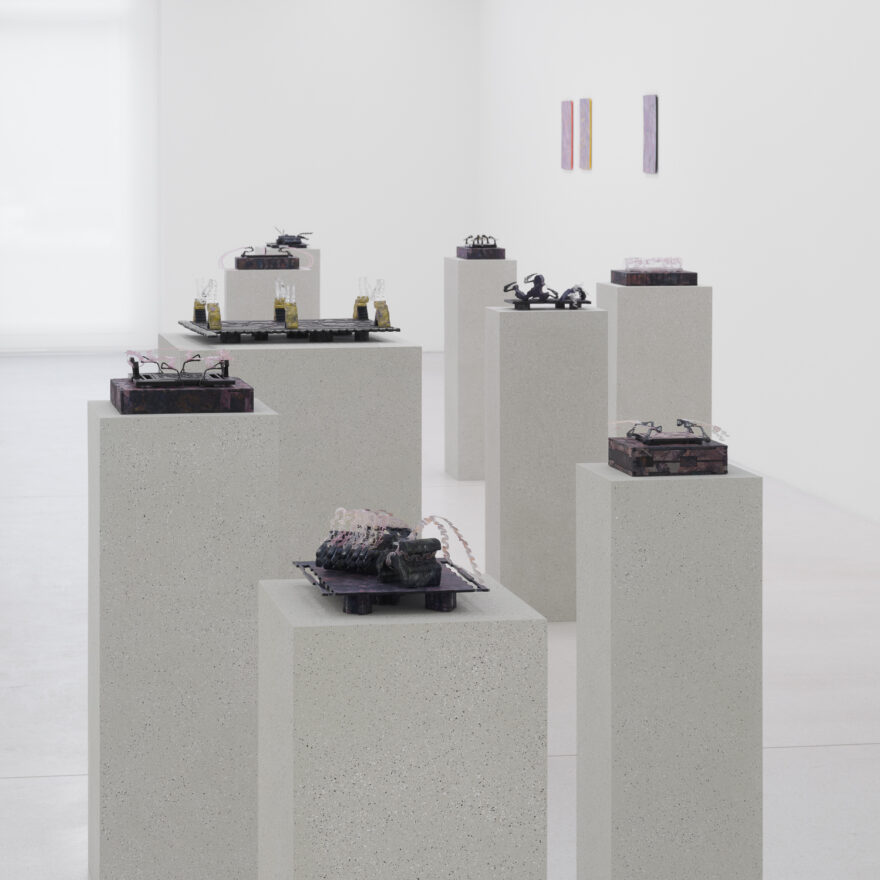
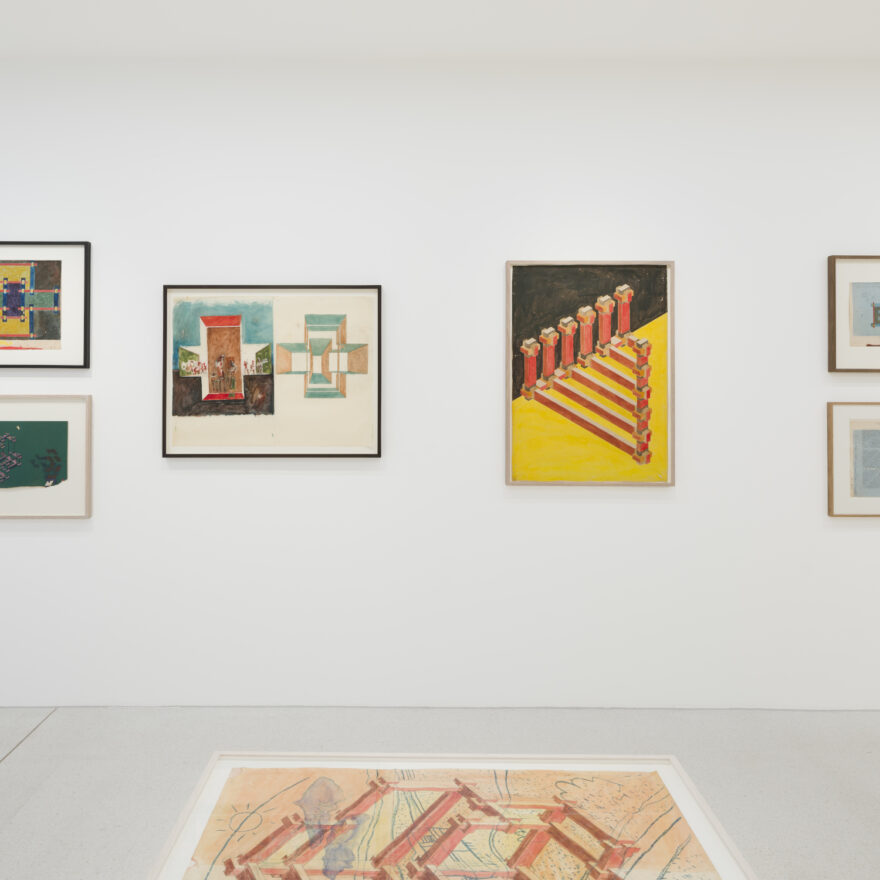
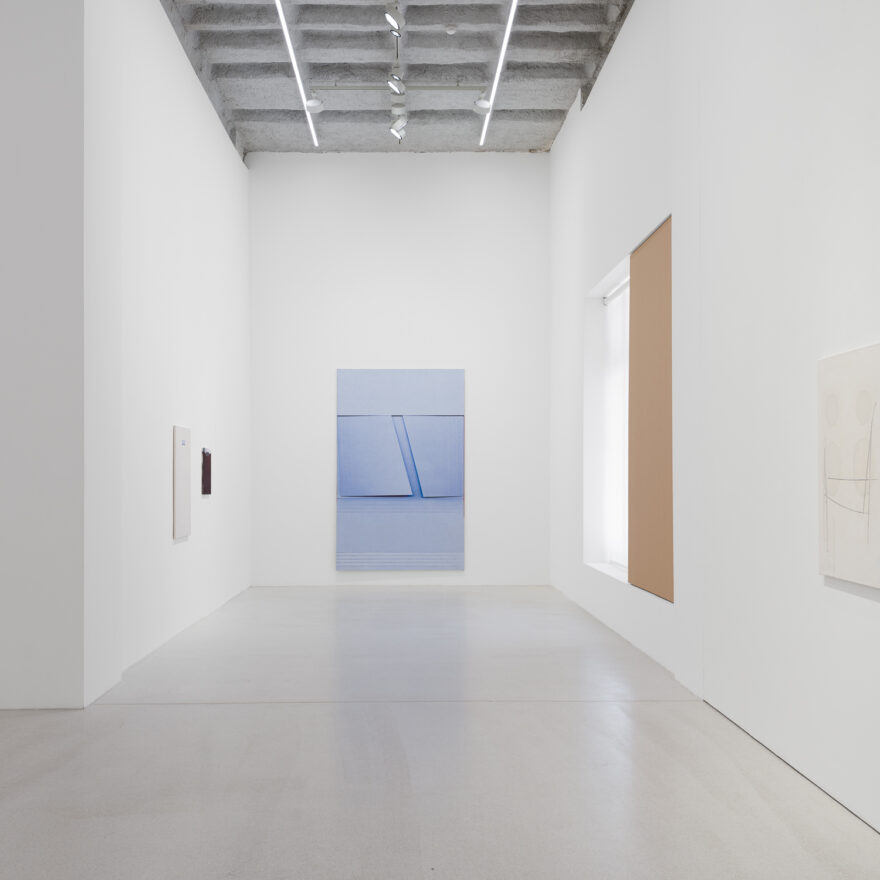
Exhibition view Marieta Chirulescu,
Galeria Plan B, Berlin 2026
Photo: Trevor Good
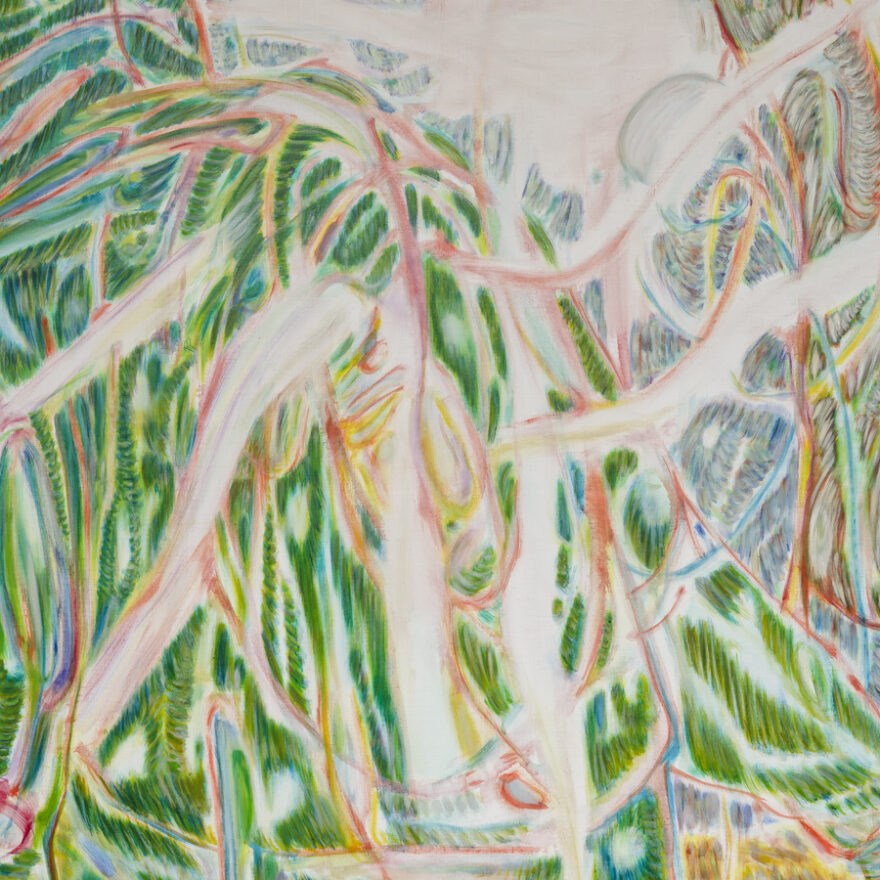
Now that its promise has been superseded by that of other, more up-to-date technologies, the extent to which the photographic component of her work is assimilated by painting and fabric collage is less likely to be obscured by the glamour of the printing technique in its own right. We can see more clearly that what is what in the mix has always been difficult to distinguish. Images are arranged as bricolage; the bricolage of printed fabric creates images. Photography is used to produce monochrome painting; monochrome painting to occlude photographic illusionism. A traditional pin-striped shirt fabric, sliced up finely, becomes drawing, liberated from the manual input a pencilled line would imply. When that fabric is scanned and printed onto canvas, there is a humorous relish of the tautology of turning fabric (canvas) into an image of fabric, and having clothing ‘clothe’ a painting.
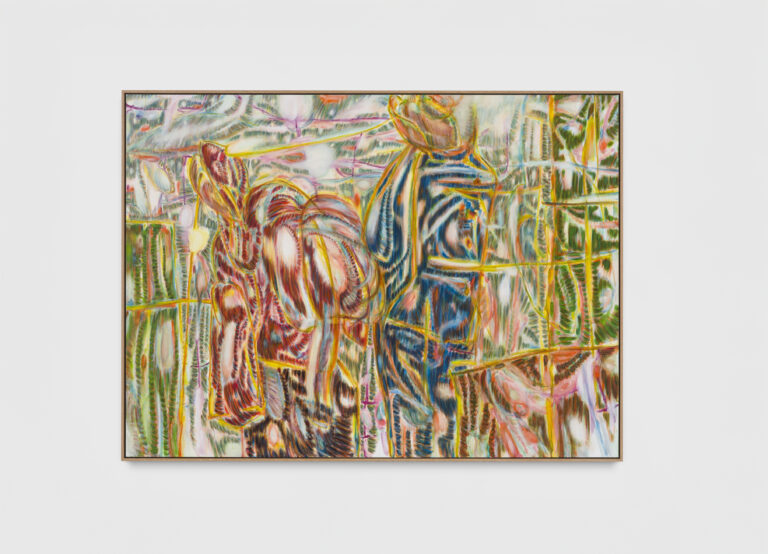
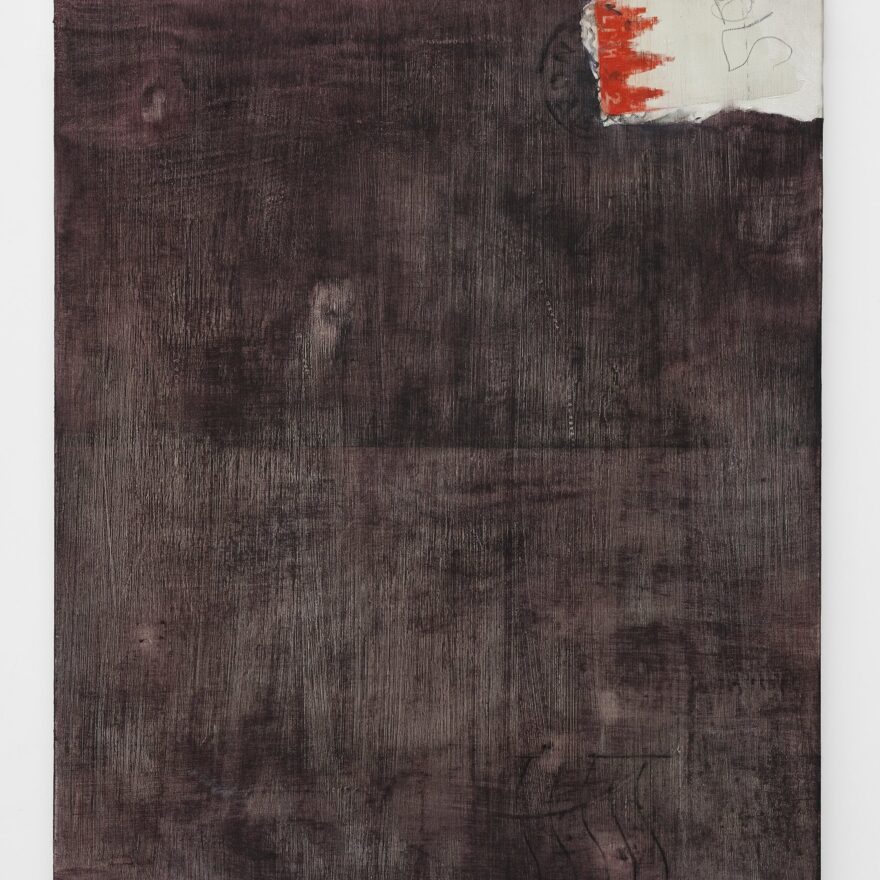
Marieta Chirulescu
Untitled, 2026
UV print and gesso on canvas
260 x 165 cm
Photo: Trevor Good
Courtesy the artist and Plan B Cluj, Berlin
Such double entendres are cultivated, not as virtuoso tricks, but with an acknowledgement of the perplexity of appearances and a self-deprecation that wishes to avoid having any constituent medium flaunt its contribution for its own sake. Not only is it hard to tell what is there from what is pictured as being there, the distinction resolves, in all instances, into the materiality of a surface. As much as this consists of explicit decisions, it also includes the contingencies and glitches that arise in executing them; all the seemingly absent-minded traces Chirulescu leaves of the unpredictable path that has led her to particular conclusions. Even the odd signs, like nascent letters – Ds or dashes – which recently recur, assume a structural role as lesions cut into fabric, exposing another surface beneath it as part of the same surface.
The application often begins on the back sides of unusually thin cotton supports – translucent as parchment – which have been partially painted to produce an impression of partial transparency on the front. It may take years to get from that backing to the final layer, interspersed with fallow periods of subconscious gestation, of waiting for something to shift and something else to become possible.
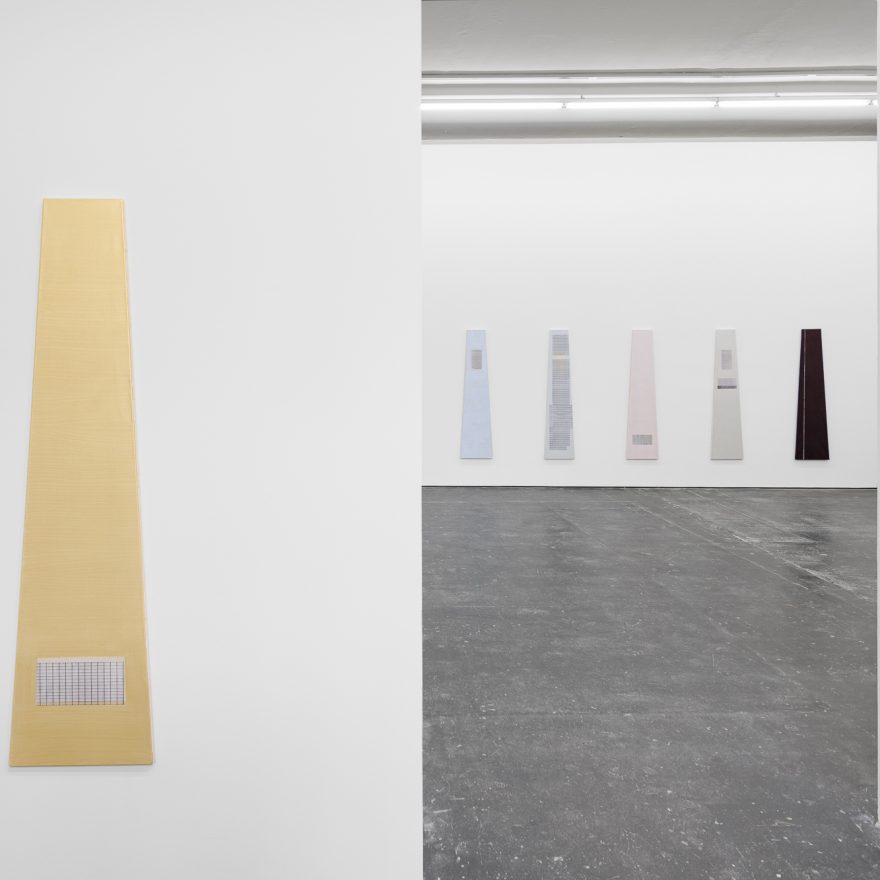
Exhibition view Marieta Chirulescu,
Galeria Plan B, Berlin 2026
Photo: Trevor Good
Marieta Chirulescu
Untitled, 2026
UV print and gesso on canvas
260 x 170 cm
Photo: Trevor Good
Courtesy the artist and Plan B Cluj, Berlin
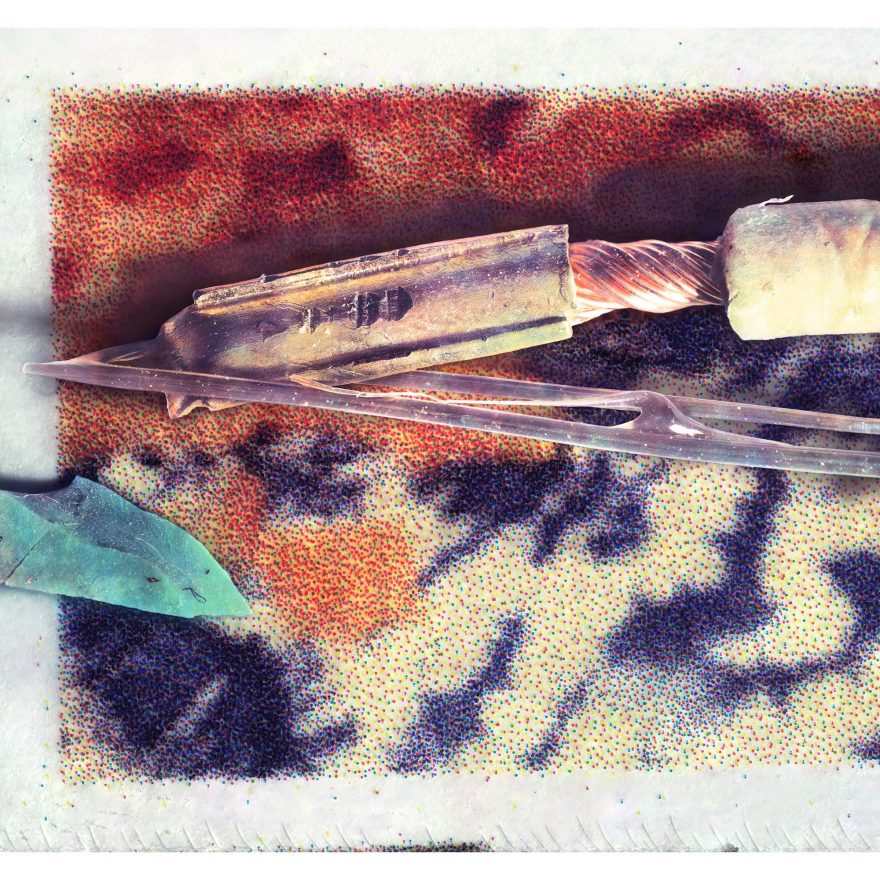
Marieta Chirulescu
Building, 2026
inkjet print, textile, silk on canvas
50 x 34 cm
Photo: Trevor Good
Courtesy the artist and Plan B Cluj, Berlin
But despite the step-by-step accretion of materials, these are not recipe paintings. The alchemical result of their process is that rather than leaving us to parse its constituent elements, and enumerate their components, at the last moment it abstracts itself. The ambiguity between media turns out to be a means to this end, as the canvas’s translucent thinness is also a clue, in that it combines the fulcrum of a support – the definition of a painting’s physical surface – with a hint of its function as a window, but onto nothing but the wall on which the work is hung. Surface is released from its literalness, but without divesting itself of its essential materiality to assume the condition of an image.
Chirulescu could be engaged in an inquiry into how pictures disclose what they do, without letting what is being disclosed distract us from a focus on the act of disclosure itself. The implication is that appearances consist of some unanalysable synthesis of projection and reception, and that this corresponds to the essential ambivalence of painterly ontology. Contemporary painting, on the other hand, tends to veer one way or other: into the self-concealment of illusionism or the bric-a-brac of formalism, with the sub-category of abstract painting as a series of pedantically specialised practices, each a litany of formal ticks that pride themselves on the niche they establish.
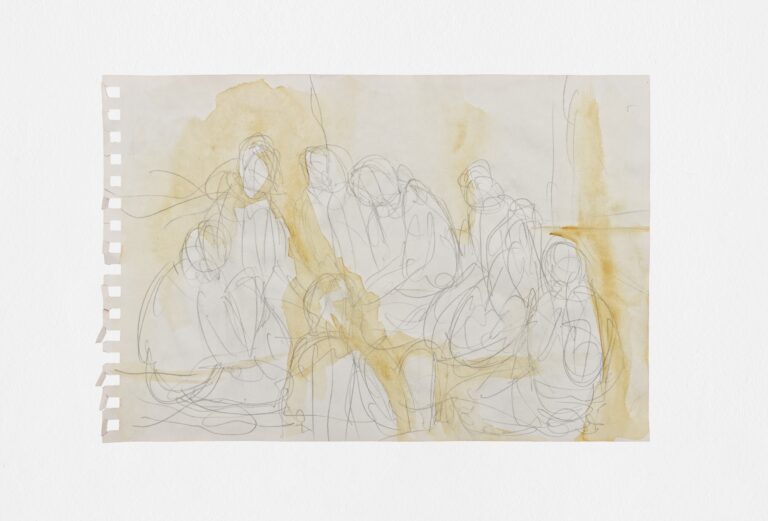
Marieta Chirulescu
Untitled, 2026
gesso and textile on canvas
95 x 66 cm
Photo: Trevor Good
Courtesy the artist and Plan B Cluj, Berlin
Here we have an alternative, more specific definition of abstraction in painting. To abstract something from something else is literally to remove it into a less material realm, conditional on projections of various sorts. The infinitesimal traces of making, which constitute Chirulescu’s works, do not allow us to escape their vehicles, but to intuit the possibility of doing so. They are traps that turn seeing into seeing-into – if never quite into seeing-as – as if laid by an inveterate sceptic, who refuses to let herself believe that even that first step is possible, but never gives up on the hope of taking it.
Mark Prince