

Babette Semmer
Gentle Parenting
12 JUN until 24 JUL 2026
Exploring complex social topographies of everyday violence and domesticity, Semmer constructs atmospherically charged paintings that point toward the threshold between threat and empathy. She synthesizes a wide array of motifs and sources–from archival material, to film stills, AIgenerated imagery, and personal photographs–, and transforms everyday situations into stages of suspense, assembling fictional landscapes filled with ambiguity and open-ended associations.
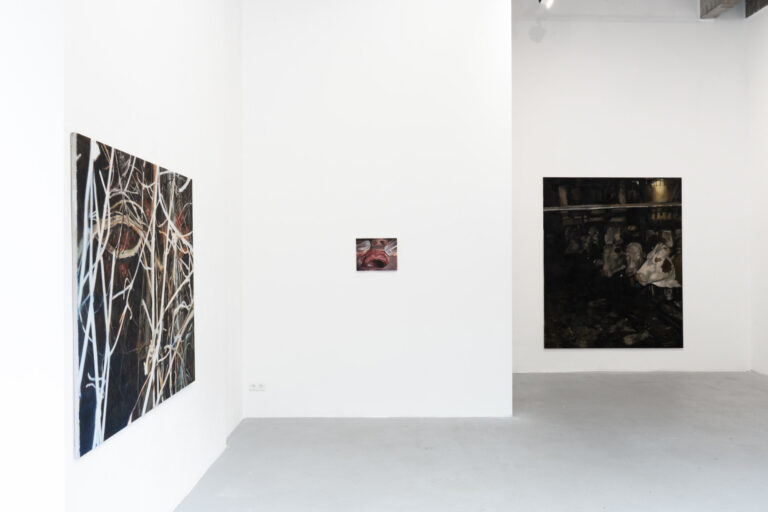
Installation view
Babette Semmer,
Gentle Parenting, 2026.
Courtesy of the artist and Klemm’s, Berlin. Photograph: Charlotte Walter
Semmer’s interest in images is rooted in their capacity to both convey and conceal. Across her vast landscape of spaces and objects anonymous and biographical references coexist, all formally unified through her distinctive style of painting. Sand is a constant presence in her compositions—a conceptual device that not only enables her to move beyond the conventions of both photography and painting, but also brings together her diverse visual worlds within a hazy, atmospheric terrain where mood and affect come to the foreground.
In doing so, she explores questions of authenticity through atmospherically charged imagery. Ultimately, Semmer plays with the notion of familiarity, as she portrays and seizes relatable, everyday objects and scenarios into the fictional realm. She stresses, speculates, reveals hidden gestures underneath banality: children in their rooms, cows in a stall, shrubs at night in the park. Banality as mystery means: everything that one recognizes is suddenly undecipherable.
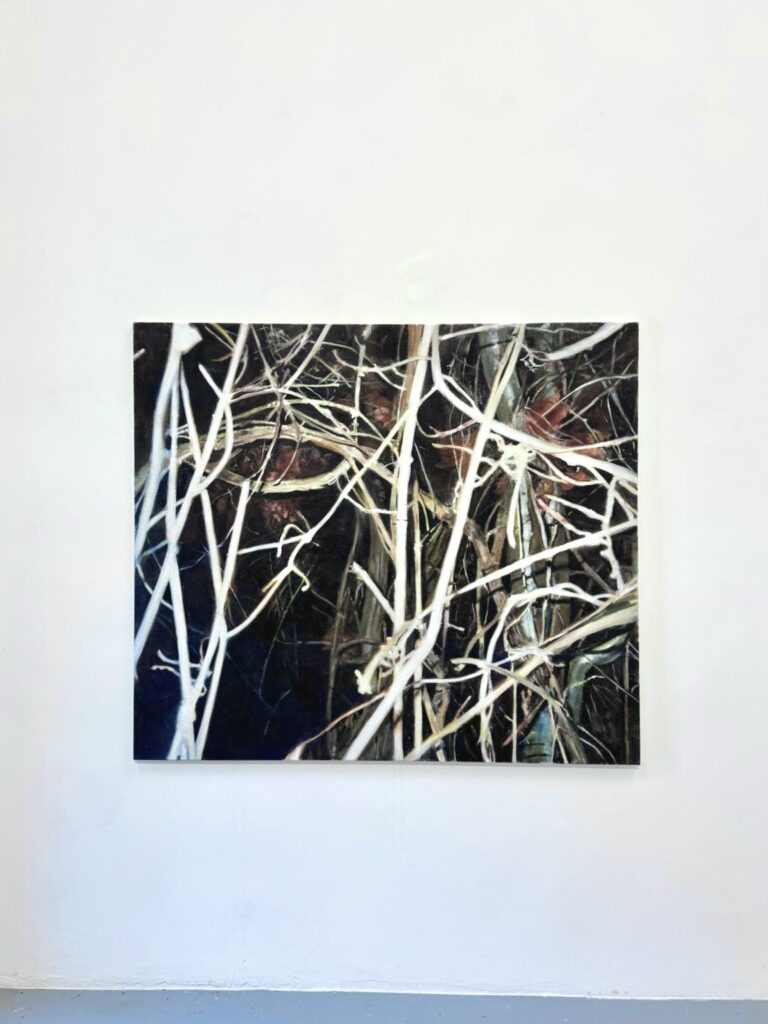
Babette Semmer,
‘Dickicht (Katzbach)’, 2026.
Oil and sand on canvas,
130 x 150 cm.
Courtesy of the artist and Klemm’s, Berlin.
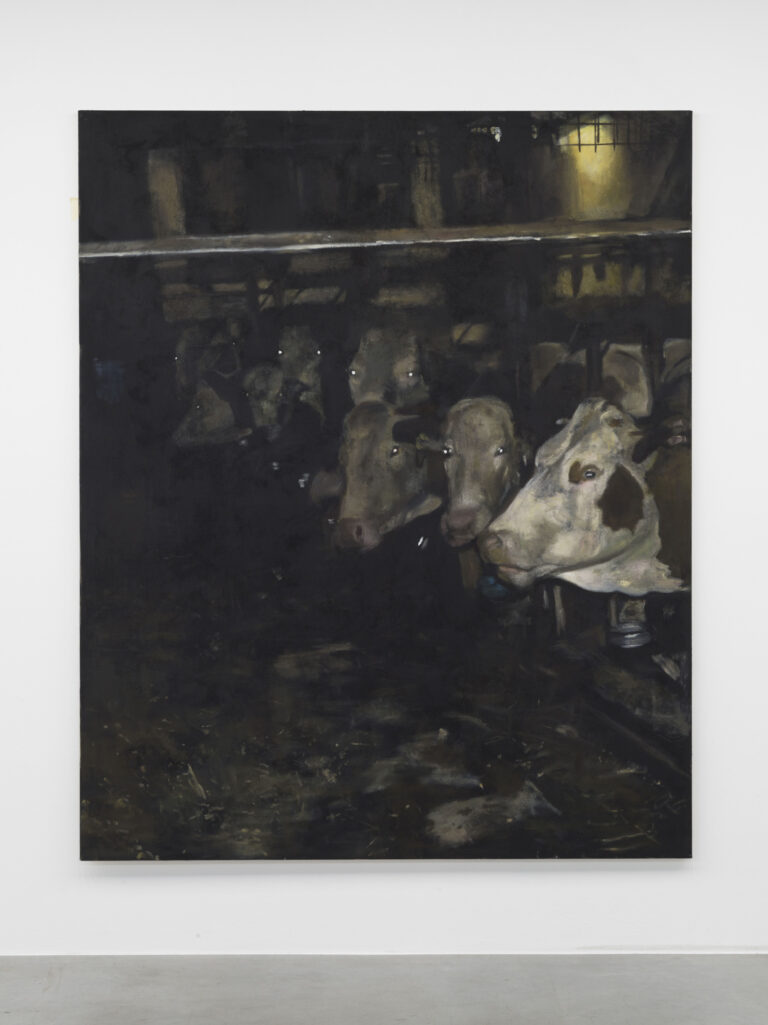
Babette Semmer,
‘Stall’, 2025.
Oil and sand on canvas,
220 x 180 cm.
Courtesy of the artist and Klemm’s, Berlin.
May an abstract interweaving of lines that criss-cross, overlap and intertwine be the proof of an accident, maybe a crime? May it reveal a situation of distress where the flash was used as a cry for help? Or may the flash only have been used as a torch? Above all, the question is how recognition–and especially image recognition in an era of image overload–may turn into a speculative exercise. By juxtaposing disparate visual worlds, Semmer brings to the surface the threshold between the uncanny and the domestic, forming a field of tension in which placid scenes distort toward invocation and enigma.
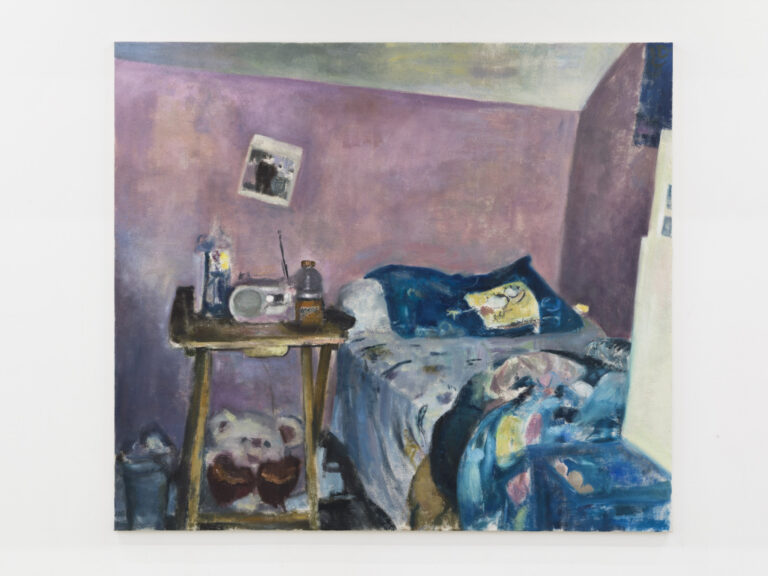
Babette Semmer,
‘Whenever / Whatever’, 2025.
Oil and sand on canvas,
140 x 160 cm.
Courtesy of the artist and Klemm’s, Berlin.
Babette Semmer (*1989, London) lives and works in Berlin. She studied at the Slade School of Fine Art and the Städelschule. Semmer has received numerous awards and grants, including the Berlin Senate’s Fine Art Working Grant in 2024. She participated in the Goldrausch Künstlerinnenprojekt in 2022. Recent solo exhibitions include Oldenburger Kunstverein (2026), and Studio Hanniball, Berlin (2025). Selected group exhibitions include Spoiler Zone, Berlin (2026); Volker Diehl and Neuer Berliner Kunstverein (2025); Parfümerie, Frankfurt, and Gruppe Motto, Hamburg (2024). Her work has also previsouly been shown at Bonner Kunstverein, Städelmuseum, Museum Angewandte Kunst Frankfurt, Turf Projects and Zona Mista, among others.
Fiona Mackay
40’s
12 JUN until 24 JUL 2026
Turning 40 often inaugurates a time of reckoning and reassessment. Existential questions may arise for the first time or return with growing force. Goals and desires may have been achieved, deferred, abandoned, or simply paused. Not yet old, but no longer that young, attention turns to understanding what energy remains, what has changed, and what can be revitalized. A two-part exhibition by Fiona Mackay, 40’s presents two bodies of work ranging from painting to various printmaking and coloration techniques. The first part, Roses, focuses on the male body, examining not only its erotic charge but also its role as a site of vanity, rivalry, and social performance, while the second, 40’s presents a series shaped by the unstable life stage of the early forties—a condition heavily informed by popular culture, clichés, and social expectations.
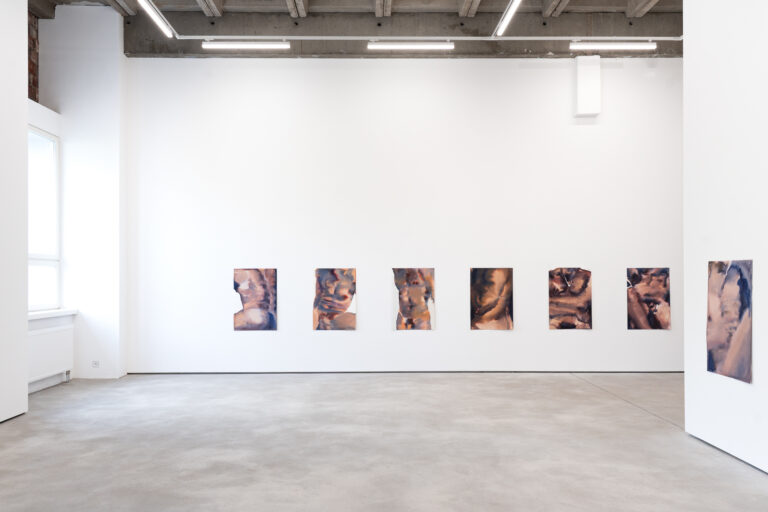
Installation view
Fiona Mackay,
40’s, 2026.
Courtesy of the artist and Klemm’s, Berlin. Photograph: Charlotte Walter
40’s deepens Mackay’s long standing engagement with longing, femininity, and desire, which her work embodies in the form of continual oscillation. Across both series, desire is a recurring focus, which is addressed as a permanent state, an all-encompassing dimension that does not need to be overcome but rather inhabited and filled with life. 40’s opens onto this complex horizon through drift and instability, swinging between figuration and abstraction, urgency and hesitation, assertion and withdrawal. These poles are neither a metaphor nor a mere decorative motif. Rather than illustrating them, Mackay approaches them almost structurally, prying open liminal spaces in which viewers are invited to immerse in something that never fully reveals itself.
As one of the defining painters of her generation, Fiona Mackay has emerged as a vital voice in contemporary art through her unflinching and deeply perceptive investigations of lust and female desire while embracing or distorting notions of cliché and bad taste. The works in 40’s stand in conscious dialogue with a long tradition of painters who have brought desire, the body, and emotional interiority into the foreground of their practice. This is exactly Mackay’s itinerary—she explores what it means to desire as a woman in a world that has historically managed, instrumentalized, or romanticized female desire, although she does not seek to counter this legacy with alternative concepts. Instead, her painting subverts stereotypes and projections by treating desire simply as what it is: a genuine, complete, and sovereign inner experience—complex, contradictory, vulnerable, and at times unabashedly trashy.
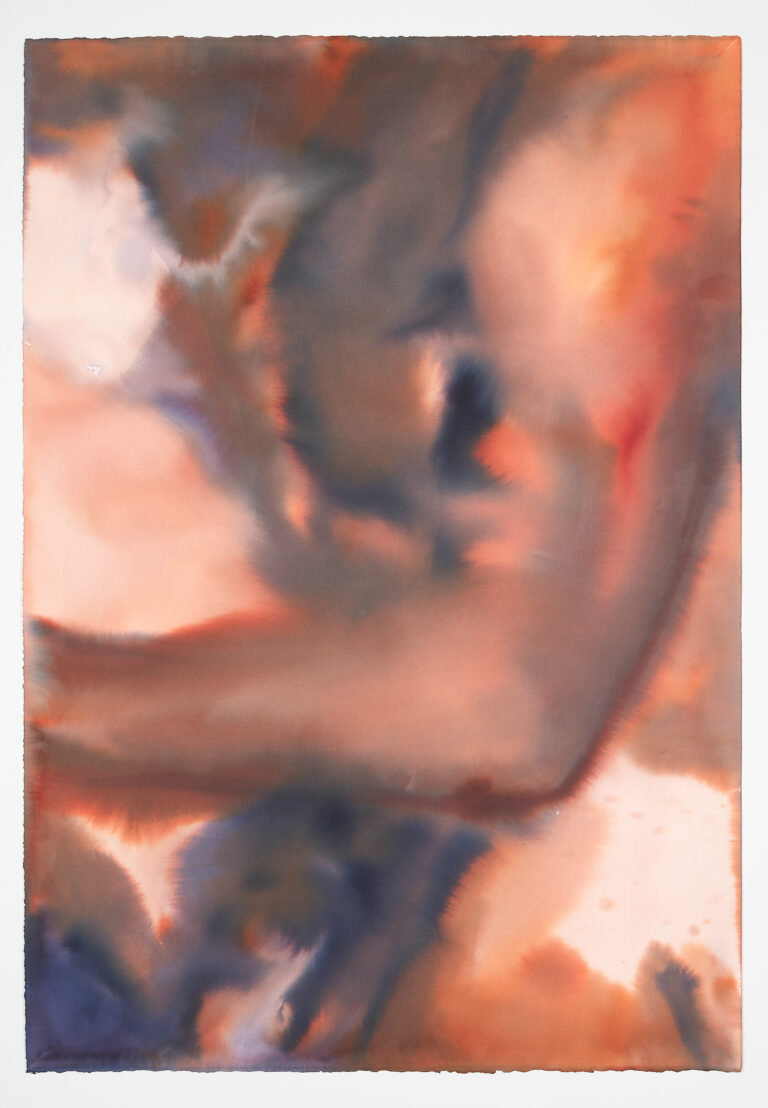
Fiona Mackay,
‘Rose #12, 2025.
Procion MX dye on 270 g BFK rives white velin paper.
90.5 x 62.5 cm.
Courtesy of the artist and Klemm’s, Berlin. Photograph: Charlotte Walter
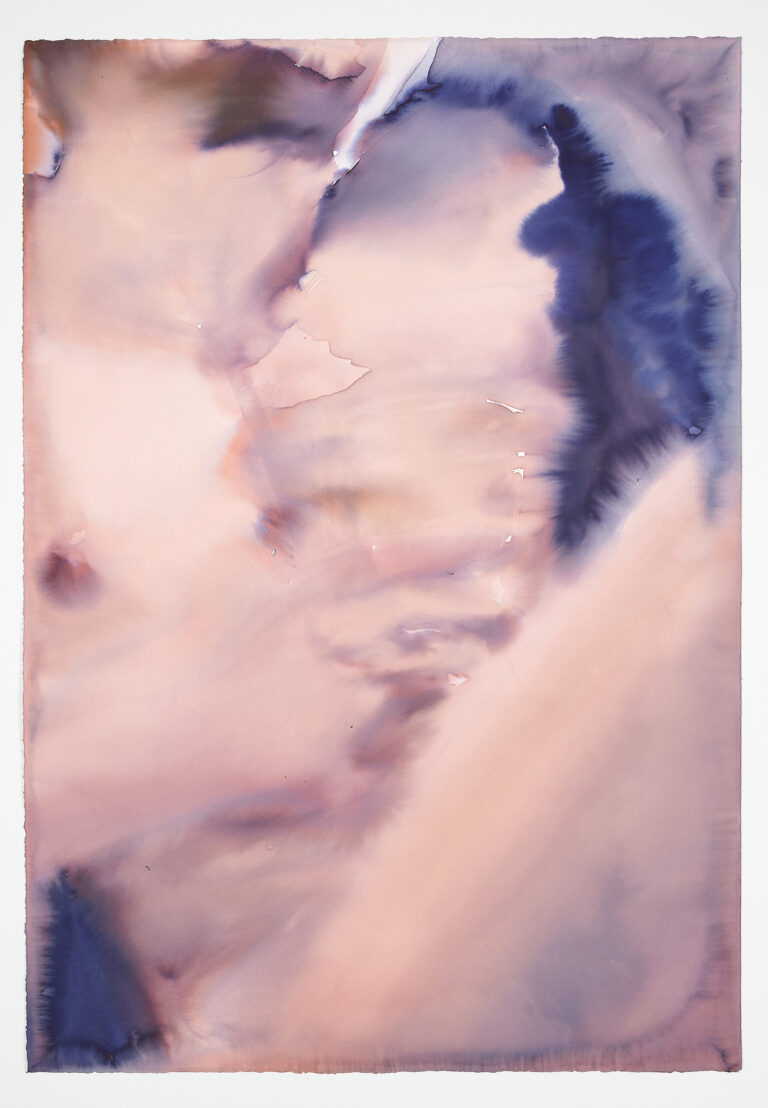
Fiona Mackay,
‘Rose #7, 2025.
Procion MX dye on 270 g BFK rives white velin paper.
90.5 x 62.5 cm.
Courtesy of the artist and Klemm’s, Berlin. Photograph: Charlotte Walter
Overall, Mackay’s painting is an ongoing negotiation between personal perception and emotional experience as they move toward more abstract, typological, and universal dimensions of the human condition. Her gaze encompasses a wide range of dreamlike, mnemonical (or fantasizing) landscapes to the recent, almost narrative scenes drawn from observations of urban life. Throughout, her work oscillates between ironic distance and absolute directness. The clear act of printing is counterbalanced by the oneiric lines of her compositions. Colour is not used to describe but rather to evoke. Form remains fluid.
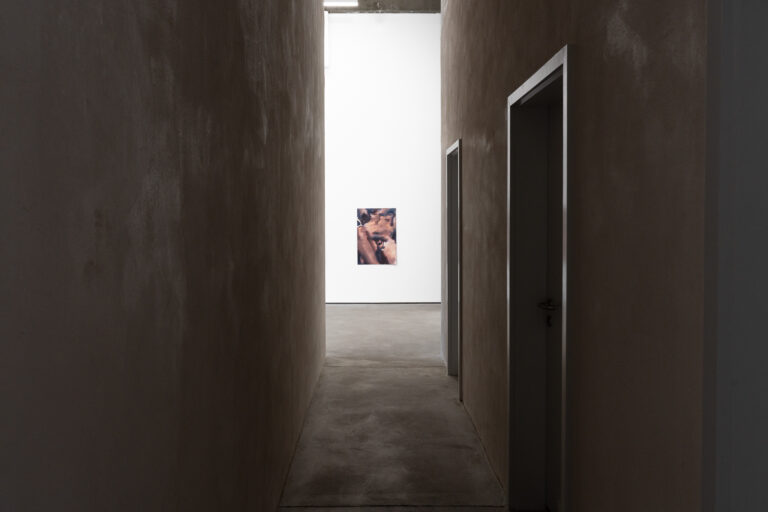
Installation view
Fiona Mackay,
40’s, 2026.
Courtesy of the artist and Klemm’s, Berlin. Photograph: Charlotte Walter
Ultimately, what distinguishes Mackay’s painting is that this oscillation – above all between figuration and abstraction – often takes the form of diffusion. The blur that coats her compositions is key. This dissolved physicality and the apparent looseness of her compositions are deliberate conceptual choices: blurring is not a veil but a form of exposure. Longing cannot be brought fully into focus; it exists in the space between grasping and letting go, between appearing and receding. It is through this gesture that a form of courage emerges, one that extends beyond the individual toward a collective experience of vulnerability and longing.
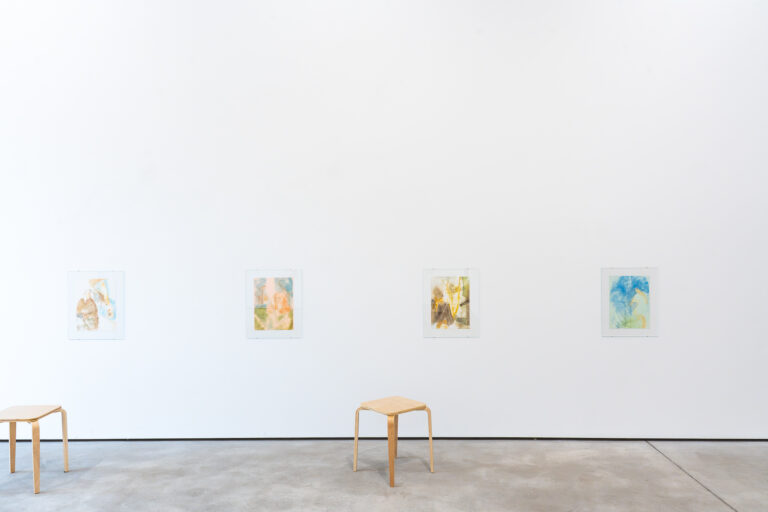
Installation view
Fiona Mackay,
40’s, 2026.
Courtesy of the artist and Klemm’s, Berlin. Photograph: Charlotte Walter
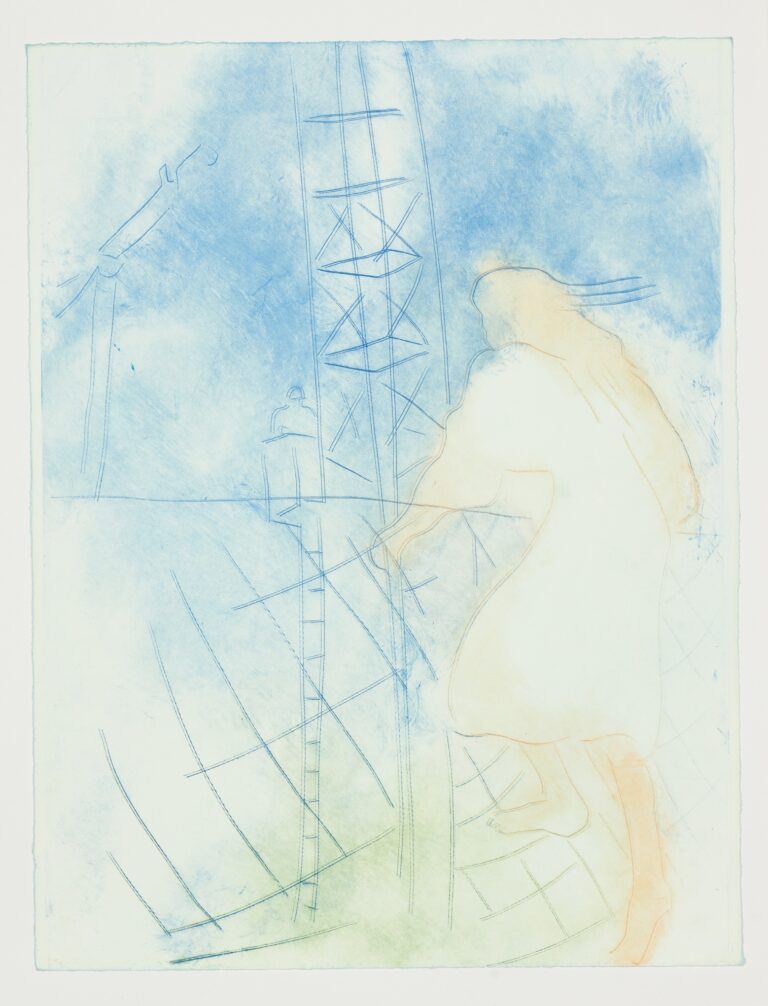
Fiona Mackay,
40’s, 2026.
Courtesy of the artist and Klemm’s, Berlin.
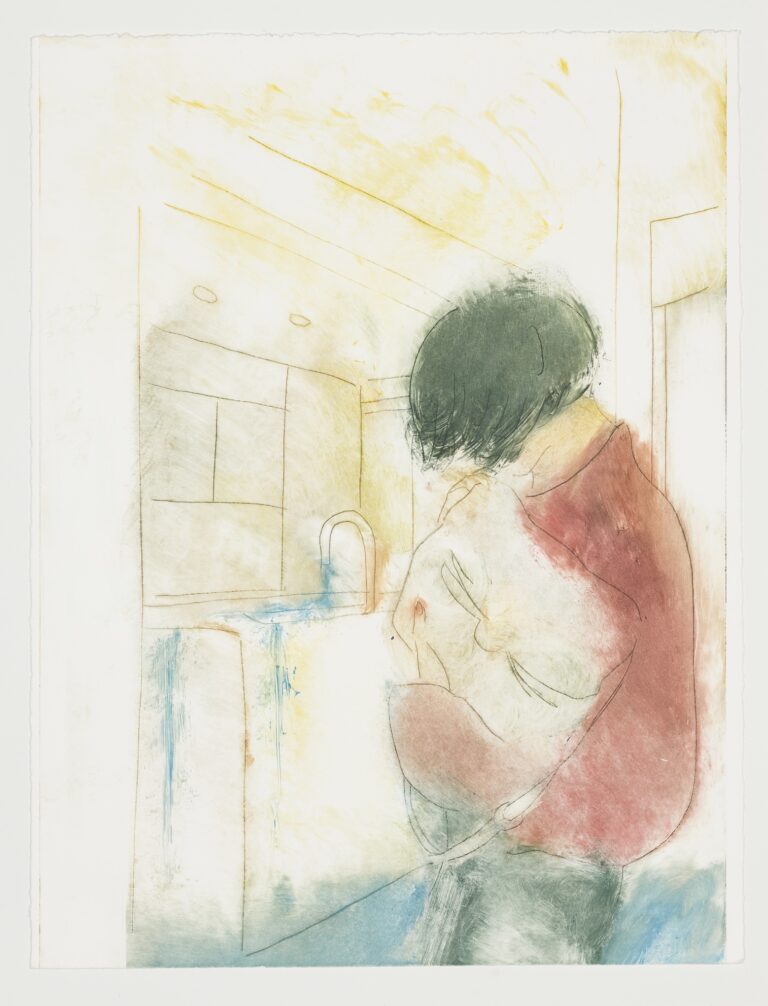
Fiona Mackay,
40’s, 2026.
Courtesy of the artist and Klemm’s, Berlin.
Fiona Mackay (1984, Aberdeen, Scotland) lives and works between Antwerp, Belgium and Marseille, France.