

James Turrell
sensing fields
1 MAY until 30 MAY 2026
Opening – 1 MAY 2026, 6-9 pm
With sensing fields, max goelitz inaugurates an exhibition project that opens with a solo presen- tation by James Turrell during Gallery Weekend Berlin 2026 and unfolds over several months.
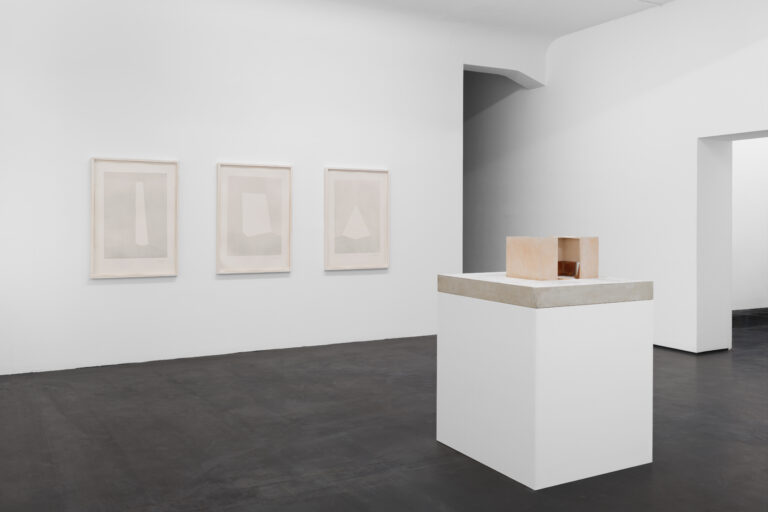
Installation view sensing fields, 2026, max goelitz, Berlin
Courtesy of Häusler Contemporary Zurich
Copyright James Turrell
Photo: Marjorie Brunet Plaza
The presentation of James Turrell (*1943, Los Angeles, CA, USA) is realized in close partnership with Häusler Contemporary Zurich as a guest gallery, which has represented the artist for decades. Since the 1960s, Turrell’s work has fundamentally redefined the relationship between light, space, and perception. At the core of his practice is the direct experience of light itself—not as a means of illumination, but as a material and spatial phenomenon that structures space and consciousness. The works unfold over time, heightening sensory awareness and resisting immediate visual comprehension in favor of a durational experience.
The exhibition includes, for the first time in Berlin, a work from Turrell’s Glass series. These works establish highly controlled perceptual environments in which color and light shift almost imperceptibly over extended durations. Oscillating between surface and depth, opacity and transparency, they destabilize fixed spatial coordinates and foreground perception as an active, contingent process.
James Turrell
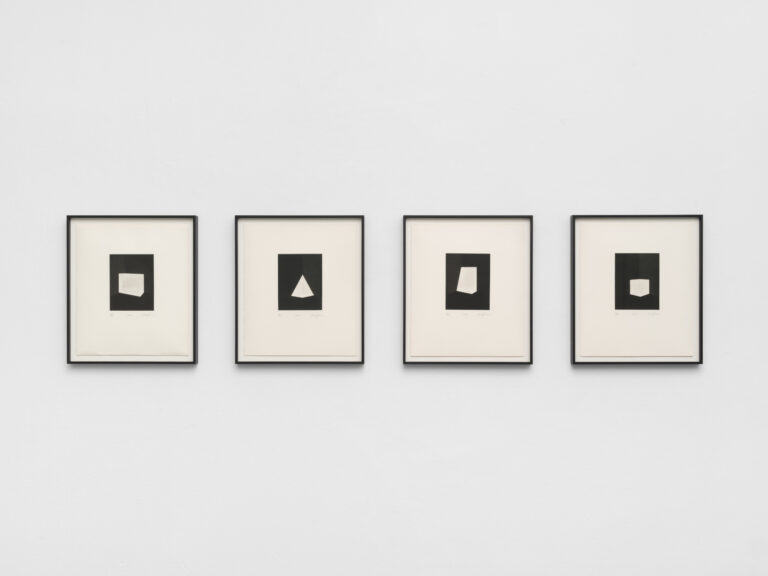
Squat, Juke, Carn, Alta; Parkett VII/XXI, 1990
Aquatint etching on Zerkall paper
4 parts, each
49.5 x 43 cm
Ed. 40 + 21
Courtesy of Häusler Contemporary Zurich
Copyright James Turrell
Photo: Marjorie Brunet Plaza
For the presentation of the Elliptical Glass work First Cause (2024), the gallery space will be reconfigured through a precise architectural intervention, creating a discrete environment for focused contemplation. The title First Cause evokes both cosmological and philosophical origins—pointing to light not only as a perceptual phenomenon, but as a primary condition of existence and awareness. Within this setting, the work’s slow chromatic modulations and spatial ambiguities unfold with heightened intensity, inviting sustained attention and a heightened sensitivity to the act of seeing itself.
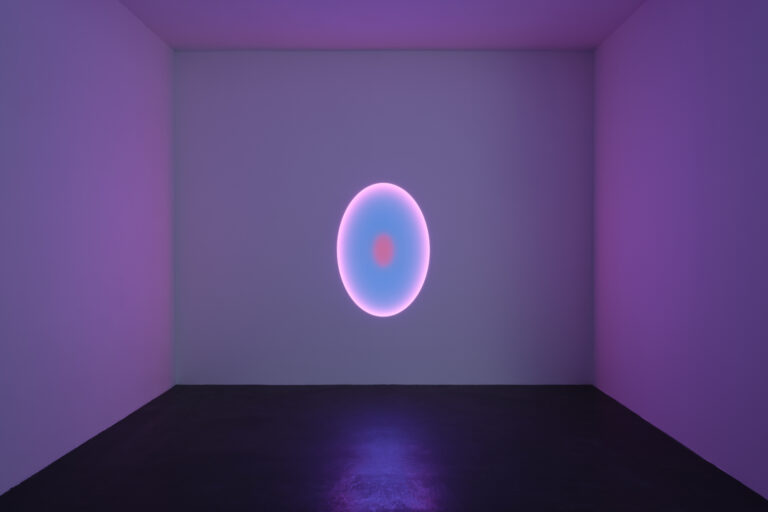
Installation view sensing fields, 2026, max goelitz, Berlin
James Turrell
Elliptical Glass “First Cause”, 2024
Glass, computer-controlled LED, aluminium, Corian
Aperture
152.4 x 106.7 cm
Frame
262 x 394.5 x 40 cm
Courtesy of Häusler Contemporary Zurich
Copyright James Turrell
Photo: Marjorie Brunet Plaza
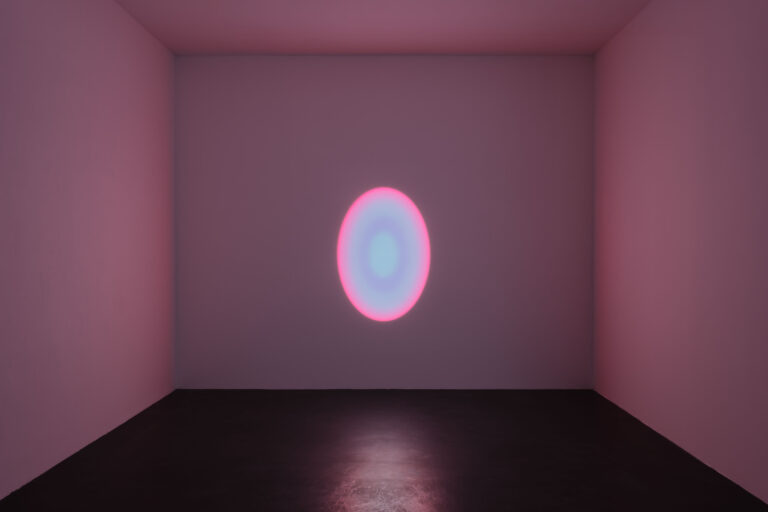
Installation view sensing fields, 2026, max goelitz, Berlin
James Turrell
Elliptical Glass “First Cause”, 2024
Glass, computer-controlled LED, aluminium, Corian
Aperture
152.4 x 106.7 cm
Frame
262 x 394.5 x 40 cm
Courtesy of Häusler Contemporary Zurich
Copyright James Turrell
Photo: Marjorie Brunet Plaza
An adjacent space brings together Turrell’s iconic Still Light aquatint series (1990) with the archaic, almost elemental Skyspace sculpture Fire Inside (2006). Created during Turrell’s extended period in Zurich, the Still Light prints translate his early investigations into projection, shallow space, and perceptual thresholds into the medium of printmaking. Using aquatint—a technique that allows for subtle gradations of tone—they produce luminous fields that appear to open into indeterminate depth, despite their planar surface.
Rather than functioning as representations, the Still Light works operate as perceptual propositions: like afterimages of light works, they evoke spatial ambiguities and subtle modulations between light and dark. Emerging from Turrell’s early investigations into projection, shallow space, and perceptual thresholds, they form a crucial conceptual bridge within his practice— linking the early projection works to the later Glass series, in which light becomes fully environmental and spatially encompassing. What appears here as an opening within the image unfolds elsewhere as an immersive field: in works such as the Elliptical Glass First Cause, perception itself becomes spatial, durational, and continuous.
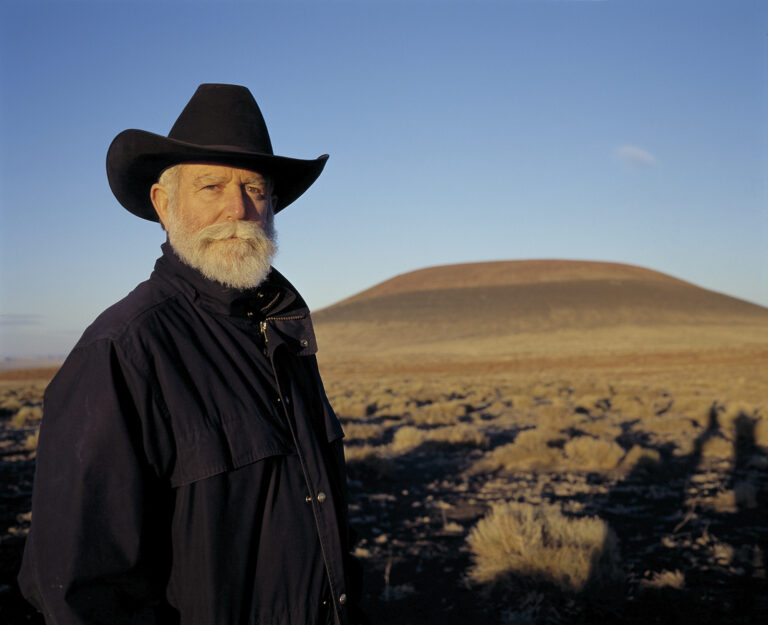
© James Turrell
Courtesy: Häusler Contemporary Zürich,
Photo: Florian Holzherr