

Symptoms
with works by Mamma Andersson, Miroslaw Balka, John Coplans, Ann Edholm, Ayan Farah, George Grosz, Valentina Kozinets, Alex Müller, Edvard Munch, Francis Offman, Benjamin Orlow, Frida Orupabo, Naufus Ramírez-Figueroa, Sophie Reinhold and Michael Schmidt among others
11 SEP – 24 OCT 2026
Opening – 10 SEP 2026, 6–10 pm
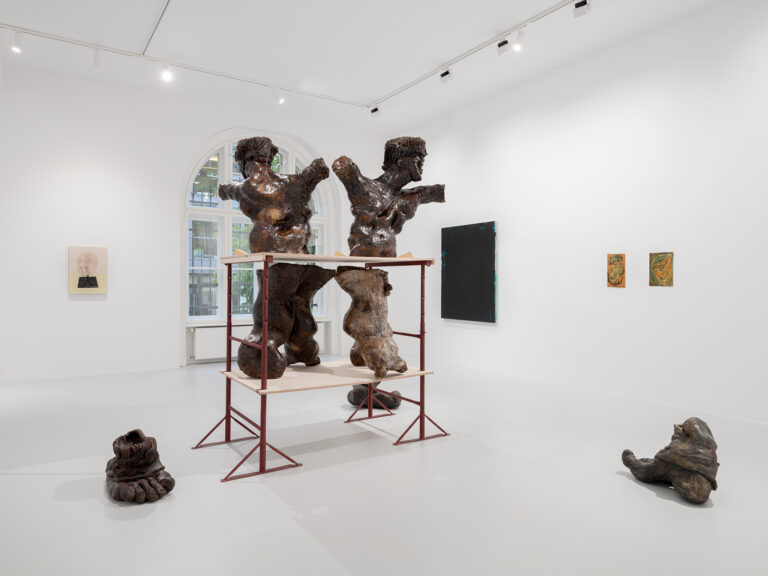
Installation view
Photo: Gerhard Kassner
Courtesy of Galerie Nordenhake Berlin, Stockholm, Mexico City.
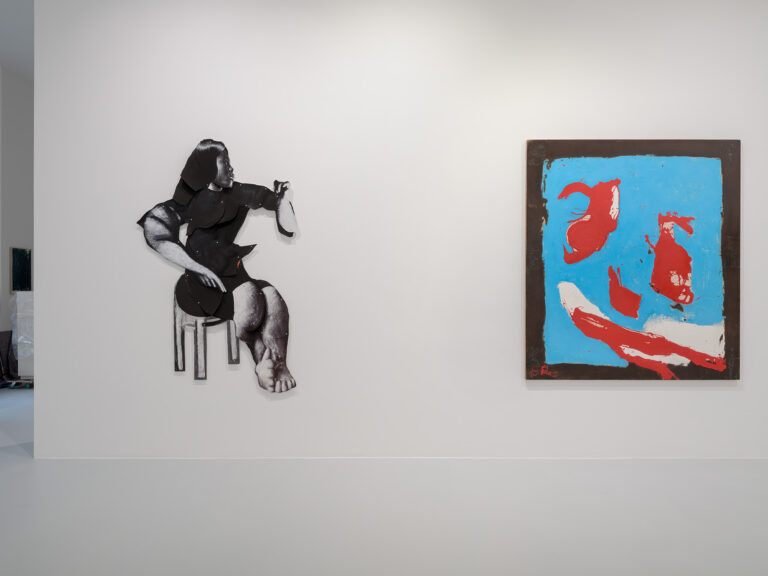
Installation view
Photo: Gerhard Kassner
Courtesy of Galerie Nordenhake Berlin, Stockholm, Mexico City.
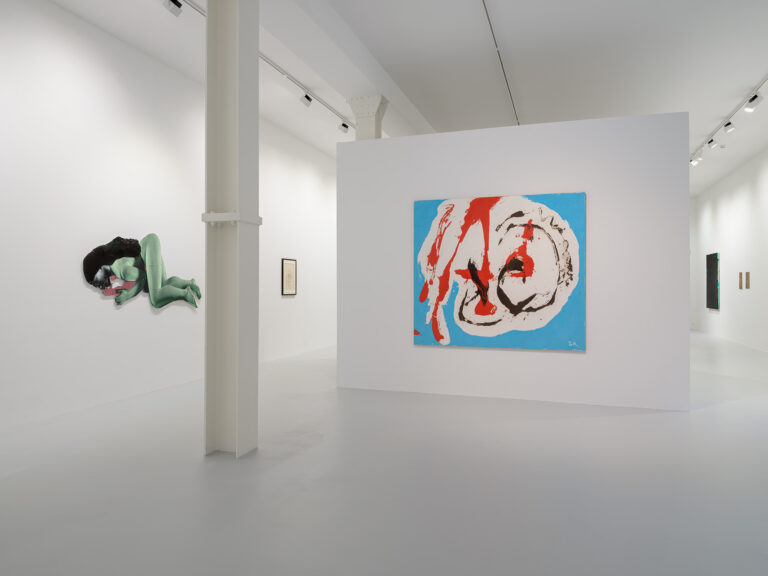
Installation view
Photo: Gerhard Kassner
Courtesy of Galerie Nordenhake Berlin, Stockholm, Mexico City.
Some experiences leave no visible record, yet they alter the way we see, remember and inhabit the world. They persist as traces: in images, materials, gestures and spaces. Symptoms are the forms through which these inner traces become perceptible, revealing the realities from which they arise. Bringing together works by artists including Mamma Andersson, John Coplans, George Grosz, Edvard Munch, Benjamin Orlow, Frida Orupabo, Sophie Reinhold and Michael Schmidt, the exhibition considers how such conditions emerge through painting, sculpture, photography and collage.
Benjamin Orlow’s monumental sculptures combine references to classical sculpture, ritual and mythology while presenting the human body as a site of continuous transformation. At the centre of the exhibition, Ritual City serves as both its physical and conceptual anchor. Caught between formation and dissolution, its fragmented figures resist fixed definition, giving form to processes that would otherwise remain imperceptible.
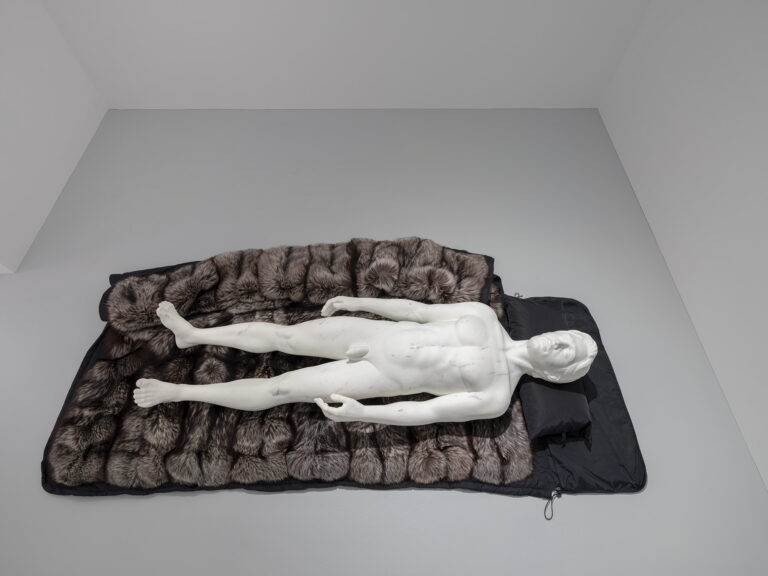
Not Vital
The Boyfriend, 2006
marble and silver fox fur lined sleeping bag
25.4 x 179 x 50.8 cm
10 x 70 1/2 x 20 in
Installation view
Photo: Gerhard Kassner
Courtesy of Galerie Nordenhake Berlin, Stockholm, Mexico City.
Like Orlow, Munch depicts the body as anything but stable. Distorted figures, dissolving contours and expressive brushwork transform it into a register of psychological experience. In George Grosz’s early drawing, grief is inscribed in the body of an elderly man collapsed beside an empty dog bowl, speaking with remarkable reduction about loss and aging. John Coplans likewise fragments the body in enlarged self-portraits, where age, vulnerability and lived experience become palpable through physical presence.
In the works of Mamma Andersson and Michael Schmidt, psychological space becomes a manifestation of memory and inner experience. Andersson transforms domestic interiors and landscapes into uncanny spaces, drawing on childhood memories and archival photographs to evoke realities just beyond the visible. Schmidt approaches the city as a psychological landscape in which memory, history and political division remain embedded in the urban fabric.
Sophie Reinhold’s paintings question inherited visual codes by disrupting familiar iconographies and materials. Marble dust embedded in the painted surface lends the works a tactile presence, suggesting that meaning is materially as well as visually inscribed. Similarly, Frida Orupabo fragments and reassembles archival photographs of Black bodies to expose the violence embedded in colonial histories of representation. Her collages reveal how these histories continue to shape the present. Taken together, the works the works in the exhibition echo the term’s original sense of a symptom as a co-occurrence: not a representation, but something that emerges alongside an underlying condition that remains hidden.