

Marie Schubert
Exuvie
11 SEP – 31 OCT 2026
Opening – 10 SEP 2026, 6–10 pm
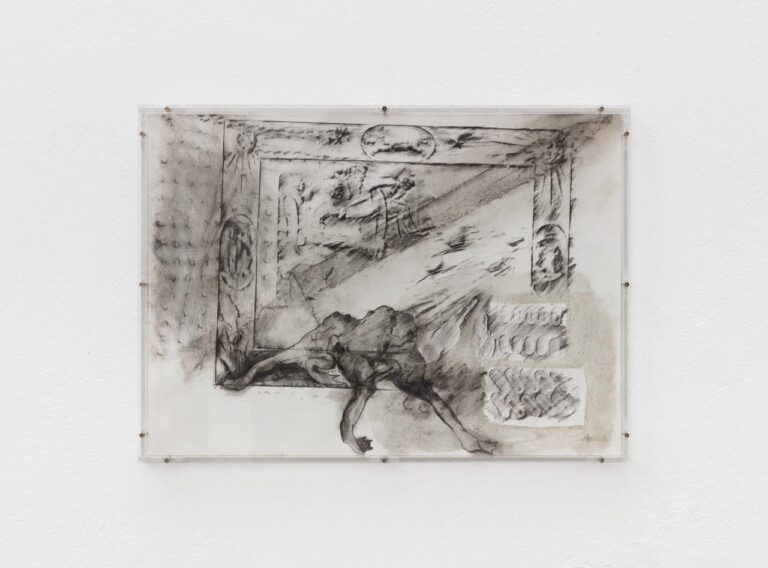
Marie Schubert
Frogs enjoy the view blisters
2026
Drawing on paper, acrylic glass box
37 x 51,5 cm
Search for “exuvia” online, and the screen fills up with insects. More specifically, insect husks. Their inhabitants are long gone. All that remains are abandoned remnants that still convey a lingering sense of vitality, although they now consist of nothing more than lifeless matter. In her solo exhibition Exuvie, Marie Schubert studies what is left behind and the husks that remain.
It is generally taken for granted that beneath the surface lies some sort of true essence. One should not get blinded by appearances and fall for the allure of beauty. This applies just as well to the Elan +2 sports car, which launched in June 1967 as a larger, more luxurious variant of the two-seater Elan, created by Lotus Cars. Pictures show the British luxury car thundering down avenues, posing in front of mansions or Big Ben in Westminster. The sports car’s elegant and athletic appearance satisfied a desire for status, power, and masculinity. Such promises remain hollow in Schubert’s artistic confrontation: the engine, the transmission and the seats are missing. The car is hollowed out. Only its husk remains.
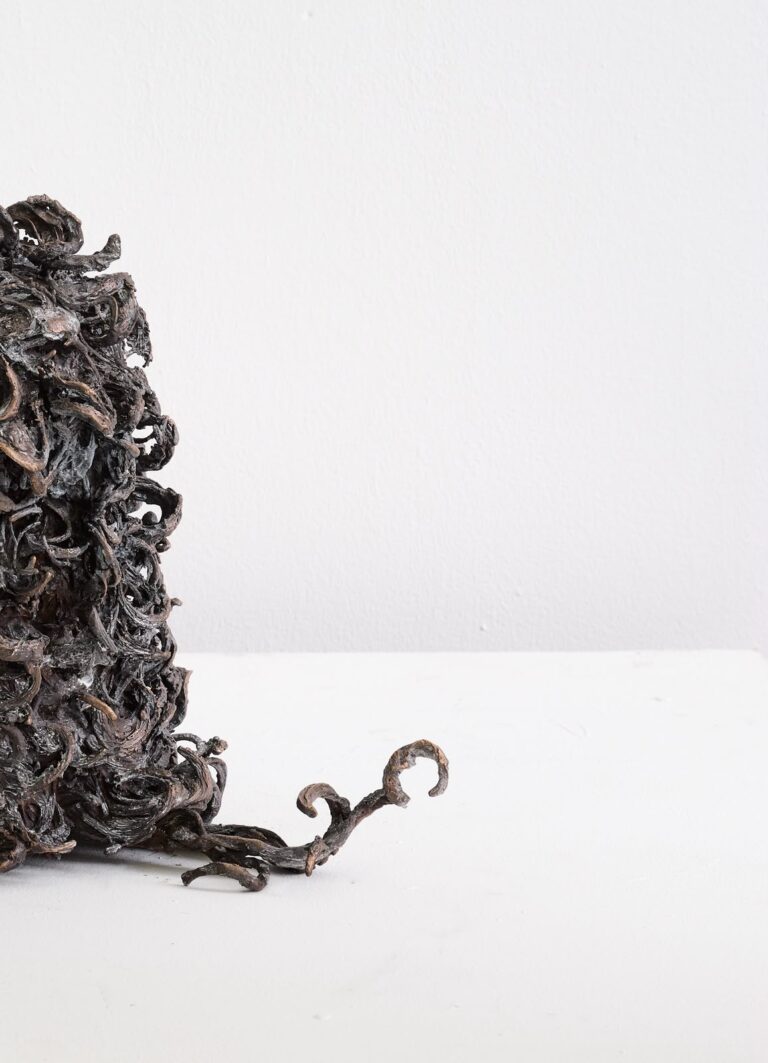
Marie Schubert
Marie-Antoinette
2026
Bronze
Detail
Raised onto a simple platform, the dream appears as a relic that reveals its fragility. The reflective, polished object of luxury has become translucent, allowing light to shimmer through. Stripped bare and sandblasted, the husk appears porous and fragile, as if even a gentle knock would cause the dream of status, power, and masculinity to crack. The sculpture Lotus Elan +2 thus evokes another meaning of “exuvia”: a trophy taken from the enemy.
It is the remnants of cultural objects that Schubert breaks down into their components. In her works, she breathes new life into these relics. Shimmering sequins of a suit of armouror a cut-open bag become found objects behind frameless acrylic glass. In her drawings, discarded objects form worlds that seem to operate by different rules. Dollar signs begin to float; the outlines of a glove and a necklace appear; frogs bathe in the sun, next to the blister packs of headache pills. In Schubert’s works, the familiar suddenly seems distant. Only the husks remain. Who needs the rest anyway?
Text by Claas Oberstadt