

Published on 25 JUN 2026
Philipp Hindahl
Gallery Portrait
Galerie Judin
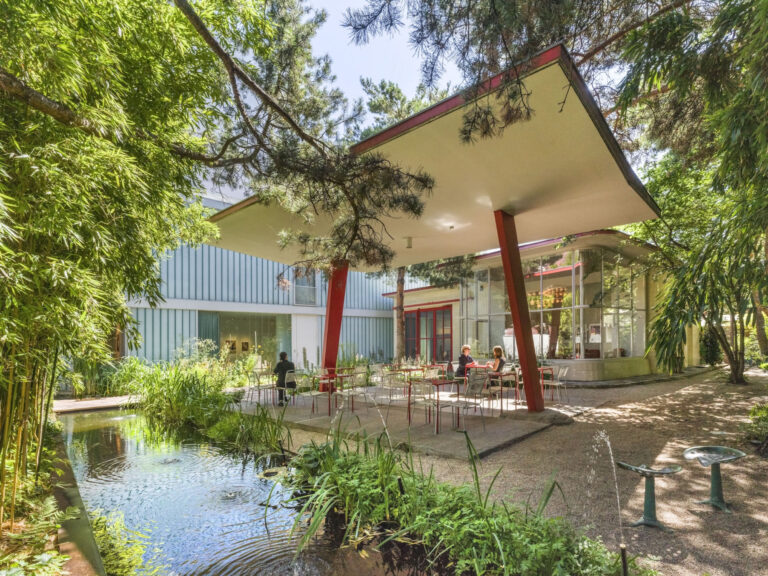
Galerie Judin, Die Tankstelle, Berlin 2025
Photo: Roman März
Courtesy Galerie Judin, Berlin
A few years ago, a new museum suddenly appeared on a busy street in Schöneberg, within sight of Berlin’s elevated metro tracks. New galleries and project spaces open in Berlin all the time; new museums, less so. Yet Das Kleine Grosz Museum was anything but ordinary. Housed in a former 1950s Shell gas station, the museum presented exhibitions for roughly two years devoted to the artist George Grosz, who was born in the city in 1893. Founded on the initiative of the gallerist Juerg Judin, the museum was built around his collection of Grosz drawings and paintings, assembled over the course of twenty years and now considered among the most extensive in the world.
Judin originally founded his gallery in Zurich in 2003. Before that, he had worked in film, but as the independent film industry began to change in the early 2000s, he decided to leave it behind and pursue his longstanding interest in art as a gallerist. Not long after establishing the gallery in Zurich, an opportunity arose to relocate to Berlin in 2008. It was a leap into the unknown, Judin recalls: the gallery was initially located on Heidestraße before moving in 2011 to Potsdamer Straße. Berlin may have been affordable at the time, but the move still entailed considerable risk. There were very few galleries in the area then—and certainly none in the Mercator Höfe complex, where Galerie Judin is now based.
The Imperial-era history painter Anton von Werner once had his studio here, and during the interwar years the art dealer Alfred Flechtheim—who also exhibited George Grosz at his gallery on Lützowufer—ran a gallery nearby before the Nazis forced him into exile.
New buildings were constructed immediately after reunification, during a period of optimism about the future of the newly reestablished German capital. The newspaper Der Tagesspiegel anticipated national significance and planned to print the paper there and distribute it throughout the Federal Republic from Potsdamer Straße. It invested heavily—and was disappointed. A speculator later purchased the vast halls, but redevelopment proved difficult because the street-facing buildings were landmark protected. Like so many investors of that era, he too was eventually driven into bankruptcy. The complex was ultimately sold at a foreclosure auction. As it happened, Judin had been commissioned by artists including Tacita Dean and Thomas Demand to find a studio complex after they were forced to vacate the buildings around Berlin Central Station, which were slated to make way for the new Europaviertel district. The Mercator Höfe may not have been suitable for artists’ studios, but they turned out to be ideally suited to a gallery.
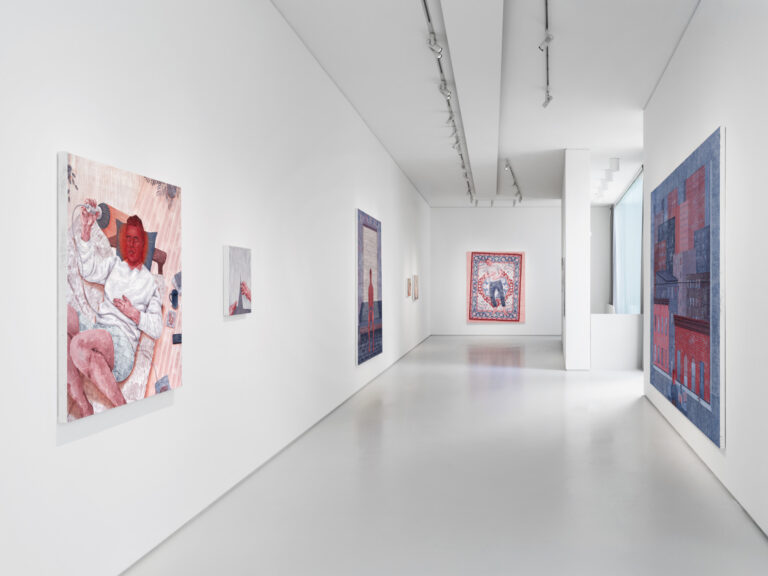
Adam Lupton, “Too Sure of the Sun”, May 1 – June 14, 2026, Galerie Judin (Die Tankstelle), Berlin
Photo: Roman März
Courtesy Galerie Judin, Berlin
At the beginning of the new millennium, Potsdamer Straße had not yet reemerged as a center of the art trade. Two decades later, however, the Mercator Höfe are now recognized as a gallery hotspot, with roughly thirty galleries located in the surrounding area.
The West Berlin art trade could not compete with the galleries of the Rhineland before reunification, let alone with international players. Galleries from Leipzig and Cologne began arriving in Berlin and took an interest in the city’s growing art scene. After all, art was being made there, even if a real art market had yet to emerge—a reality reflected in the number of art fairs from that period that ultimately failed.
Not everyone was interested in understatement. Gallerists such as Max Hetzler and Guido Baudach, for example, sought to develop a former industrial site in Wedding modeled on New York’s Chelsea neighborhood, where warehouses and factories had been left vacant after industry moved out. Juerg Judin, too, had larger ambitions. He persuaded Harry Blain of Blain|Southern to take over the vast former printing hall now occupied by Max Hetzler. Shortly after Judin signed his lease, Andreas Murkudis appeared in the courtyard in search of space and opened his new fashion store on the ground floor. The Mercator Höfe became a countermodel to understatement: Berlin was to become more international.
That approach involved considerable risk, and many of the developments of the 1990s and early 2000s ultimately proved unsustainable. Judin did not so much analyze the Berlin market as follow his intuition, and he was right: the art scene around Potsdamer Straße continued to grow. At first, the gallery’s clientele consisted primarily of international buyers. Since then, however, Berlin and Germany have become important markets in their own right.
“I was swimming against the current by refusing to participate in art fairs. I could have gotten into many of them, and in my very first year I took part in Art Forum Berlin,” Judin recalls. “But at a certain point I realized I had to choose. I couldn’t be active on the fair circuit while also sustaining a program that produced three or four books a year. People kept asking me, ‘How do you survive without fairs?’ I survived precisely because I didn’t do fairs.” Only after Pay Matthis Karstens joined the gallery as a partner did the necessary manpower become available, and since then Judin has participated in art fairs as well.
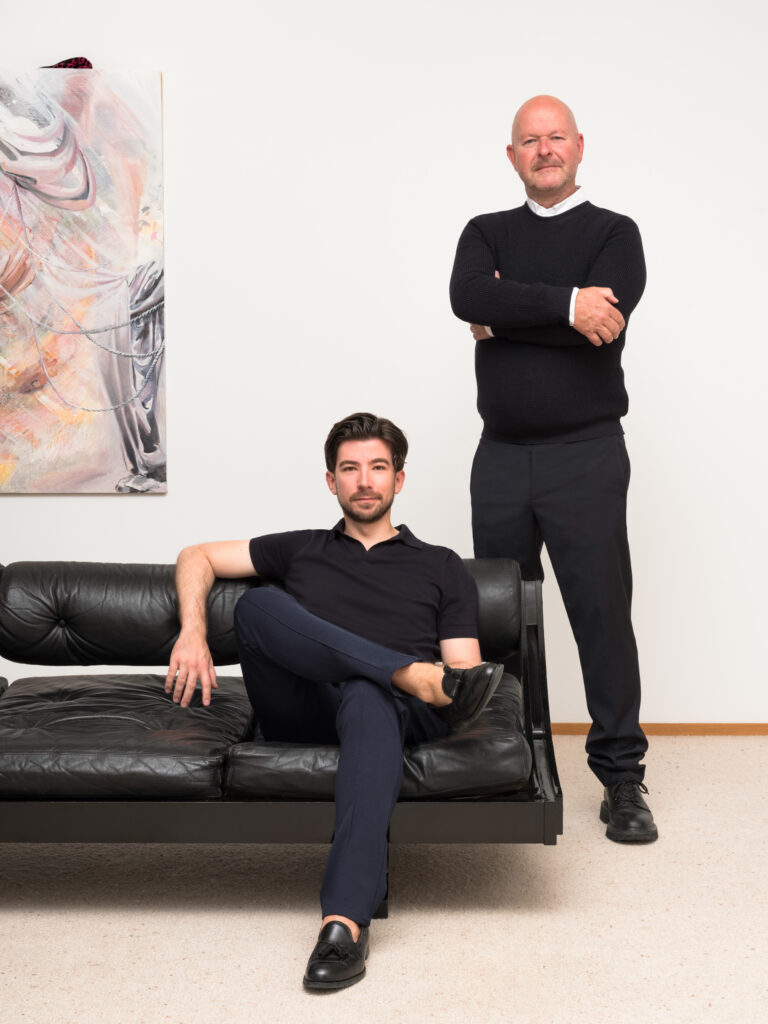
Juerg Judin & Pay Matthis Karstens, Berlin 2025
Photo: Roman März
Courtesy Galerie Judin, Berlin
In the gallery’s early years, Juerg Judin—who had come to the art world from another industry—relied on the advice of colleagues when identifying artists to exhibit. He followed the recommendation of two friends to present the notoriously difficult postminimalist Barry Le Va, who was known for room-filling installations made from unconventional materials such as flour, chalk, spilled oil, and ball bearings. Le Va had not had a gallery exhibition devoted to his sculptures in thirteen years; the last had been at the New York gallery of the dealer Ileana Sonnabend. The exhibition at Judin’s gallery was itself enormously elaborate and also included a retrospective selection of drawings, ranging from works made in the 1960s to sketches for the installation. Judin published his first book in conjunction with the exhibition.
For many years, the gallery self-published traditional exhibition catalogues. “Our relationship to books and their function has changed, just as the book market itself has changed,” Karstens says during a video call. “We entered into a collaboration with Walther König, which now publishes almost all of our books. Today, we think of the book more as an object in its own right. Our approach has also become more art historical. We would rather produce one catalogue raisonné than two exhibition catalogues.” Most recently, the gallery published a monograph on the painter Adrian Ghenie; a book on Niki de Saint Phalle is scheduled for publication this summer, and Karstens and Judin are also working on a catalogue raisonné of Cornelia Schleime. “Collectors and curators love books, but nowadays there has to be a good reason to carry around a publication that weighs three kilos,” Karstens says. Books, he adds, are ideal for presenting contexts and pursuing a more museum-like approach than a gallery necessarily affords. “With rising costs, we’re focusing on greater concentration. Even though we are producing slightly less overall than before, publications now play a more important role.”
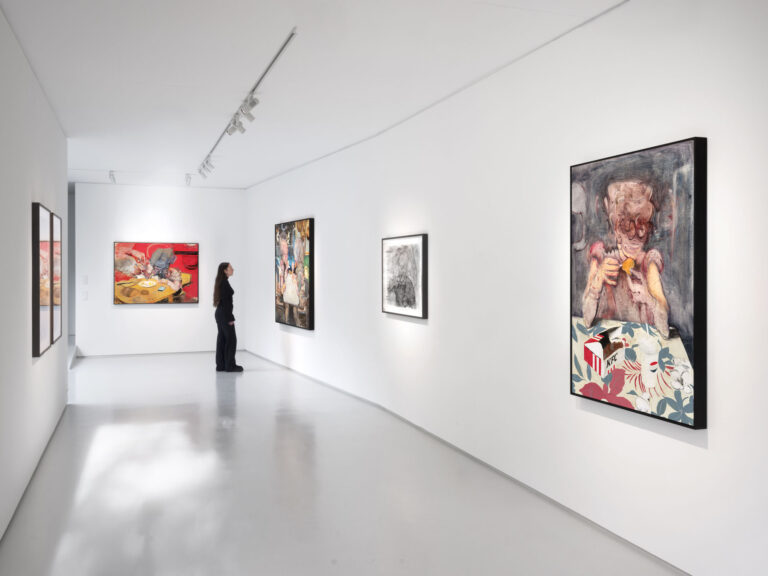
Adrian Ghenie, “Cloud Fever”, November 15, 2025 – January 18, 2026, Galerie Judin (Die Tankstelle), Berlin
Photo: Roman März
Courtesy Galerie Judin, Berlin
It was in Berlin that the gallery’s contemporary program truly took shape, with artists such as the painter Adrian Ghenie joining the roster. Over time, the program evolved into a combination of historical positions, estates, and both older and younger artists, with a strong emphasis on figurative painting, including figures such as Alexander Basil, Ellen Akimoto, and Kiriakos Tompolidis. The gallery recently announced that it will now represent the estate of Christoph Schlingensief. “Juerg and I are interested in narrative content and in the thread of art history. That is where our expertise lies,” Karstens says. “As a result, many of our younger positions are already shown in museum contexts: Basil is the most recent acquisition of the Städel Museum, Tompolidis is represented at the Taipei Biennial, and he will be among the youngest artists ever to have a solo exhibition at Museum Folkwang. The contemporary and the historical energize one another. Older material inspires the younger positions.”
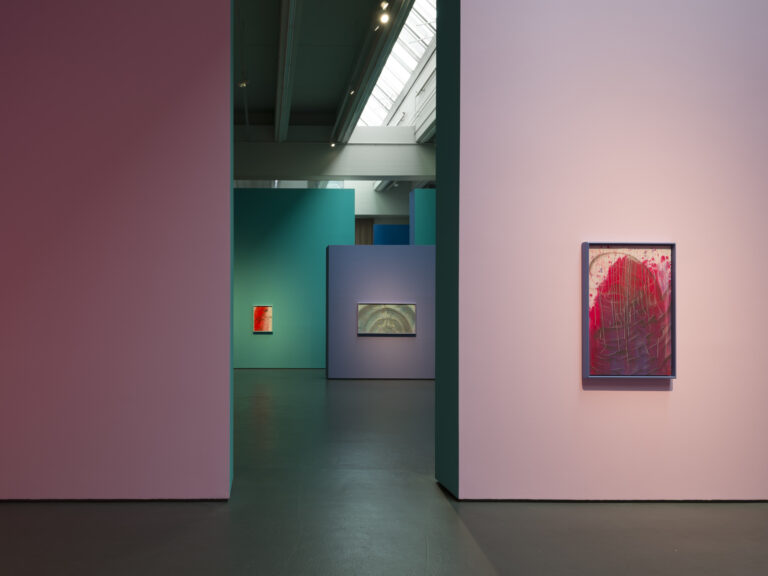
Jorinde Voigt, “Non-Fiction”, May 1– June 6, 2026, Galerie Judin (Mercator Höfe), Berlin
Photo: Trevor Good
Courtesy Galerie Judin, Berlin
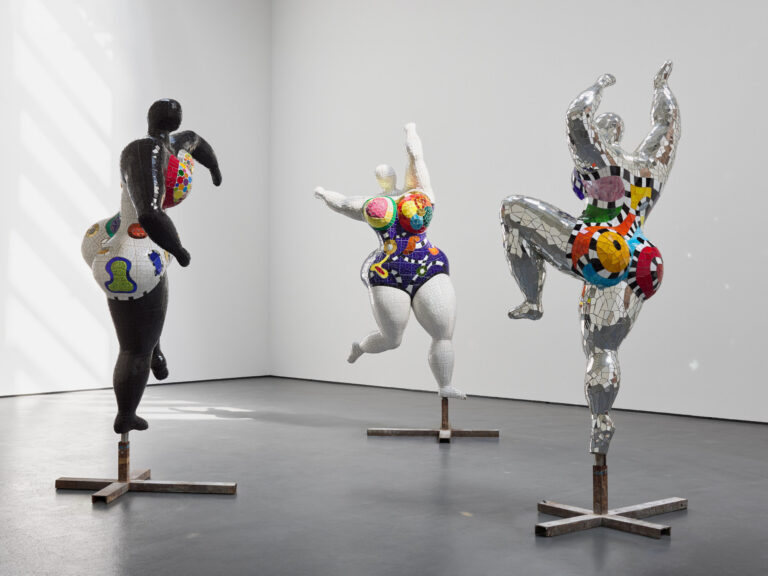
Niki de Saint Phalle “Les Trois Grâces”, 1995–2003
© 2026 NIKI CHARITABLE ART FOUNDATION, All rights reserved.
Photo: Joe Clark
What emerges is a network: “Michael Buthe had been somewhat forgotten, and then we organized two exhibitions with the estate. In the end, we sold one work to the Museum of Modern Art in New York, two to the Städel Museum in Frankfurt, and another to mumok in Vienna, all for their permanent collections.” Synergies emerge from this process. “Once those institutional doors open, they open for younger positions as well.”
The gallery’s perspective emerges from its grounding in art history and from a culture of dialogue and exchange. The gas station is emblematic of this approach, with its café and exhibition program organized in alternation with Pace Gallery, which has maintained this unconventional Berlin outpost since 2025. “The gas station was my home for fifteen years,” Judin says. “A lot of memorable occasions took place there. I cooked and invited forty, fifty people.” Judin also kept a pied-à-terre nearby in Schöneberg. Shell abandoned the station in 1985 because it had become too small. “Fortunately, the company never received a permit to build one of those ugly new stations. The building slowly fell into disrepair, and over the years I kept photographing it.” A “for sale” sign hung there for years as well. “Then one day it disappeared, and I thought: now they’re going to tear it down.” But the station had not been sold, and the gallerist spontaneously decided to purchase the building, originally intending to convert it into a livable artist’s studio. “That was how I wanted to entice artists to my then little-known gallery in Zurich: how about spending three months in Berlin?” Eventually, however, he realized that he no longer wanted to remain in Zurich himself. “After the renovation, the gas station became too beautiful—surrounded by a garden with a duck pond in the middle of the city—and I thought the artists could wait a little longer, so I moved in myself.” Judin lived there for fifteen years after the renovation, even though the building technically violated certain zoning regulations—though he nevertheless received a permit. “Because I had the privilege of living there for fifteen years, I thought it was time to share the building with the public.” That was how Das Kleine Grosz Museum came into being.
Why would a gallery take on the task of honoring an artist like George Grosz in his own city? “Because otherwise no one would have done it. It responded to a demand and was a hit,” Judin says. “Museums in Germany are grotesquely underfunded, and at the same time the field keeps expanding. Artists are elevated to museum-level recognition far earlier than would once have been the case. On the one hand, artists demand it; on the other, it also drives sales. Alongside the lack of public funding, we are seeing an expansion of both the field and the canon.” The gas station, no longer a museum but now part of the gallery, also serves another function. Galleries can feel intimidating, and people outside the art world often hesitate to enter them. The gas station and the gallery’s location in the Mercator Höfe signal that the doors are open.