John Zurier
along – between
1 MAY until 27 JUN 2026
Opening – 1 MAY 2026, 6-9 pm
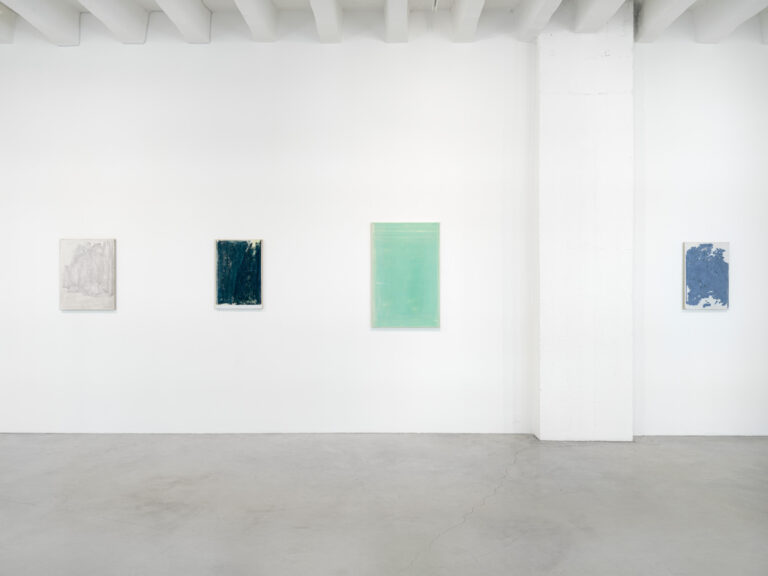
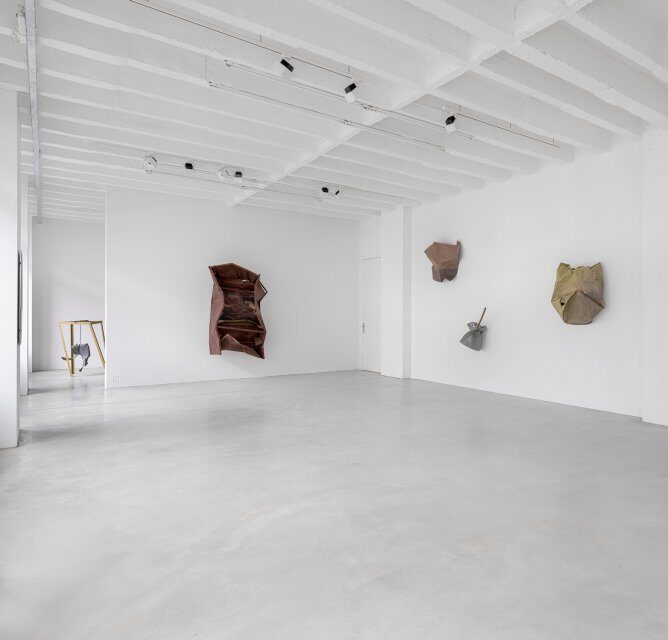
Installation view
Copyright the artist.
Courtesy of the artist and Galerie Nordenhake Berlin, Stockholm, Mexico City.
Photo by Gerhard Kassner.
In John Zurier’s work, color is not merely a means of representation; together with the materiality of the canvas, it becomes the very subject of the painting – an echo of a moment, almost impossibly fleeting, yet one that lingers. This atmosphere profoundly shapes his approach and defines the paintings in his tenth solo exhibition at the gallery, opening as a part of Gallery Weekend Berlin. The show brings together new, predominately, small size works revealing the range of his monochromatic idiom.
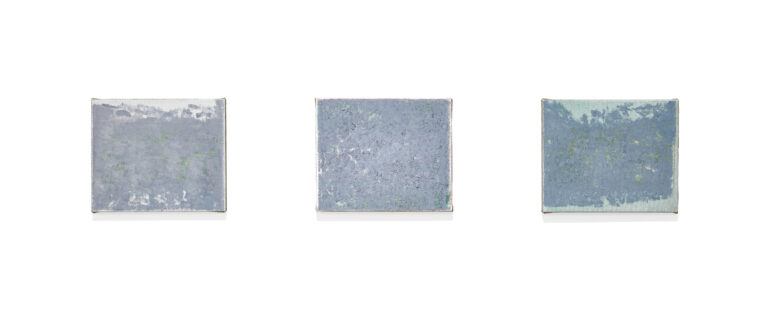
John Zurier,
April, 2024
oil on linen,
triptych, each 25 x 30 cm, 9 7/8 x 11 3/4 in
overall dimensions 25 x 130 cm, 29 1/2 x 51 1/8 in (TBD)
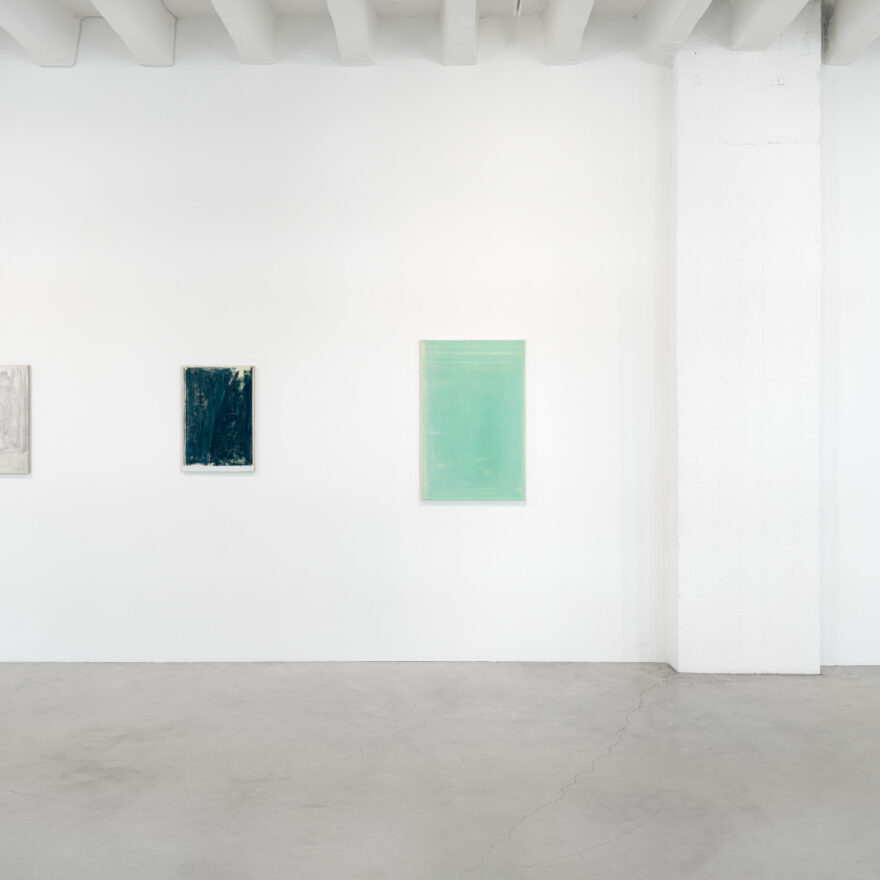
In certain works, the oil paint is heavily diluted, allowing the weave of the canvas to remain visible. The surface shimmers like a distant flicker. Dense fields of pigment settle over underlying layers of color, creating a sense of stratification, depth, and layering. In some works, such as Half the Sky, lighter hues permeate dense fields of color like light piercing through a dark cloud cover. Nothing in these works is final. The colors remain in flux, as though they have not yet settled into their final state, an open, indetermined stance that allows each mark to emerge from the moment and in response to what is given. This becomes especially evident in the triptych April, whose three panels appear like different states of a single moment, akin to the shifting phases of a mood. Greenish inflections run through the grey-blue surface. The colors appear coarse, at times washed out, seeming to conceal rather than reveal.
The paintings unfold in varying intensities. Some appear dark and nearly monochrome; only sparse, delicate gestures interrupt this impression. In Holding the Rain, by contrast, the paint almost dissolves: a cool, silvery-blue field settles across the canvas in visible brushstrokes like a fine veil, laced with an almost imperceptible quiver. The painting evokes rain, mist, or morning dew. Other works, such as the blue-violet, nearly closed pictorial spaces in April Earth condense into an almost impenetrable field of color that reveals subtle shifts and traces. Visible brushstrokes and dry impasto areas of paint – whose quiet intensity recalls the tactile surfaces of the Welsh painter Gwen John – become signs on the canvas that we follow. The gaze finds no rest.
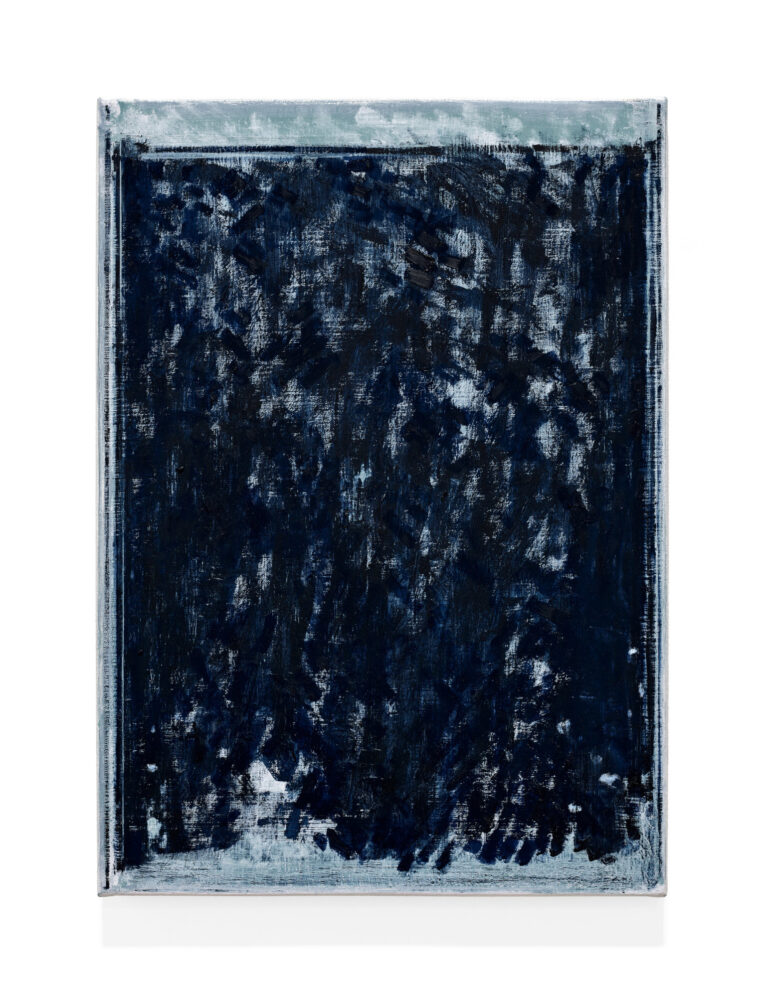
John Zurier,
A Scattering of Salts, 2023/2026
oil on linen
70 x 50 cm
27 1/2 x 19 3/4 in
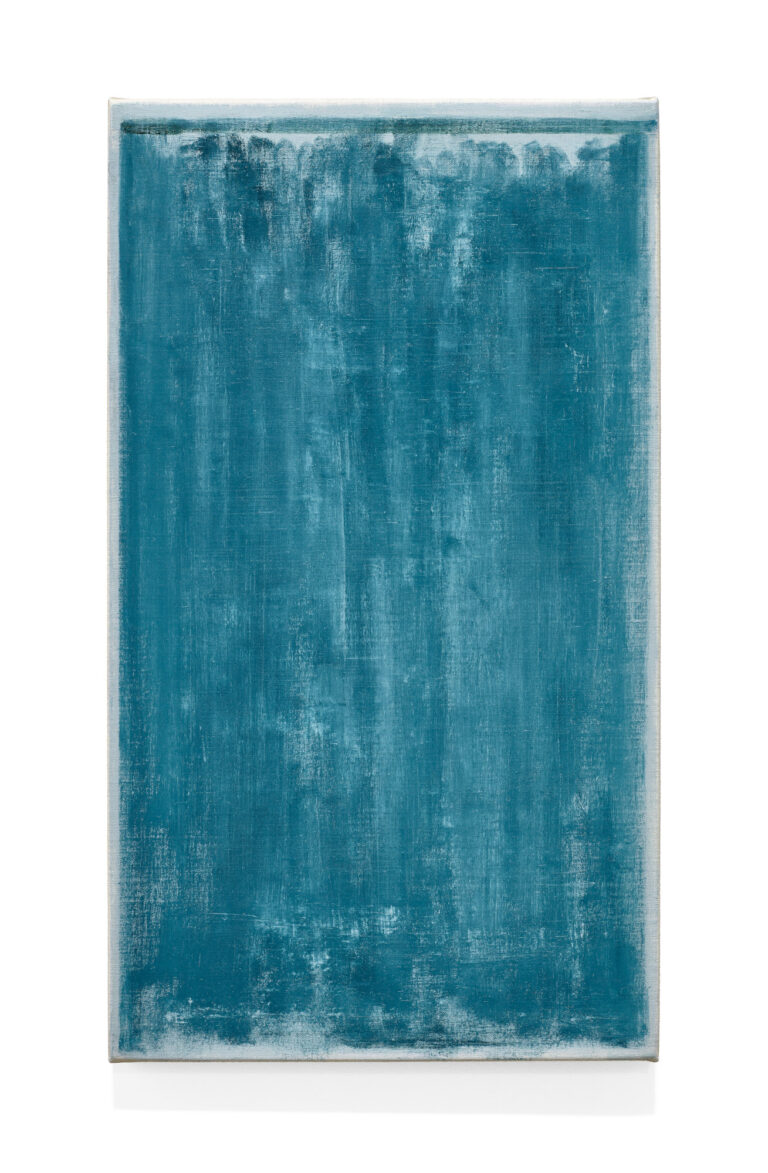
John Zurier
Pale Fountain, 2026
oil on linen
70 x 40 cm
27 1/2 x 15 3/4 in
(JZ00332)
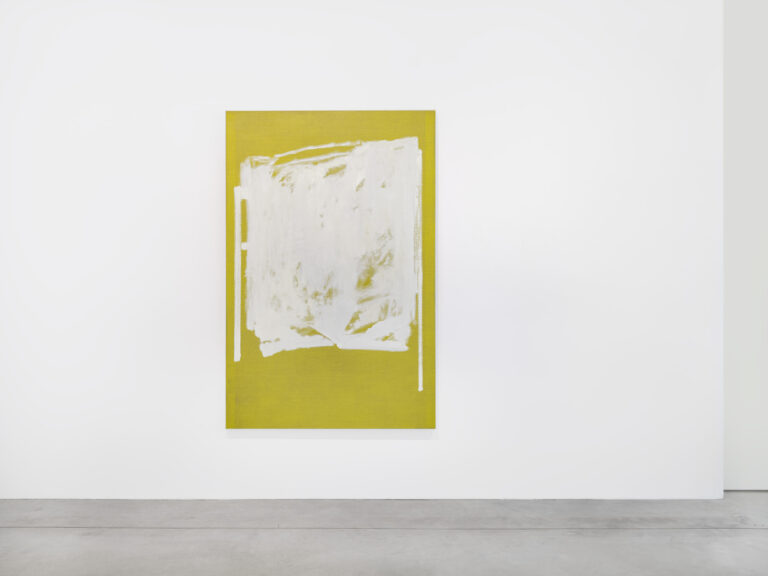
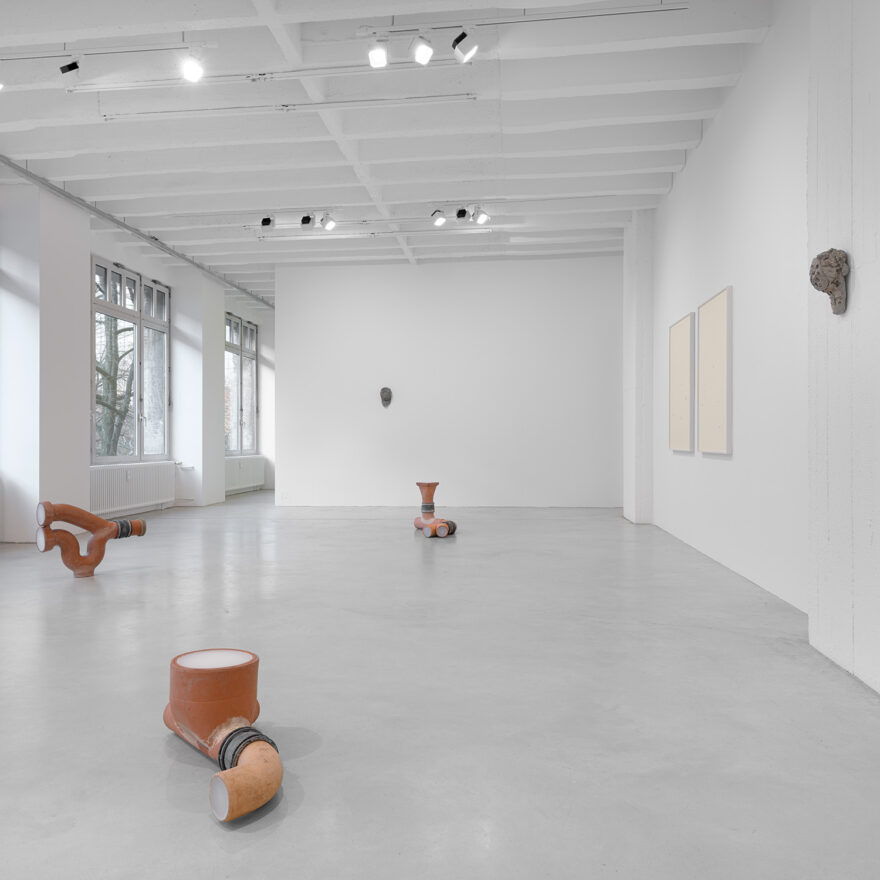
Installation view
Copyright the artist.
Courtesy of the artist and Galerie Nordenhake Berlin, Stockholm, Mexico City.
Photo by Gerhard Kassner.
The titles suggest a specific place and moment in time, as if they were holding onto those instances that have inscribed themselves into our memory. They read like personal recollections or notes on a thought. Zurier’s painting refuses the motif; in its place emerges an atmosphere that can be apprehended rather than described. The gaze moves tentatively across the canvas, following concentrations of pigment, moments of clearing, and barely perceptible transitions. The coarse texture of the canvas, the visible brushstrokes, and the carefully built layers of color reveal Zurier’s interest in the material dimension of painting, the real and constitutive. He experiments with pigments and materials, which ultimately shape the mode of the brushwork.
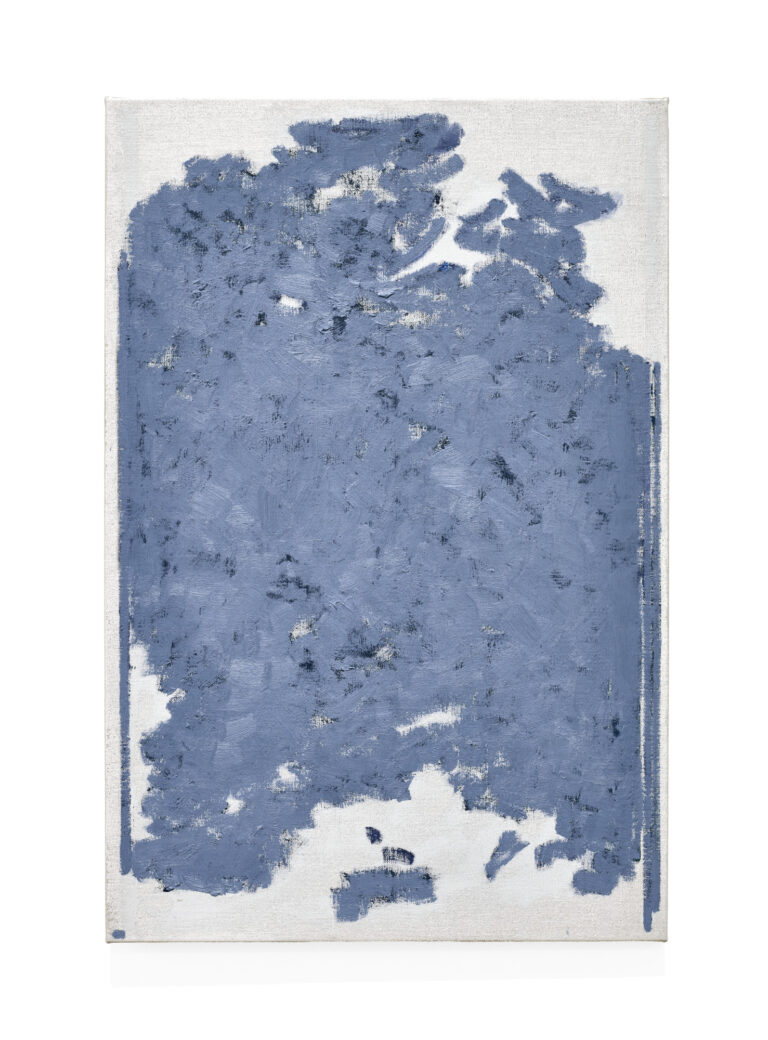
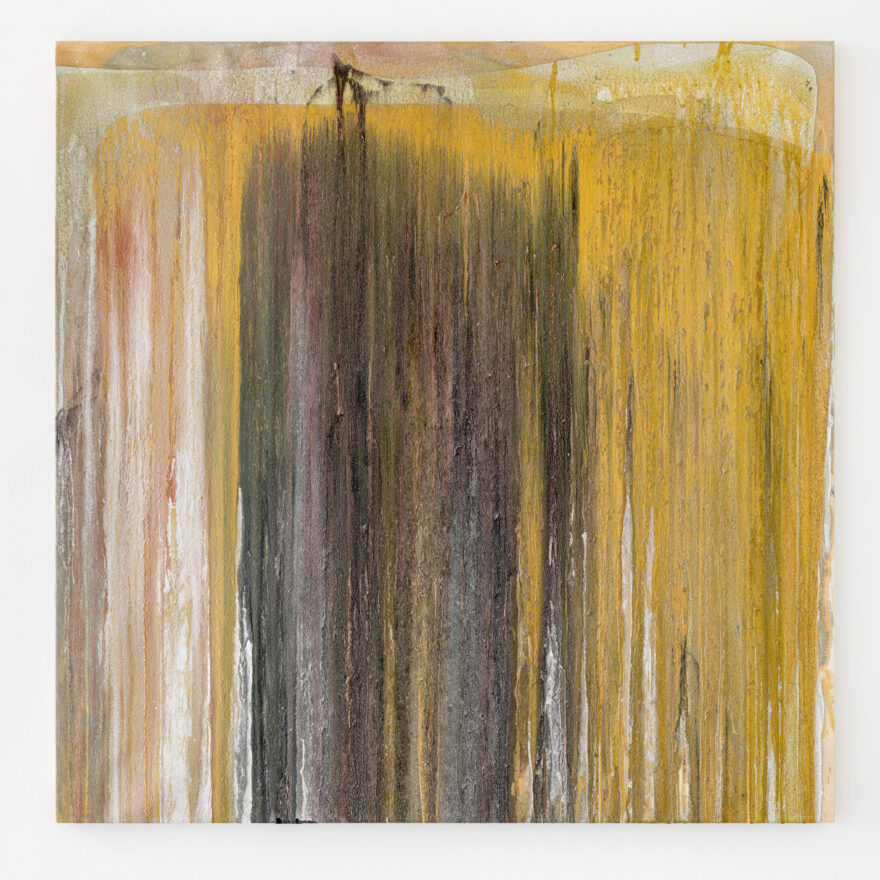
John Zurier
Path to the White Moon, 2026
oil on linen
61 x 40.6 cm
24 x 16 in
(JZ00342)
Copyright the artist.
Courtesy of the artist and Galerie Nordenhake Berlin, Stockholm, Mexico City.
Photo by Shaun Roberts.
The works in along – between move within an in-between state. They become the physical condensation of an inner state. The title itself plays with this interval, leaving something unsaid while seeming to compress meanings within it. Viewing Zurier’s paintings, we follow a shifting rhythm of appearance and disappearance: something briefly emerges before slipping away again.