Leiko Ikemura
de sensu
11 SEP – 24 OCT 2026
Opening – 10 SEP 2026, 6–10 pm
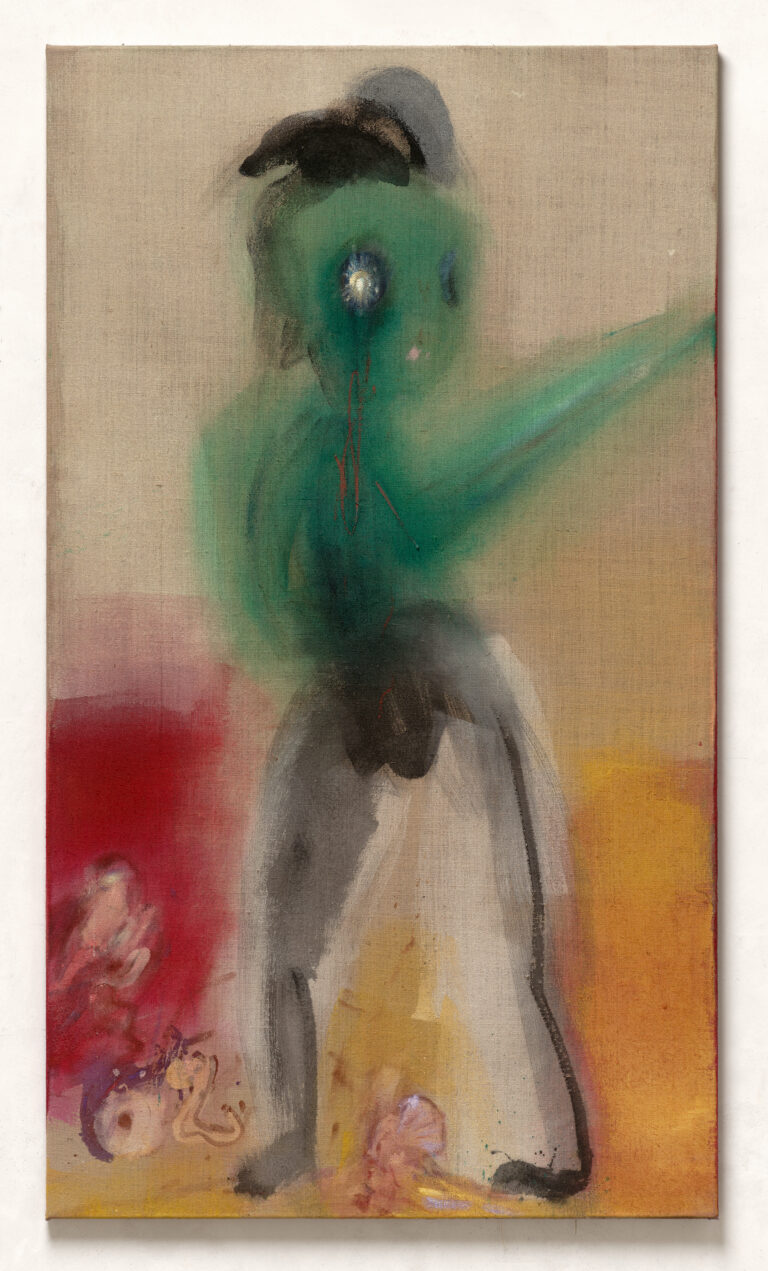
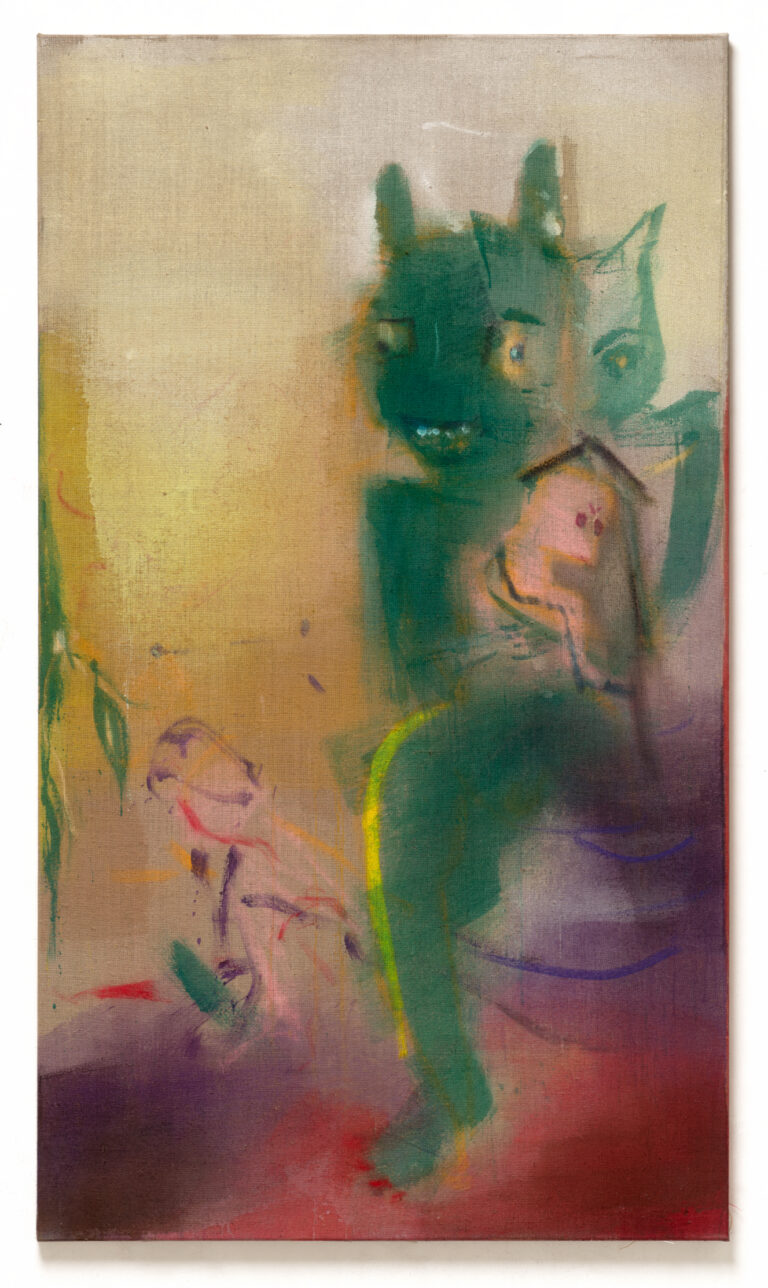
Leiko Ikemura
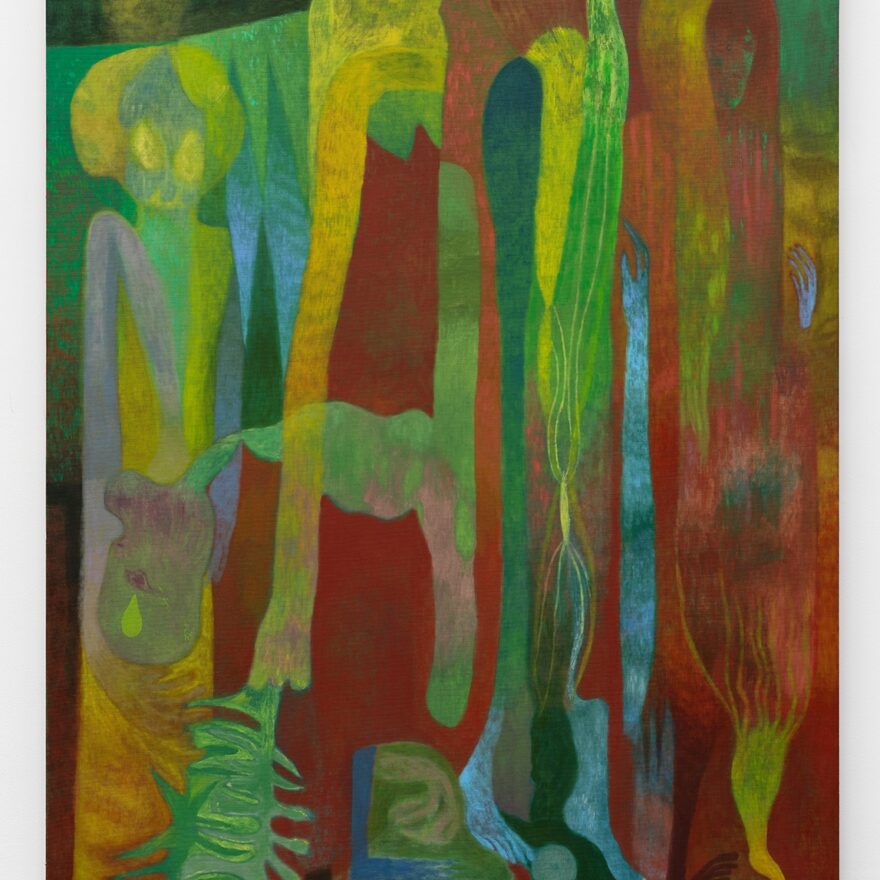
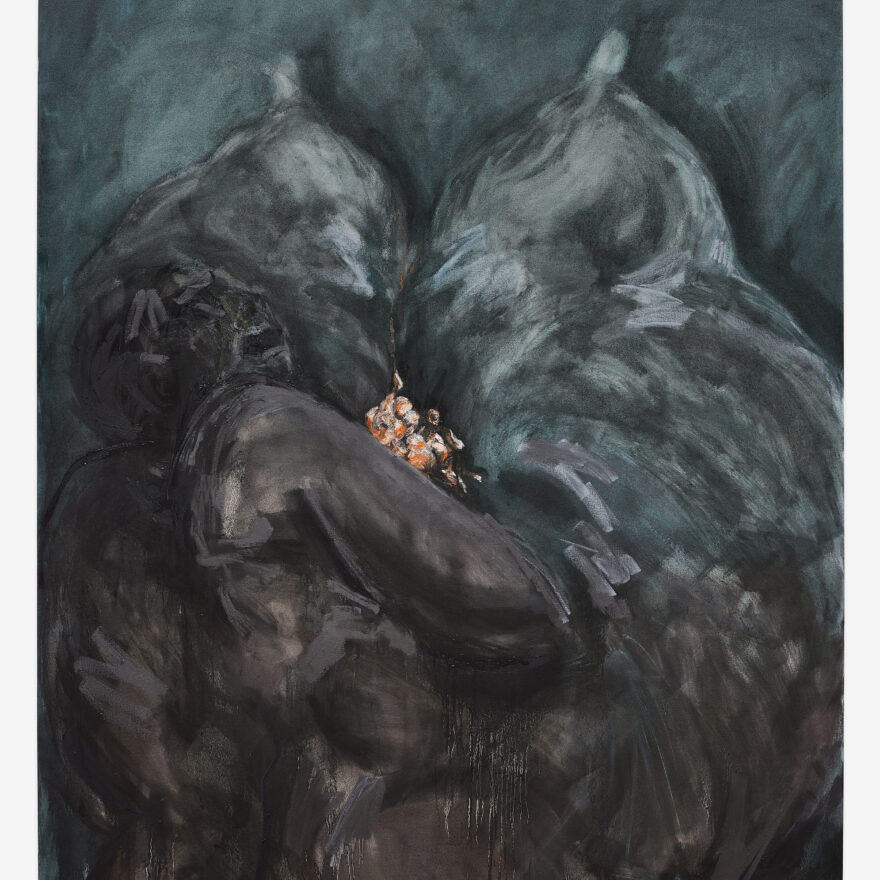
“Green Baby” 2025
Tempera und Öl auf Jute
210,5 x 120,5 cm
82 7/8 x 47 1/2 in
© Leiko Ikemura
Courtesy Contemporary Fine Arts
Photo: Jörg von Bruchhausen
Contemporary Fine Arts is pleased to announce the second solo exhibition of Japanese-Swiss artist Leiko Ikemura at its Berlin gallery.
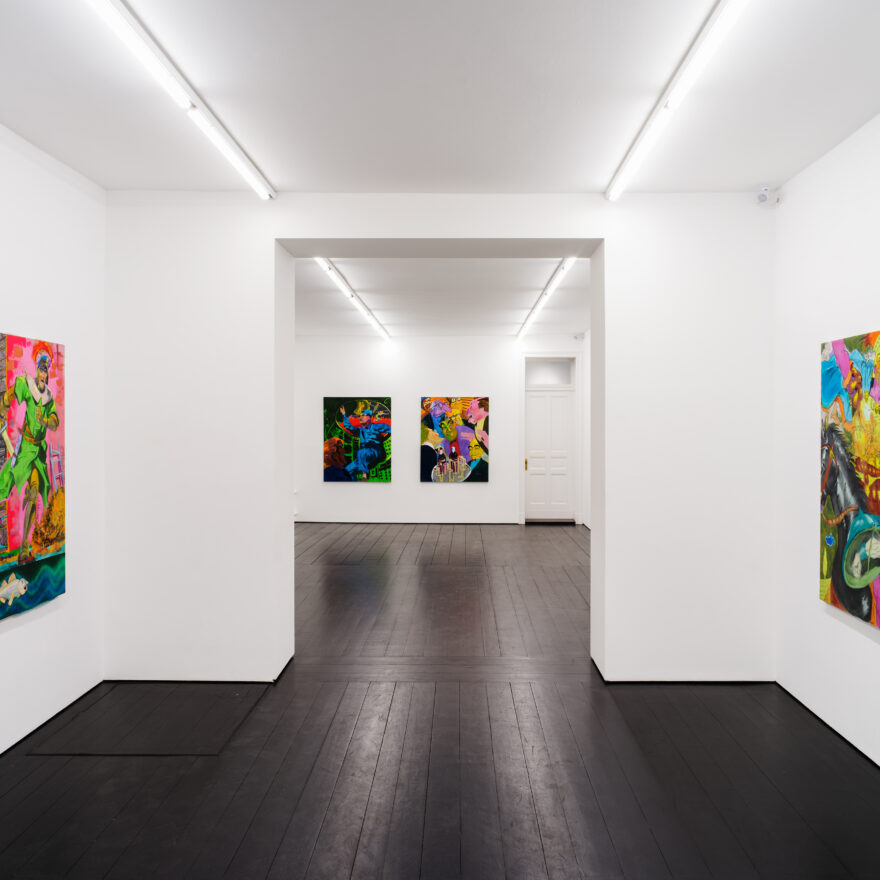
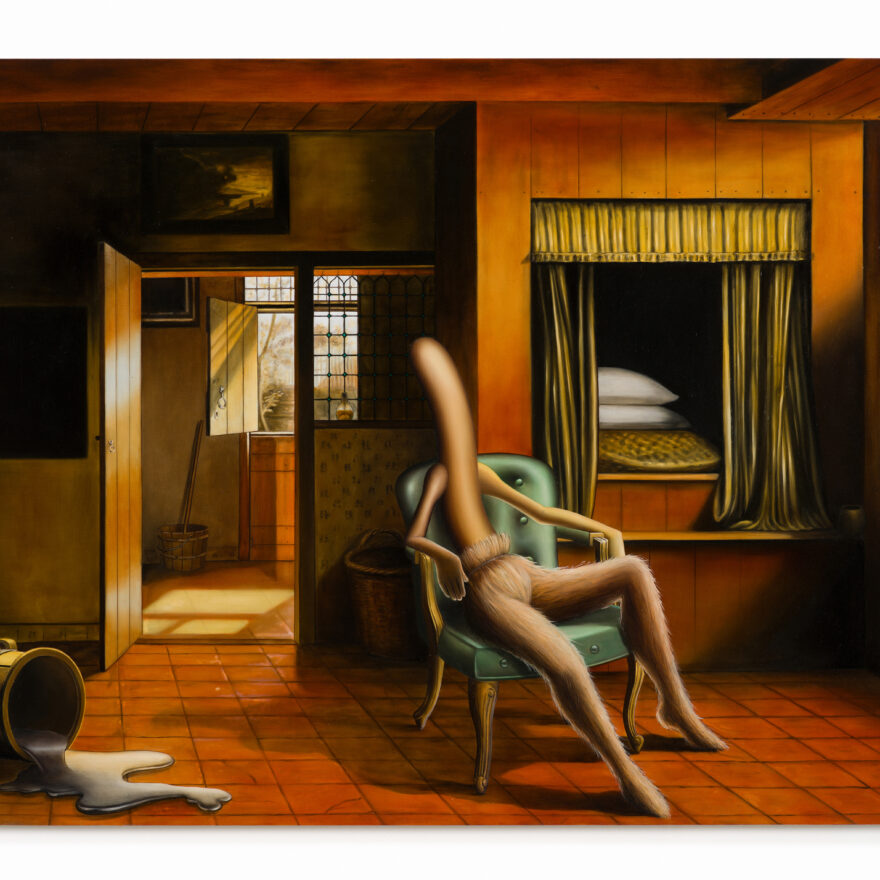
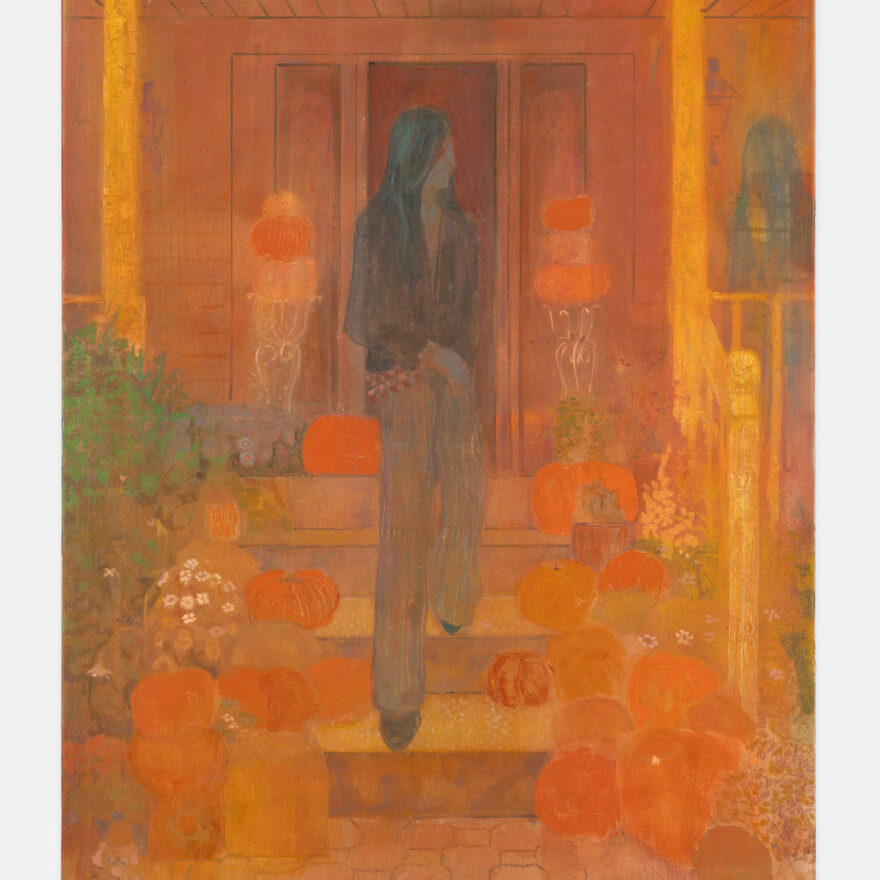
Under the title de sensu, Ikemura presents new paintings and sculptures that explore the relationship between perception, body, mind, and space. The Latin title – de sensu, “through the senses” – refers to a central theme of the exhibition: the experience of the world beyond the purely visual. The suggestion of touch, imagined sounds, and scents seeks to expand perception synesthetically, inviting viewers to understand their own bodies as part of a larger spatial and social context.
Beginning from a state of uncertainty, Ikemura explores the possibility of finding new orientation in a world shaped by constant change. The sharpening of the senses appears here as a process of searching and rediscovering – an awakening of awareness of one’s surroundings.
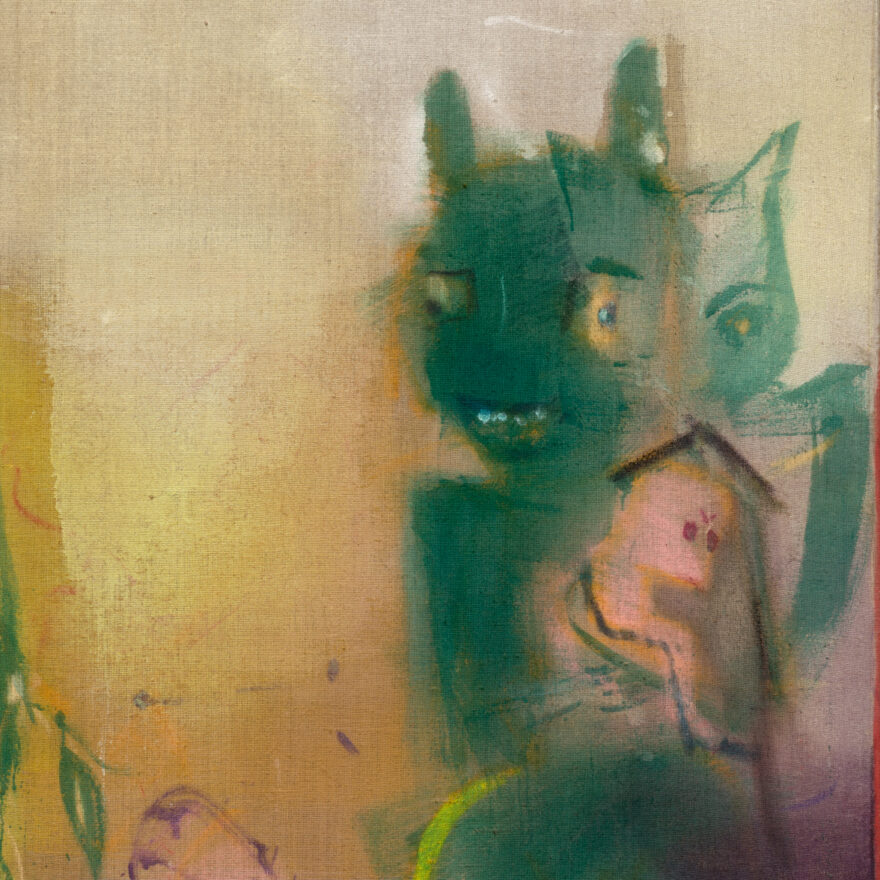
The spatial design of the exhibition is shaped by three green figures – Green Baby, Green Mom, and Dear Spirit. Green walls and accents of yellow and dark blue light create an atmosphere reminiscent of the transition from day to night, evoking the cycle of becoming and passing away. The figure in mamagirl appears to accompany this liminal space as a vigilant presence.
Leiko Ikemura
“Green Mom” 2025
Tempera und Öl auf Jute
210,5 x 120,5 cm
82 7/8 x 47 1/2 in
© Leiko Ikemura
Courtesy Contemporary Fine Arts
Photo: Jörg von Bruchhausen
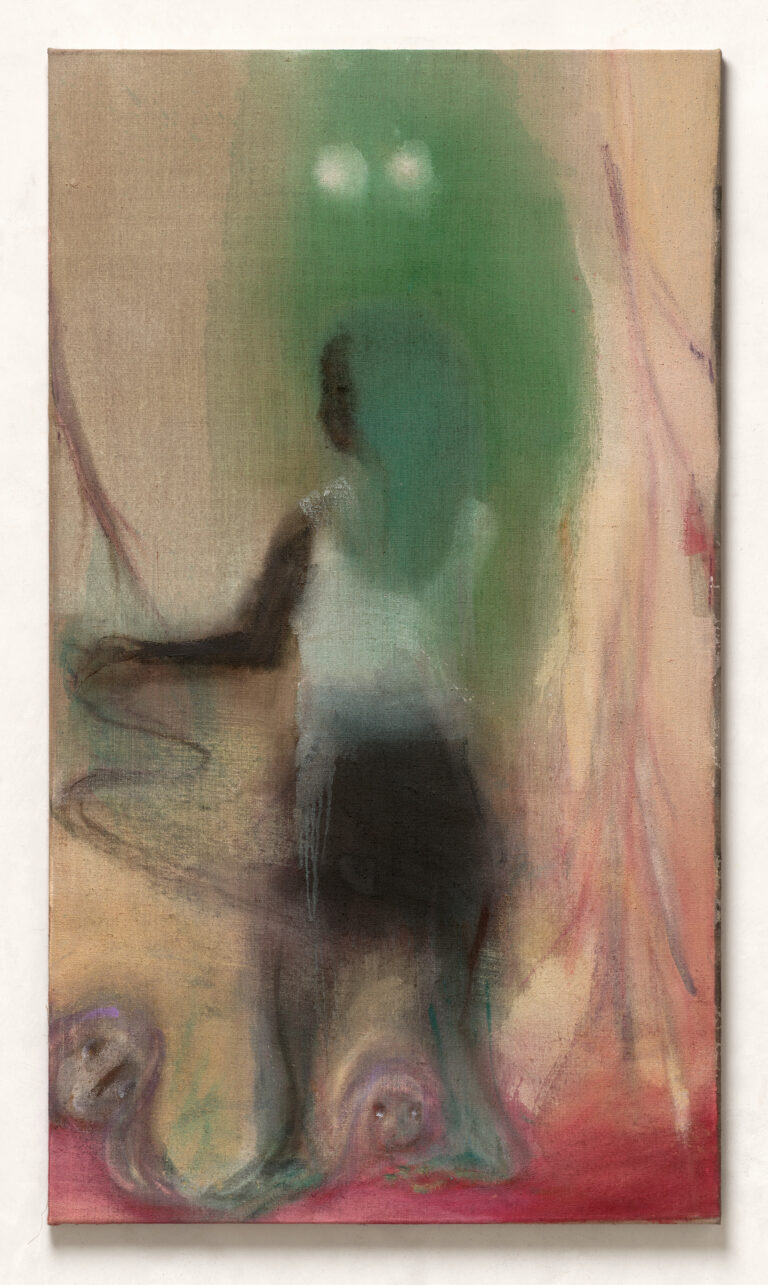
Leiko Ikemura
“Dear Spirit” 2025
Tempera und Öl auf Jute
210,5 x 120,5 cm
82 7/8 x 47 1/2 in
© Leiko Ikemura
Courtesy Contemporary Fine Arts
Photo: Jörg von Bruchhausen
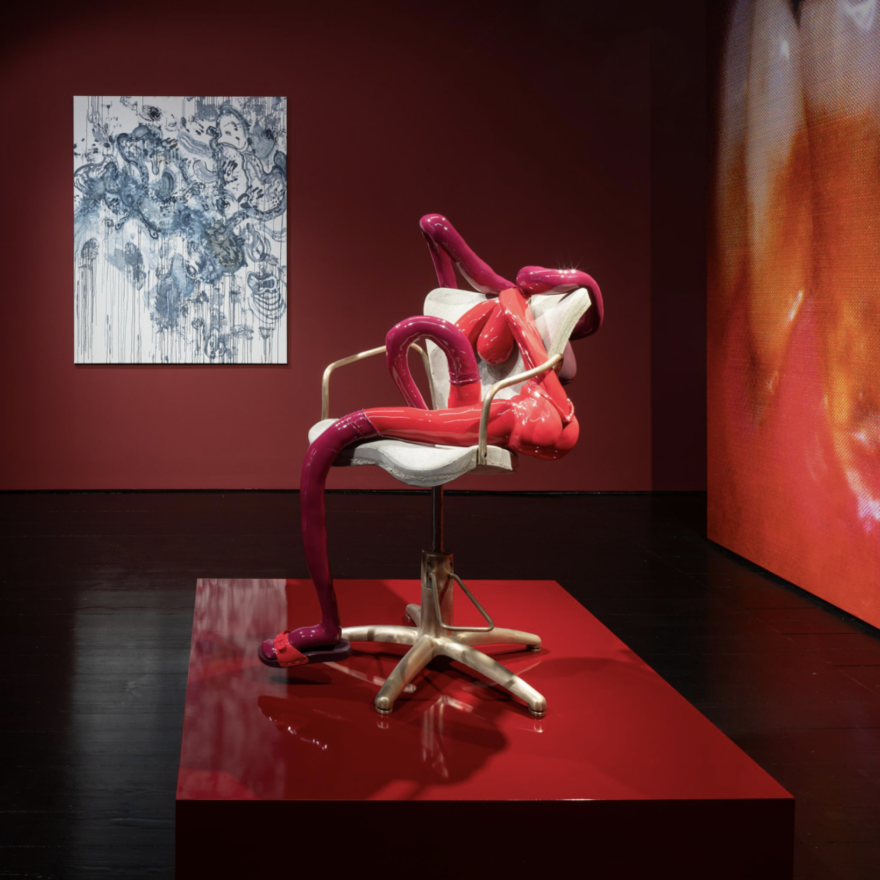
With her new sculpture Milk Lady, Ikemura deepens her exploration of care, transformation, and renewal. The figure absorbs energy and releases it again as nourishment for new life. In this way, the exhibition suggests a creaturely cycle without beginning or end.
Since the 1980s, Leiko Ikemura has explored themes of transition, transculturality, and collective consciousness beyond the boundaries of nations and gender. Her practice moves seamlessly between luminous and often monumental paintings, introspective drawings and watercolours, glazed terracotta sculptures, glass, and ceramics.
Ikemura’s figures, which often appear as female spirits, can be read as childlike, defiant, and independent, yet at the same time fragile and ethereal. They seem to possess the power to exist in multiple worlds. Mythical hybrid creatures, somewhere between human and animal, populate her artistic universe. The ubiquitous Usagi motif, for example, combines rabbit ears with a human female body. First created by Ikemura in response to the nuclear disaster in Fukushima, the motif embodies universal suffering, resilience, and renewal.
The East Asian Sansuiga tradition of landscape painting, the masters of old Japan, Surrealism, post-war abstraction, and the figurative painting of the 1980s, which she helped shape, all serve as sources of inspiration for the artist and merge as influences within her work.
Leiko Ikemura (イケムラレイコ, 池村玲子) was born in Tsu, Mie Prefecture, Japan, and lives and works in Berlin. She studied at Osaka University of Foreign Studies and at the University of Fine Arts in Seville before settling in Europe. From 1991 to 2015, she was Professor of Painting at the Berlin University of the Arts.
Ikemura’s works are held in major international museum collections, including the Centre Pompidou, Paris; the National Museum of Modern Art, Tokyo; Kunstmuseum Basel; and Museum Kunstpalast, Düsseldorf. Her most recent solo exhibitions include Motherscape, Albertina, Vienna (2025); Das Meer in den Bergen, Kunstmuseum Chur (2025); Rising Light / Frozen Moment, Museum of Contemporary Art Tokyo (2024–2025); Floating Spheres, Kunsthalle Emden (2024); When Animals Become Art, The Feuerle Collection, Berlin (2023); año del usagi, Museo de Arte de Zapopan, Guadalajara, Mexico (2023); Witty Witches, Georg Kolbe Museum, Berlin (2023); and Towards New Seas, Kunstmuseum Basel (2019). In 2025, she was awarded the title of “Person of Cultural Merit” by the Japanese government.
Walter Pichler
ZEICHNUNGEN & SKULPTUREN
organized by Anna Tripamer
11 SEP – 24 OCT 2026
Opening – 10 SEP 2026, 6–10 pm
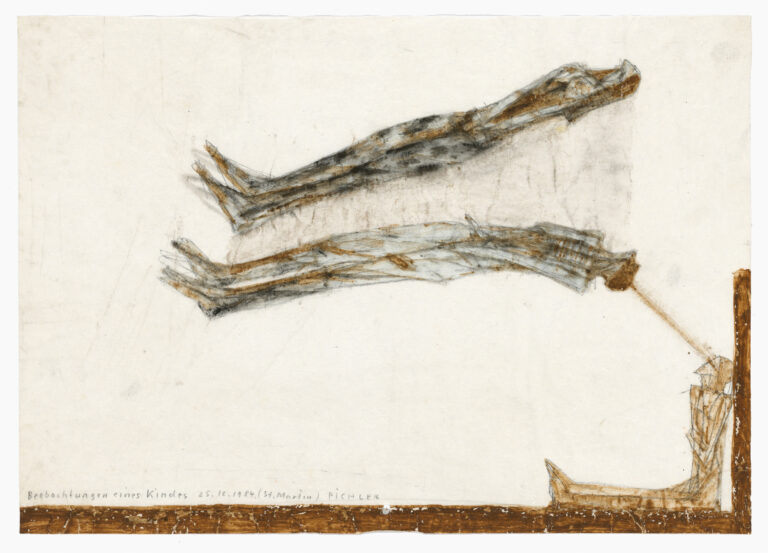
Walter Pichler
“Beobachtungen eines Kindes” 1984
Bleistift, Tempera und Tusche auf Papier
30,5 x 43 cm / 12 x 16 7/8 in
Photo: Jochen Littkemann
Courtesy Contemporary Fine Arts
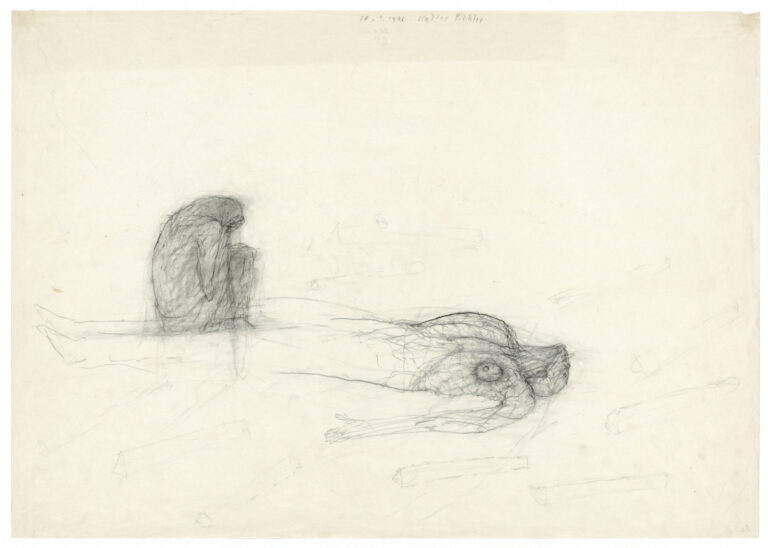
Walter Pichler
Ohne Titel / Untitled 1976
Bleistift auf Papier
43,2 x 61,1 cm / 17 x 24 in
Photo: Jochen Littkemann
Courtesy Contemporary Fine Arts
Contemporary Fine Arts is delighted to announce the fourth exhibition by Austrian artist Walter Pichler with the gallery on the occasion of Berlin Art Week 2026. We are particularly pleased to have Anna Tripamer, the artist’s daughter, estate administrator, and closest artistic confidante, oversee the conception and installation of the exhibition.
As early as the 1960s, Walter Pichler gained international recognition with his Prototypes, a series of futuristic works comprising technical body applications, pneumatic spaces, and audiovisual components. Particularly interested in architecture, he developed utopian spaces, often in collaboration with Hans Hollein and Raimund Abraham. They favoured synthetic materials that felt radically new at the time, such as PVC, acrylic glass, polyester, and aluminium. Already during this early phase of his career, Pichler had a solo exhibition at the Museum of Modern Art in New York
in 1967.
Initially planned only as a temporary stay, Pichler withdrew to Burgenland shortly after another museum solo exhibition in 1971 at Vienna’s Belvedere, today the 21er Haus. He discovered a farmstead in the village of St. Martin, which he purchased and which subsequently became his principal place of work and, alongside Vienna, the center of his family‘s life. The move back to the countryside, as Pichler had grown up in rural Tyrol, also brought about a radical shift in his choice of materials. From then on, he turned to organic materials such as wood, concrete, brick, clay, glass, and lead, gradually creating a unique universe of models, sculptures, and drawings. Drawing was Pichler’s preferred medium, as it served as a projection surface for his imagination. However, he did not carry out his artistic work solely on paper or in model form; he frequently realized his ideas working on them over periods of years, sometimes decades. With rigor, precision, and a strong spatial sense, Pichler approached the realization of his sculptural vision, creating idiosyncratic, archetypal sculptures of an almost archaic beauty.
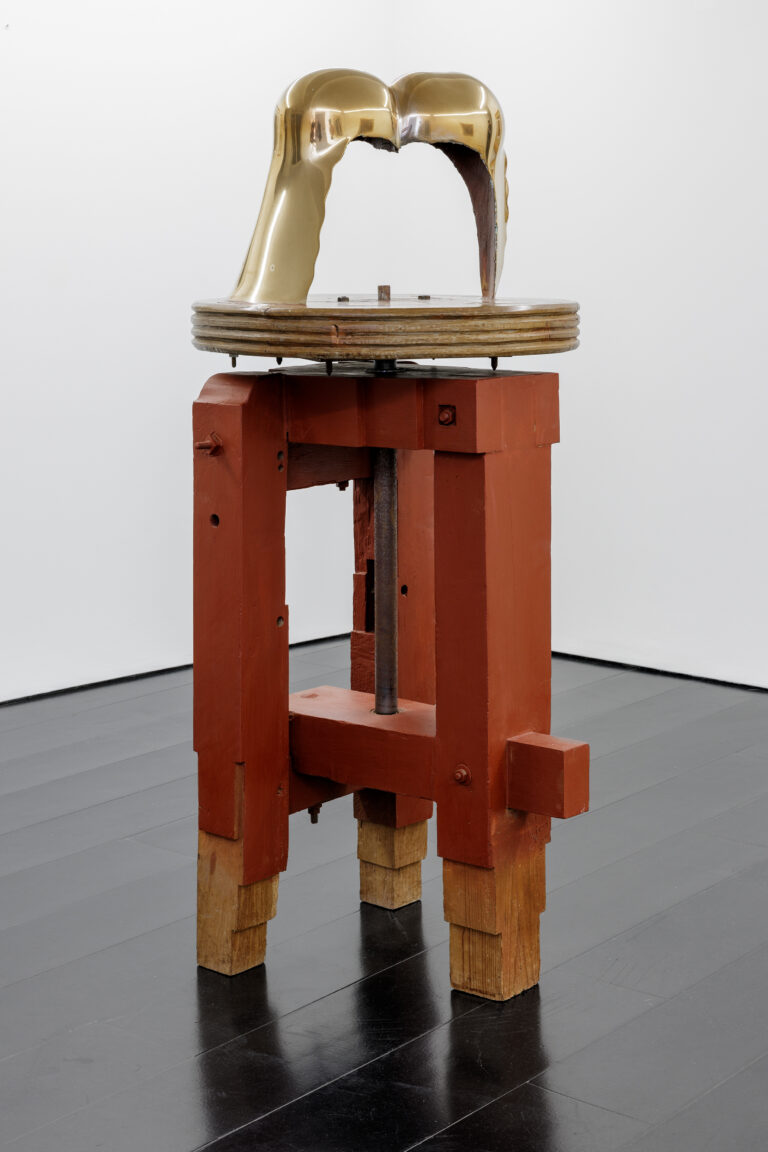
Walter Pichler
“Doppelkopf” 1987
Metall, Holz und Lehm
135 x 61 x 60 cm / 53 1/8 x 24 x 23 5/8 in
Photo: Gina Folly
Courtesy Contemporary Fine Arts
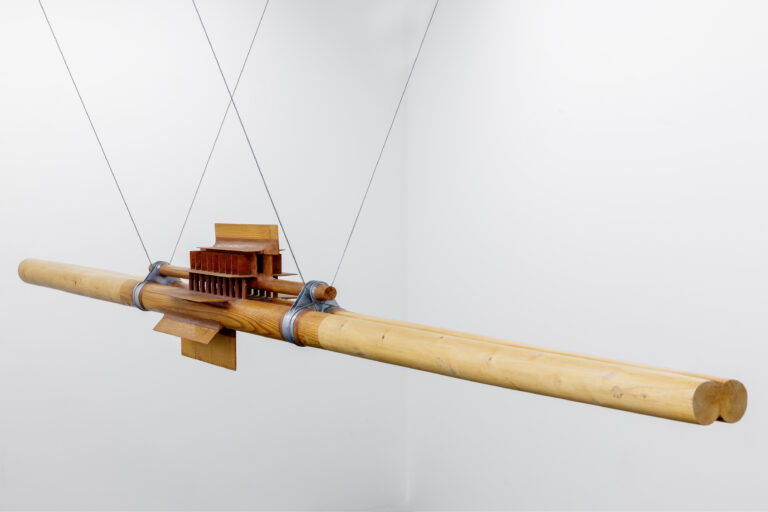
Walter Pichler
“Der rote Stab” 2003
Holz, Metall und Lehm
287 x 26 x 22 cm / 113 x 10 1/4 x 8 5/8 in
Photo: Gina Folly
Courtesy Contemporary Fine Arts
His most radical move, surely without precedent in modern art history, was his decision to build structures to house his sculptures. These simple buildings on the farmstead served and continue to serve exclusively to accommodate the sculptures. Pichler no longer distinguished between space and sculpture; they can only be understood as a unity. In terms of construction methods and materials, the houses blend seamlessly into the architectural landscape of this rural region on the border with Slovenia and Hungary.
The artist’s deeply personal relationship with his sculptures largely prevented him from selling them or placing them in museums. In the case of works that already “inhabited” a house, he categorically ruled out their sale. No one has internalized Pichler’s approach more deeply than his daughter Anna Tripamer, nor was anyone more frequently witness to his production processes – processes that dominated the family’s daily life in St. Martin while at the same time becoming an integral part of it. His wife, Elfi Tripamer (1943 – 2025), was likewise closely connected to him not only as the photographer of his works.
The exhibition, conceived by Anna Tripamer, offers a focused insight into the multifaceted oeuvre of an artist whose engagement with sculpture, architecture, and space has lost none of its radicalism to this day.
Walter Pichler was born on October 1, 1936, in Deutschnofen, South Tyrol. He lived and worked in Vienna and St. Martin an der Raab. He studied at the School of Applied Arts in Innsbruck and at the University of Applied Arts in Vienna. His work was exhibited at an early stage in renowned international museums and institutions, including the Museum of Modern Art in New York in 1967 and 1975, documenta 4 in Kassel in 1968, the Austrian Pavilion at the 40th Venice Biennale in 1982, the Städel Museum in Frankfurt am Main in 1978, the MAK – Museum of Applied Arts in Vienna in 1988 and 2011, the Generali Foundation in Vienna in 1998, the Stedelijk Museum in Amsterdam in 1998, the Museum der Moderne in Salzburg in 2016, the Belvedere in Vienna in 2023, and the Kunstmuseen Krefeld in 2024. Pichler died in 2012 in St. Martin an der Raab.