Bernd Koberling
Rooted In Time Rooted In The Sky, Paintings 1992–2026
1 MAY until 20 JUN 2026
Opening – 1 MAY 2026, 6-9 pm
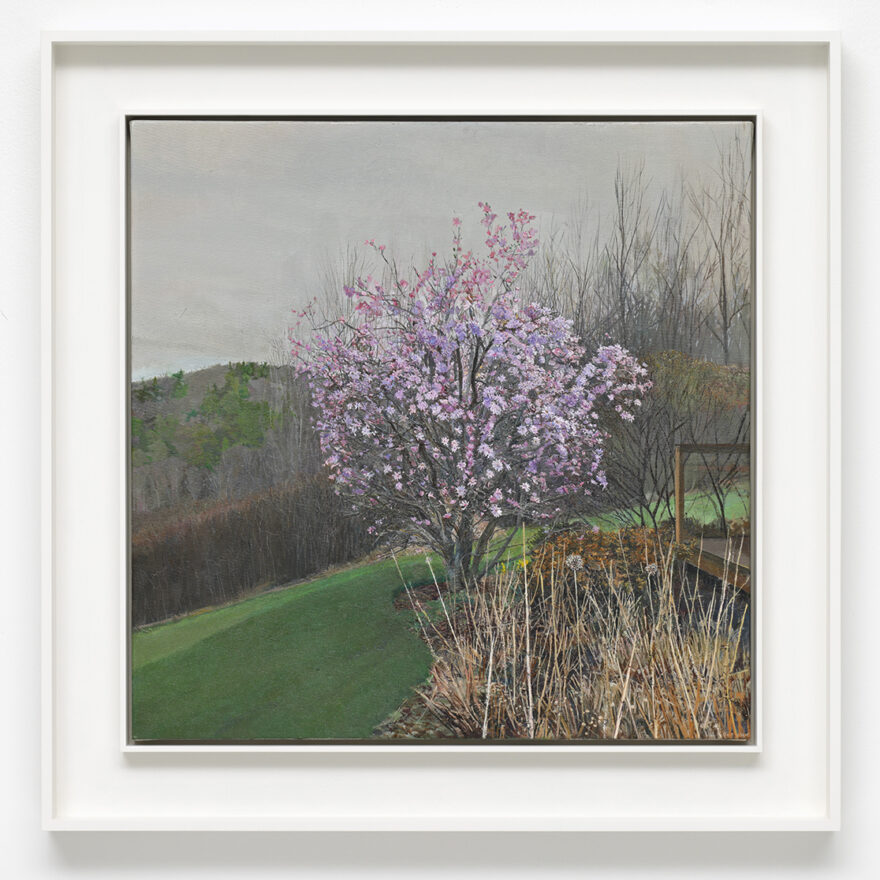
Buchmann Galerie is pleased to present an exhibition of works by Bernd Koberling on the occasion of Gallery Weekend Berlin 2026. Painter Bernd Koberling (b. 1938 in Berlin) is among the most important and influential artists of German postwar art.
BERND KOBERLING
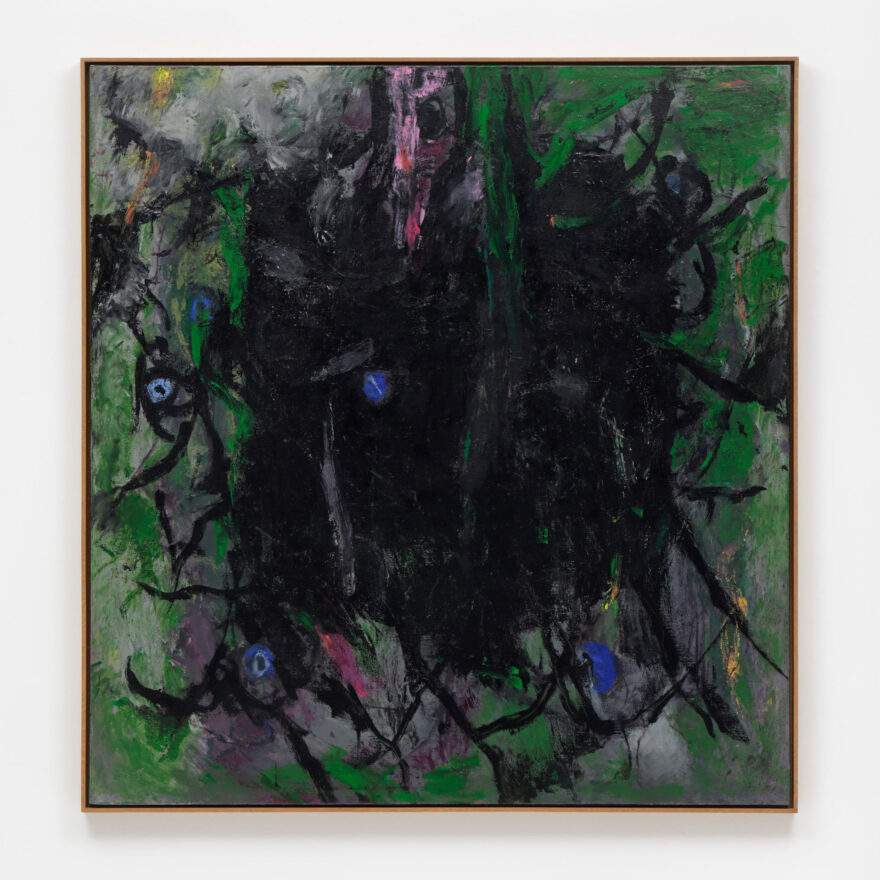
Erdstelle, 1992
Öl auf Leinwand / oil on canvas
190 x 180 cm / 74¾ x 70¾ in
Photo: Hans-Georg Gaul
All images courtesy of the artist and Buchmann Galerie
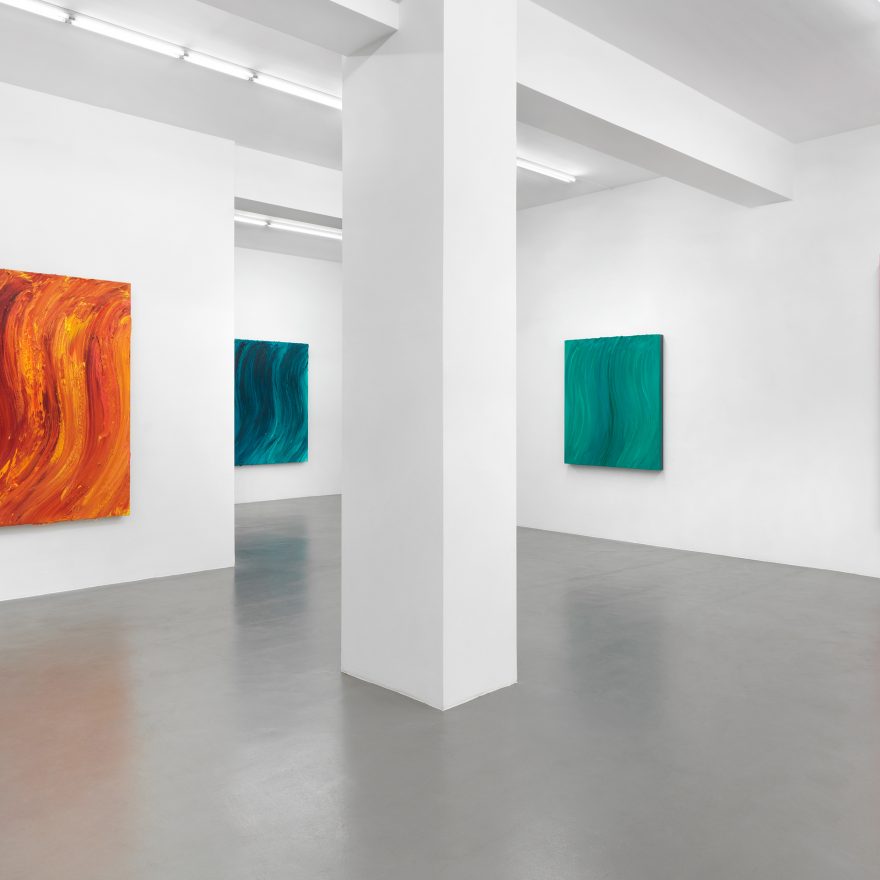
Koberling first became known as one of the leading figures of the West Berlin “Junge Wilde” in the 1980s. Around 1990, however, he moved away from the figurative furor of Neo-Expressionism and devoted himself to an intense exploration of painting as a vehicle for expression between material, color, and form. From early on, the experience of landscape became an important point of reference for his consistently playful striving to renew the possibilities of painting.
Through regular, sometimes months-long stays in Iceland, his recent works have been deeply shaped by the perception of landscape. Since 1977 he has spent time on the island every year, and its nature has had a decisive influence on his painting. This is also reflected in the chromaticity of his works, as painting that opens itself to its own means in order to produce works of great visual intensity.
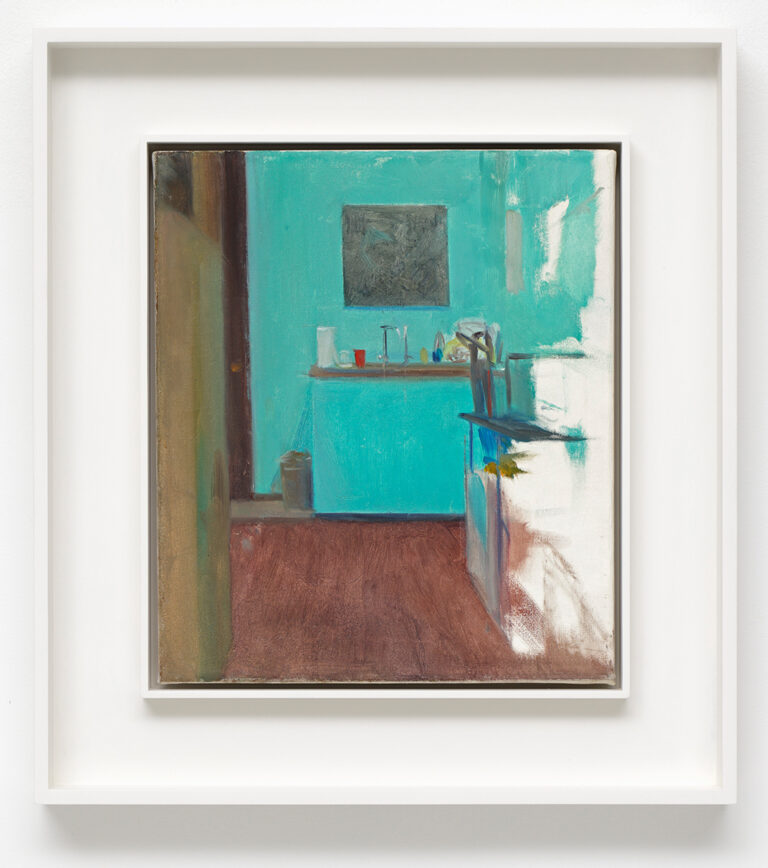
BERND KOBERLING
Momentane Vision 92, 2025
Aquarell auf Arches / Water color on Arches paper
72,5 x 56,5 cm / 28½ x 22¼ in
Rahmen/ Frame: 88 × 71,5 cm / 34¾ × 28¼ in
Photo: Joerg von Bruchhausen
All images courtesy of the artist and Buchmann Galerie
BERND KOBERLING
Momentane Vision 38, 2025
Aquarell auf Arches / Water color on Arches paper
72,5 x 56,5 cm / 28½ x 22¼ in
Rahmen/ Frame: 88 × 71,5 cm / 34¾ × 28¼ in
Photo: Joerg von Bruchhausen
All images courtesy of the artist and Buchmann Galerie
The exhibition presents, alongside large-scale canvases from the years 1992 to 2026, an extensive series of watercolors characterized by intense coloration, broad gestural actions, and consistent abstraction. “The more intimate the painting, the rougher the means,” says Koberling. The watercolors form large groups of works and reveal the mystical-romantic side of the artist.
BERND KOBERLING
Momentane Vision 92, 2025
Aquarell auf Arches / Water color on Arches paper
72,5 x 56,5 cm / 28½ x 22¼ in
Rahmen/ Frame: 88 × 71,5 cm / 34¾ × 28¼ in
Photo: Joerg von Bruchhausen
All images courtesy of the artist and Buchmann Galerie
BERND KOBERLING
Moosheidegestein, 2022
Öl auf Leinwand / oil on canvas
72,5 x 56,5 cm / 28½ x 22¼ in
Photo: Hans-Georg Gaul
All images courtesy of the artist and Buchmann Galerie
Works by the artist are held in numerous public and private collections, including the Bayerische Staatsgemäldesammlungen, Kunstsammlung Deutsche Bank, FRAC Nord-Pas-de-Calais, Dunkerque, France, Hamburger Bahnhof – Museum für Gegenwart, Berlin, Museum Ludwig, Cologne, Museum Würth, Künzelsau, Munich Re Art Collection, Nasjonalmuseet, Oslo, Norway, Nordiska Akvarellmuseet, Skärhamn, Sweden, the collection of Ulla and Heiner Pietzsch, Berlin, the Art Collection of the German Bundestag, Sprengel Museum, Hanover, Städel Museum, Frankfurt am Main, Reykjavik Art Museum, and the Vancouver Art Gallery, Vancouver.
Bettina Pousttchi - Clare Woods
Variations on Subject and Object
1 MAY until 20 JUN 2026
Opening – 1 MAY 2026, 6-9 pm
At Buchmann Box
The exhibition “Variations on Subject and Object” in the Buchmann Box presents recent works by Bettina Pousttchi and Clare Woods.
Installation view
Bettina Pousttchi – Clare Woods
Variations on Subject and Object
Buchmann Box
Photos: Michael Schultze
All images courtesy of the artist and Buchmann Galerie
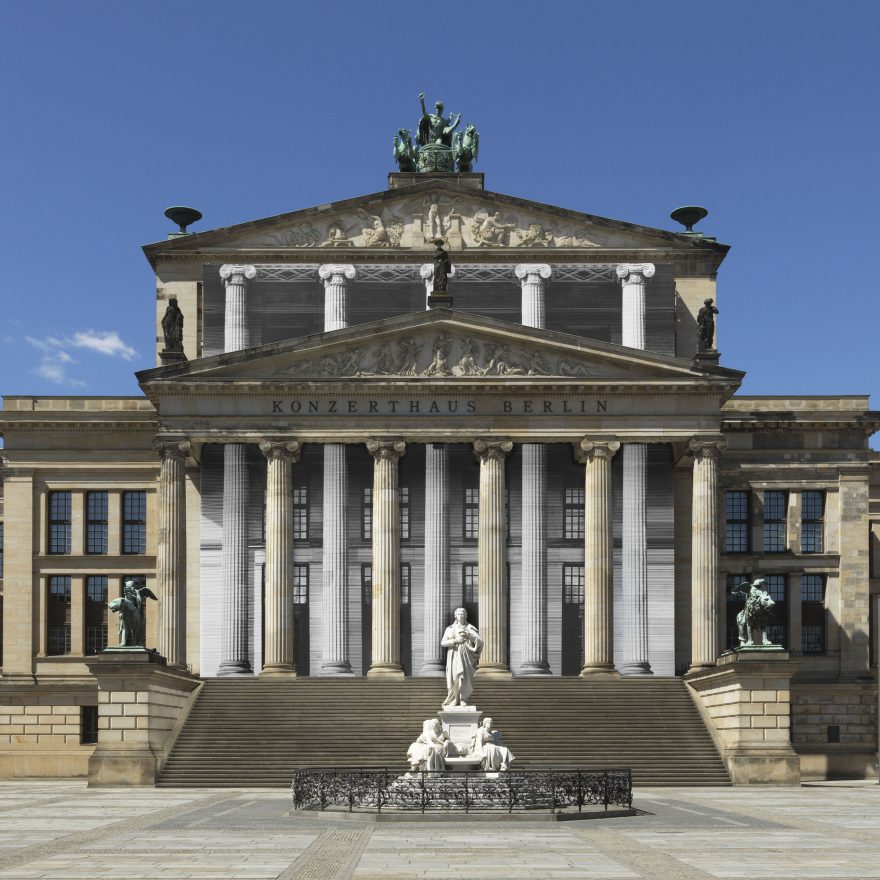
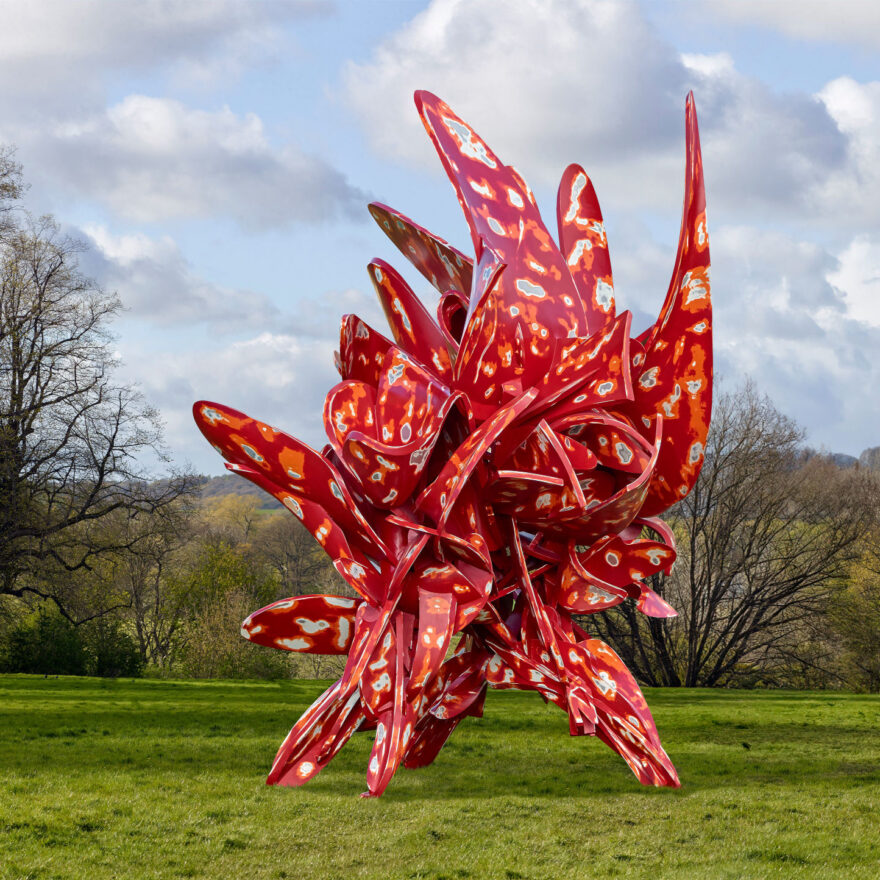
The new red sculpture by Bettina Pousttchi from the “Vertical Highways” series is made from guardrails, which the artist has transformed and arranged into a vertical composition.
For several years, Pousttchi has incorporated objects into her sculptures that structure the physical experience of urban space. By bending, pressing, and altering their color, she relieves these everyday objects of their regulatory function and detaches them from their original context of meaning. They become signs of change, fluidity, and dissolving boundaries. With her serial use of the source material, the artist conceptually draws on Minimal Art as well as to Marcel Duchamp’s readymades. Through her intervention in form, she creates a variation of a prefabricated element into a new, autonomous object.
Bettina Pousttchi
Earthwork, 2026
Glazed ceramic
Photo Michael Schultze
23,5 (h) x 80 x 12 cm / 9¼ (h) x 31½ x 4¾ in
All images courtesy of the artist and Buchmann Galerie
Clare Woods
Cold Front, 2023
Oil on aluminium
29 x 24 cm
11½ x 9½ in
11½ x 9½ in
All images courtesy of the artist and Buchmann Galerie
In relation to the red-lacquered sculpture, handcrafted ceramics are presented. Their cubic forms are derived from historical architectural elements. The manual production gives each element a slightly different shape, and the individual glaze—ranging in shades from burgundy red and light purple to deep cobalt blue—imbues each module with its own nuance. This variation of the object in form and color creates a distinctive vitality. The serial, non-hierarchical arrangement of nearly identical modules in the wall sculptures recalls Donald Judd’s progressions.
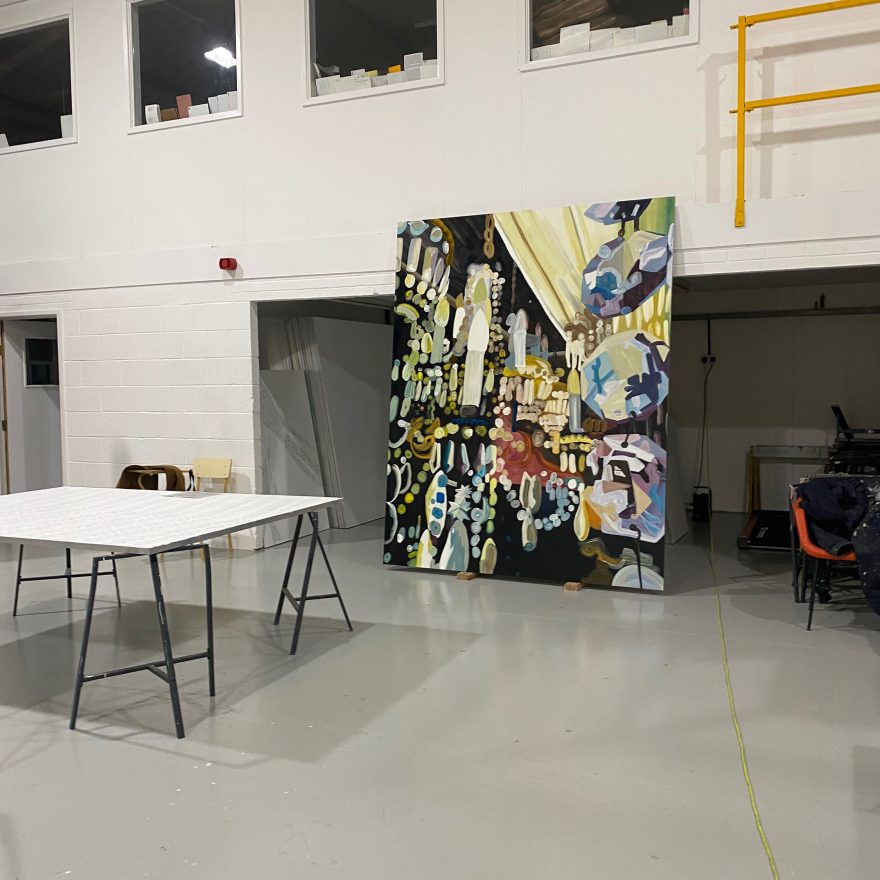
Working in variations is also a central approach in Clare Woods’s practice and is evident in her small-format oil paintings on aluminum—such as the four versions of a trifle, the British layered dessert, created in the same year.
11¾ x 9½ in
Woods’s painting moves between abstract gesture and enigmatic figuration. As the artist herself puts it: “The image is the starting point but it’s not necessarily about the image ever.” Rather, through her brushwork and a wet-on-wet technique in oil painting—which requires completing the work in a single session after careful preparation—Clare Woods condenses the motif into a high painterly intensity within a small space.
Her still lifes may depict motifs—flower bouquets, cupcakes, or trifle—but ultimately, thanks to the characteristic reduction of still-life narrative, it is color that lends the paintings their intensity and creates a vitality that follows an inner sensation more than an external representation.