

Gallery Portrait
Kunsthandel Wolfgang Werner
by Christian Ganzenberg
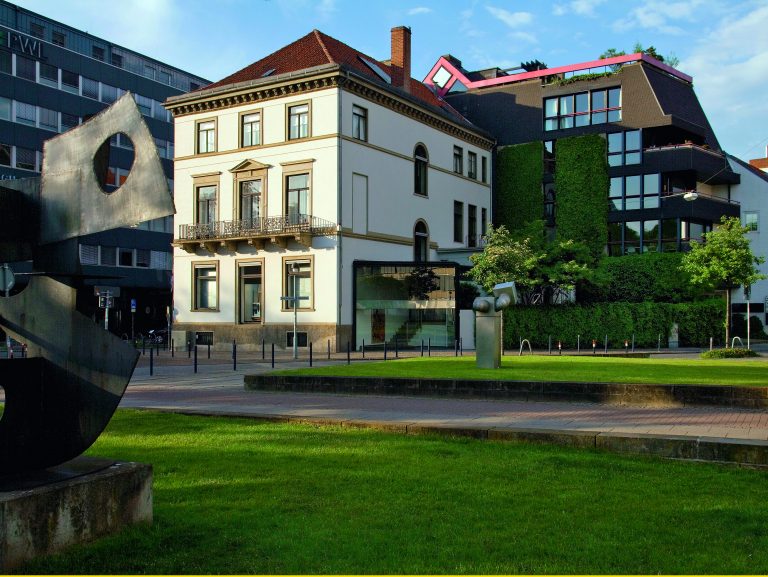
Kunsthandel Wolfgang Werner at Rembertistraße 1A in Bremen, sculpture in the foreground: Berto Lardera, Occasion dramatique VII (1960). Photo: Kunsthandel Wolfgang Werner Bremen / Berlin.
It’s not just since the fall of the Wall and the legendary ‘90s that Berlin has been a veritable hub for art. On the contrary, the art market has a long tradition in our city. Kunsthandel Wolfgang Werner, whose roots can be traced back to Israel Ber Neumann’s Graphisches Kabinett, is living proof of it. Founding his gallery on Kurfürstendamm in 1911, legendary publisher and pioneering art dealer I. B. Neumann went on to establish an entire network of Kabinett spaces throughout the Weimar Republic before moving to New York in 1924. The Voigt family continued to run its Bremen branch until 1970. It was then that Wolfgang Werner, a trained bookseller who grew up in northern Germany, gave up his art history studies to take over the gallery from Ursula Voigt.
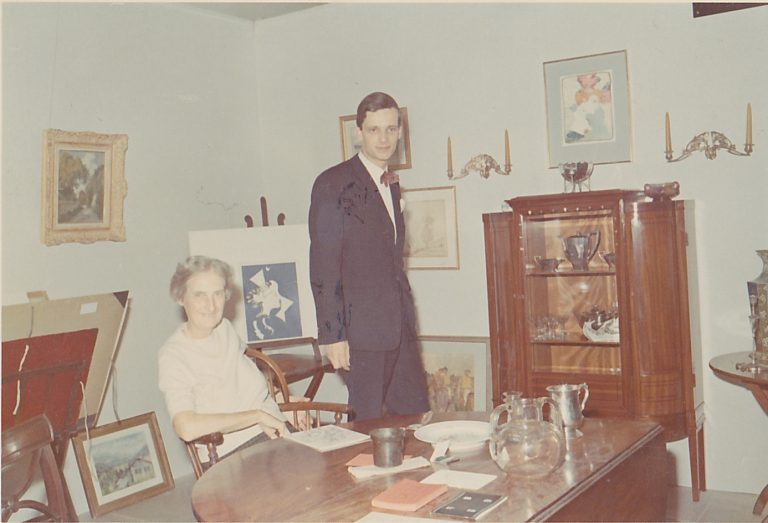
Ursula Voigt & Wolfgang Werner at the art fair in Munich, 1968
Photo: Kunsthandel Wolfgang Werner Bremen / Berlin
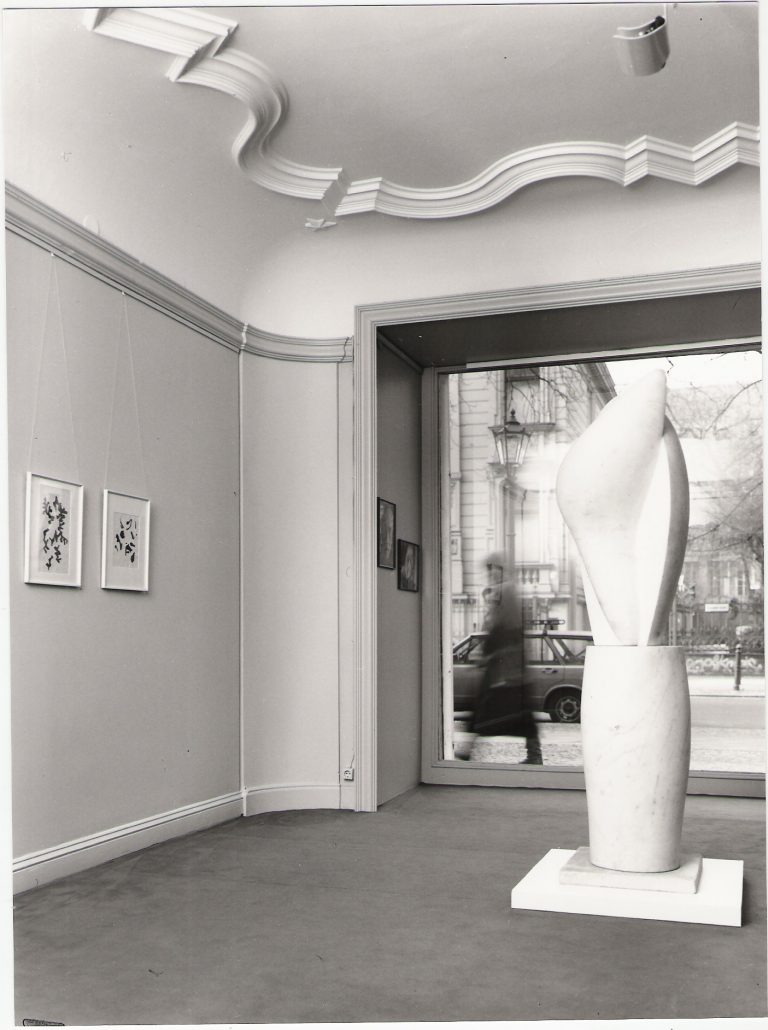
Installation view: Hans Arp – Kurt Schwitters, 1992, at Kunsthandel Wolfgang Werner, Berlin. Photo: Kunsthandel Wolfgang Werner Bremen / Berlin
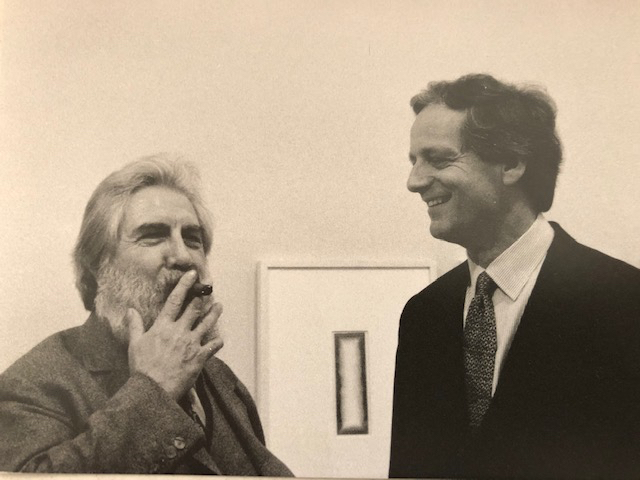
Gotthard Graubner and Wolfgang Werner in Bremen 1997. Photo: Stefanie Herzogenberg.
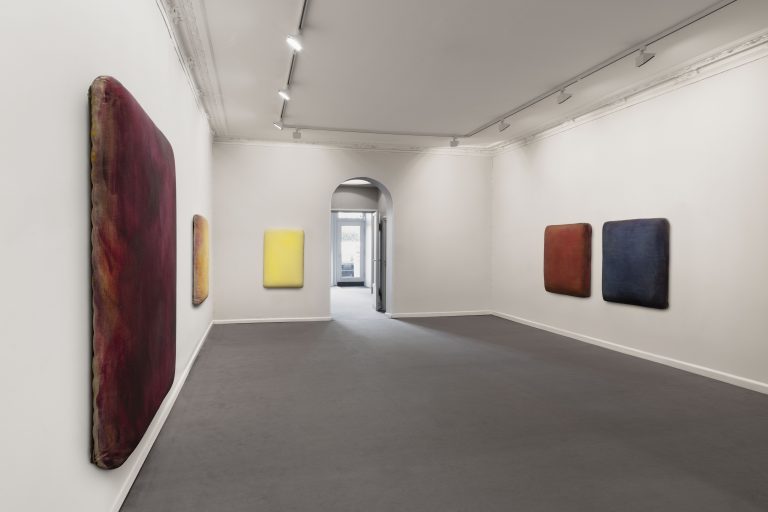
Installation view: Gottthard Graubner, 2020, Kunsthandel Wolfgang Werner Berlin. Photo: anna.k.o.
After running the gallery for two decades at Rembertistraße 1A in Bremen, Werner responded enthusiastically to the fall of the Wall by opening a Berlin location in 1991. Much like today, Berlin’s upscale bourgeoisie was concentrated back then in the Fasanenstrasse area. This audience contributed to the gallery’s aspirations in terms of artistic tradition and its dedication to artistic quality. From the very beginning, the gallery has strived to acquire knowledge and foster its artistic heritage. Scientific accuracy, continuity in programming, close cooperation, and refined presentation are the main principles behind Kunsthandel Wolfgang Werner. The gallery’s artistic program stems from its history. Early European modernism, in particular its German and French artists, and postwar art are still at the core of the gallery’s work today: Liebermann, Corinth, Modersohn-Becker, Vuillard, Belling, Dix, Nolde, Kirchner, Heckel, Klee, Beckmann, Ernst, Schwitters, Schlemmer, and Baumeister. This museum-sounding line-up could also be extended to include numerous first-class artists, since it is constantly invigorated and enriched by contemporary figures such as Jean Dubuffet, Antoni Tàpies, K.O. Götz, Almut Heise, Gerhard von Graevenitz, François Morellet, and Gotthard Graubner. The gallery’s sophisticated approach to art can be seen not only in their meticulously presented exhibitions, but also in their regularly published, scholarly catalogues. Furthermore, Wolfgang Werner has co-authored numerous publications on “gallery saint” Paula Modersohn-Becker, which have become reference works for researchers and include, in particular, the catalogue raisonné of her paintings. For more than 50 years and with distinguished northern German restraint, the gallery has made an outstanding contribution to the reappraisal of early modernism. Chapeau!
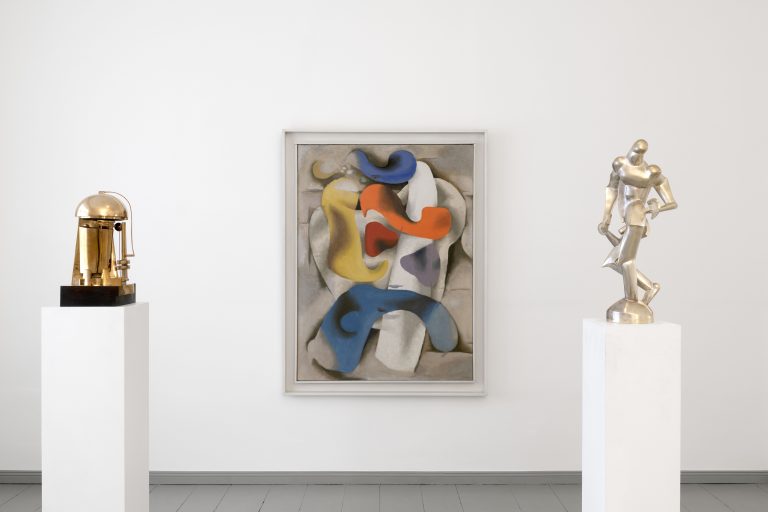
Installation view: Rudolf Belling – Willi Baumeister, 2020, at Kunsthandel Wolfgang Werner, Berlin. Photo: anna.k.o.
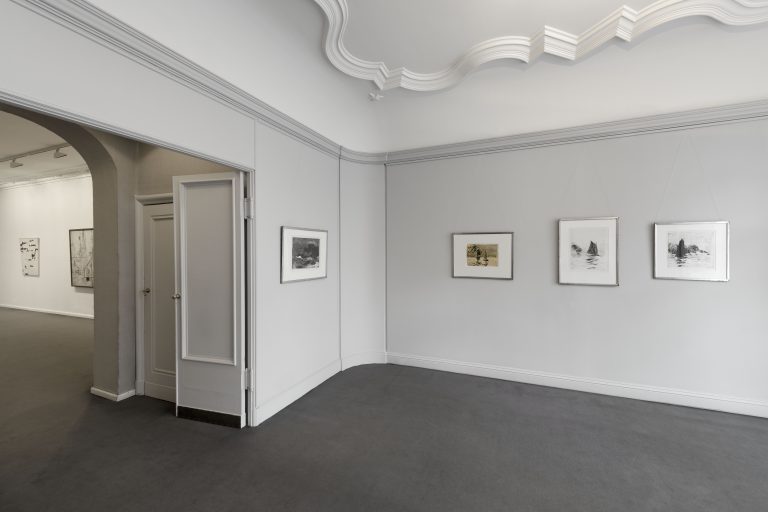
Installation view: Emil Nolde – Jean Follett – Gerhard von Graevenitz at Kunsthandel Wolfgang Werner Berlin 2020. Photo: anna.k.o.
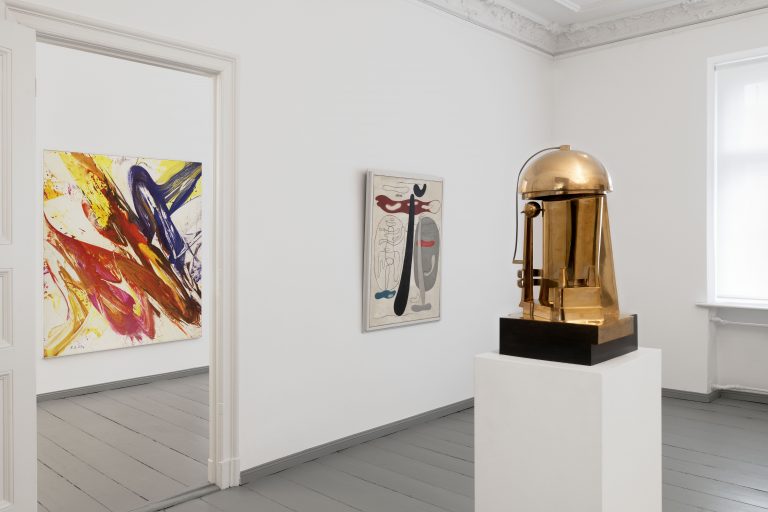
Installation view: K.O. Götz – Willi Baumeister – Rudolf Belling at Kunsthandel Wolfgang Werner Berlin 2020. Photo: anna.k.o.
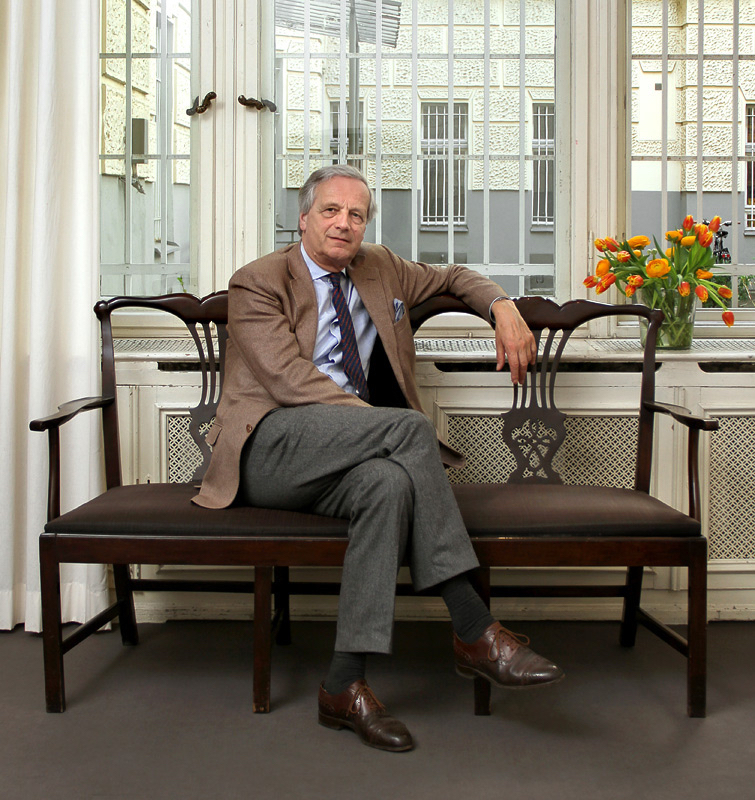
Portrait Wolfgang Werner, Gallery Weekend Berlin 2012. Photo: Marco Funke.
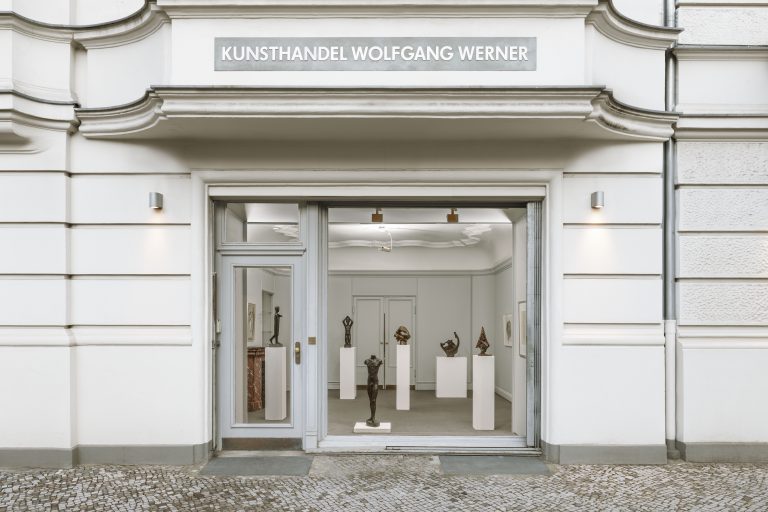
Kunsthandel Wolfgang Werner at Fasanenstraße 72, Showroom Rudolf Belling – Hermann Blumenthal, spring 2021. Photo: anna.k.o.