

Gallery Portrait
Esther Schipper
by Christian Ganzenberg
When looking at their precise and regular newsletters as well as their extensive homepage with its comprehensive archive, it is fair to assume the history behind Esther Schipper and her gallery to be vibrant and full of anecdotes. But like every adventure, this story has a beginning. After gaining initial experience working with Monika Sprüth and completing her postgraduate curatorial studies at the École du Magasin in Grenoble, Schipper opened her gallery in Cologne in 1989, with an exhibition by the Canadian artist collective General Idea. At the time, Neo-Expressionism was still predominant in the Rhineland region. Gallery owners were mostly male and rarely interested in artists who worked with new media, were politically active, or even questioned the exhibition format. Yet, Esther Schipper was committed to these very artistic figures, whose role models included pioneers such as Seth Siegelaub, Jack Wendler, Gerry Schum, and the collector Herman Daled.
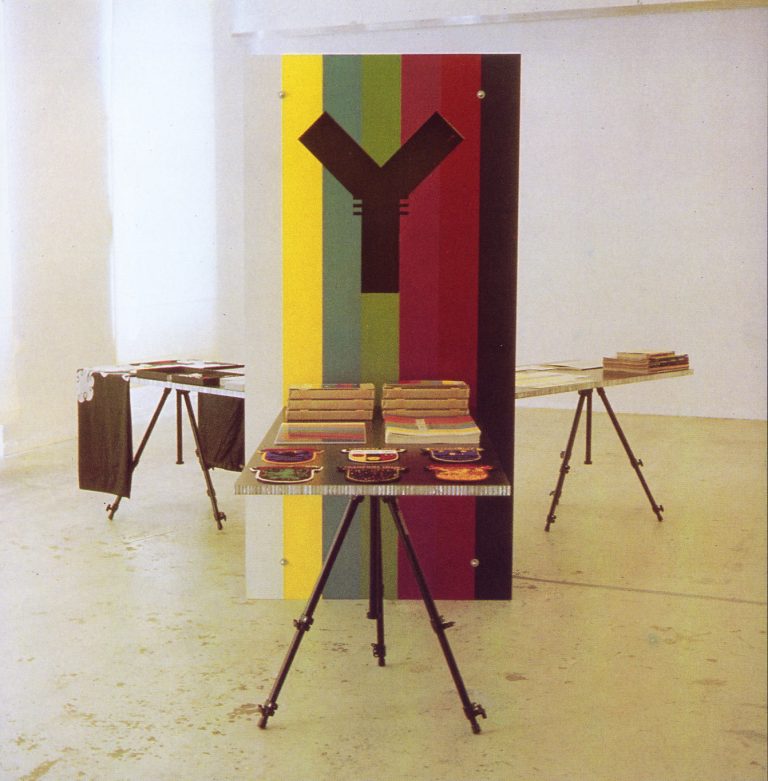
Exhibition view: General Idea, ¥en Boutique,
Esther Schipper, Cologne, 1989
Courtesy The Estate of General Idea and Esther Schipper, Berlin
Photo: Lothar Schnepf
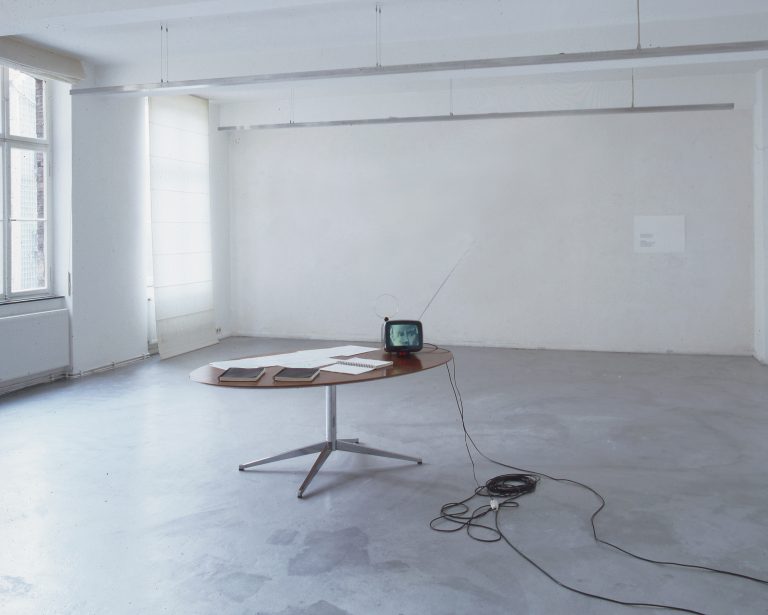
Exhibition view: Liam Gillick, McNamara, Schipper & Krome, Cologne, 1994
Courtesy the artist and Esther Schipper, Berlin
Photo: Lothar Schnepf
Well-equipped with a Toshiba notebook and a brand-new fax machine, Schipper showcased international artistic positions. These included General Idea, Angela Bulloch, Philippe Parreno, Liam Gillick, Dominique Gonzalez-Foerster, and Julia Scher, who are all still represented by the gallery after more than 30 years. Such consistency and collaborative ethos have become the signature features of her professional ventures. What once was a one-woman operation was growing swiftly. Already in the early nineties, she set up another space (with Daniel Buchholz) for multiples and artists’ books in Cologne. “A company cannot be built up by a single person, only by a team, or by many teams. Advising and selling art is often based on a relationship of particular trust. That’s why building a business that is both efficient and personal is the greatest challenge for a gallery owner,” Schipper says when looking back.
From the outset, Schipper was eager to exhibit “ephemeral and time-based conceptual projects” in order to create “spaces for discourse.” Berlin, an artists’ city burgeoning in the nineties, provided a welcome, once-in-a-lifetime opportunity. In 1995, she opened a second gallery space on Auguststraße, completely relocating to Berlin shortly thereafter. A period full of freedom and experimentation followed, during which the gallery operated more like a platform than a commercial venue. By showcasing discourse-provoking exhibition projects and specially commissioned works, series of talks, and the occasional happening, she constantly prompted her artists—including Pierre Huyghe, Thomas Demand, and Ugo Rondinone—to develop new bodies of work.
The Berlin hype subsided in the early 2000s and the gallery scene became increasingly established. After moving to Linienstraße, the gallery began to make a name for itself outside Berlin. This was a result of its ability to skillfully combine challenging conceptual exhibitions with commercial success. Furthermore, Schipper founded an initiative in 2004 with a group of Berlin colleagues that has since been emulated in many international cities: the Gallery Weekend Berlin. The idea of bringing out-of-town collectors to the city for a weekend of enthralling, top-notch exhibitions across different gallery spaces remains compelling to this day.
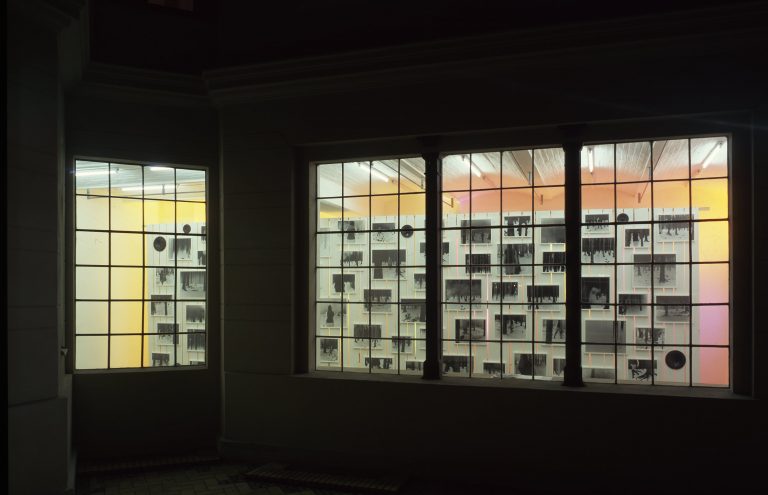
Exhibition view: Ugo Rondinone, In the sweet years remaining, Esther Schipper, Berlin, 1999
Courtesy the artist and Esther Schipper, Berlin
Photo:Carsten Eisfeld
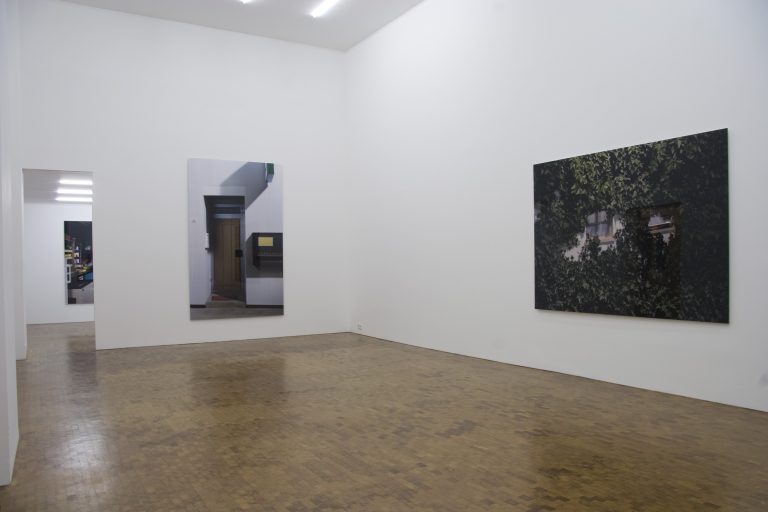
Exhibition view: Thomas Demand, Klause, Esther Schipper, Berlin, 2006
Courtesy the artist and Esther Schipper, Berlin
© VG Bild-Kunst, Bonn, 2021
Photo: Carsten Eisfeld
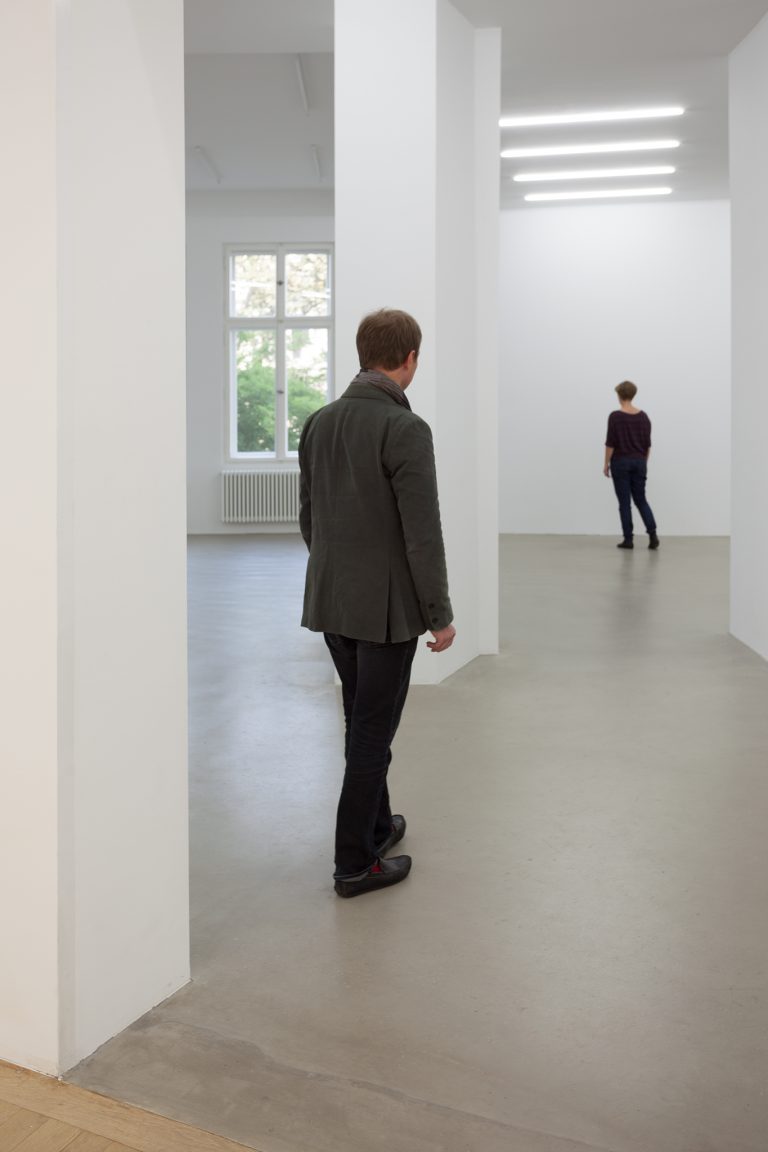
Exhibition view: Pierre Huyghe, Influants, Esther Schipper, Berlin, 2011
Courtesy the artist and Esther Schipper, Berlin
© VG Bild-Kunst, Bonn, 2021
Photo: Andrea Rossetti
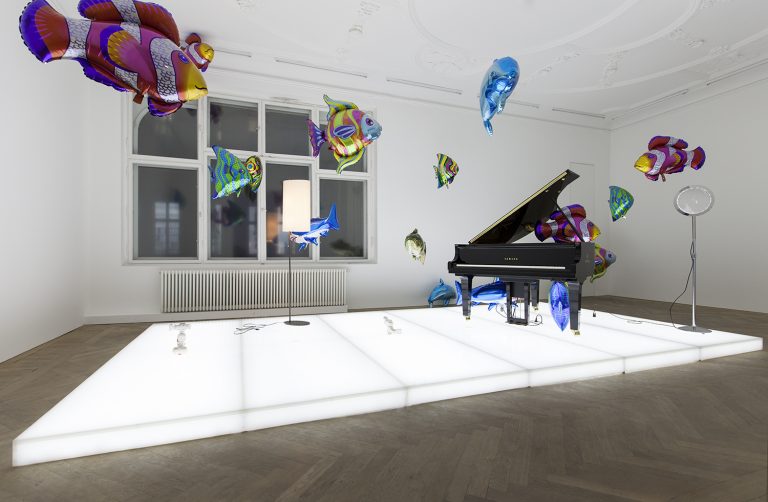
Exhibition view: Philippe Parreno, quasi-objects, Esther Schipper, Berlin, 2014-2015
Courtesy the artist and Esther Schipper, Berlin
Photo: Andrea Rossetti
At the beginning of the following decade, the gallery moved to a bel étage on Schöneberger Ufer. In 2015, Schipper boldly undertook a unique, then unprecedented step: she took over the gallery of her Berlin colleague Jörg Johnen and its roster of artists. Shortly afterwards, in order to present her expanded roster, she opened new spaces in the former Mercator Höfe. Working with Annabelle Selldorf and s1 Architekten (Berlin), a former print shop and warehouse on Potsdamer Straße was specially renovated into a spacious, elegant “white cube.” The space has made it possible for two exhibitions to be held at the same time, offering additional room for a bookshop. “The previous gallery spaces made themselves very present. This challenge was also deliberate, because most artists conceive site-specific exhibitions, responding to their immediate time and place. After almost 30 years, I felt the need to work with spaces that were much less present, more changeable, and which can practically disappear. The exhibition spaces on Potsdamer Straße are like that: they seem to change with every exhibition and always look different.”

Ann Veronica Janssens
Green, Yellow and Pink, 2017
Artificial fog, green, yellow, and pink filters Dimensions variable
Exhibition view: Ann Veronica Janssens, Ich rede zu Dir wie Kinder reden in der Nacht, Esther Schipper, Berlin, 2017
Courtesy the artist and Esther Schipper, Berlin
Photo: Andrea Rossetti
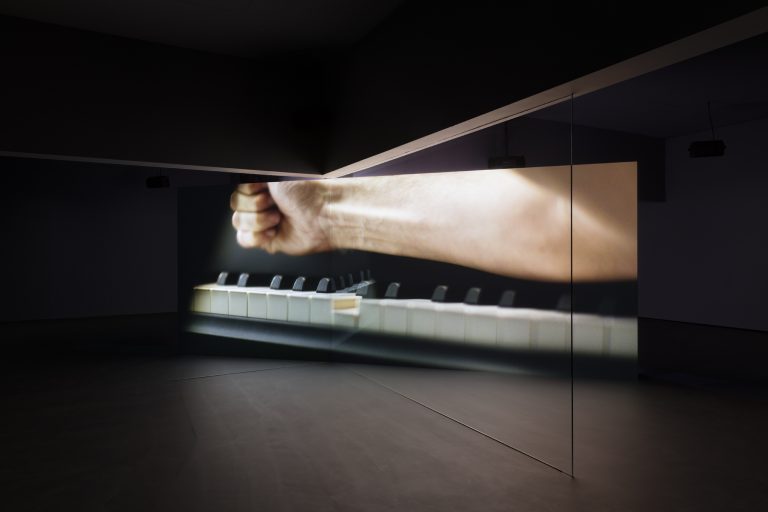
Exhibition view: Anri Sala, Take Over, Esther Schipper, Berlin, 2017
Courtesy the artist and Esther Schipper, Berlin
© VG Bild-Kunst, Bonn, 2021
Photo: Andrea Rossetti
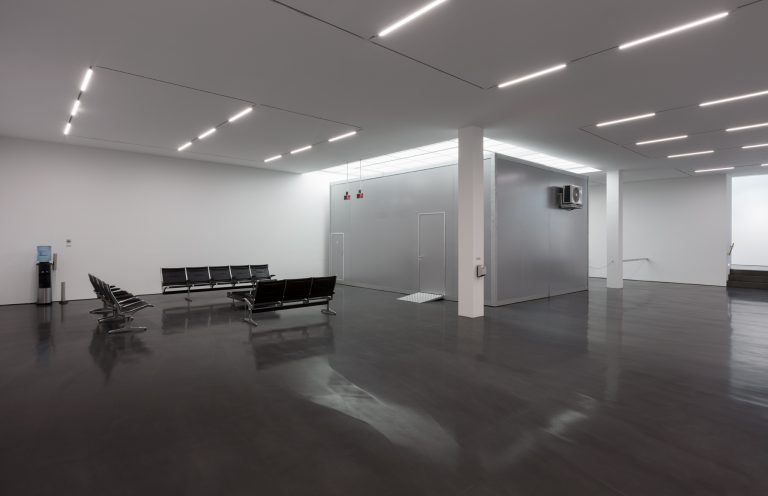
Exhibition view: Simon Fujiwara, Empathy I, Esther Schipper, Berlin, 2018
Courtesy the artist and Esther Schipper, Berlin
Photo: Andrea Rossetti
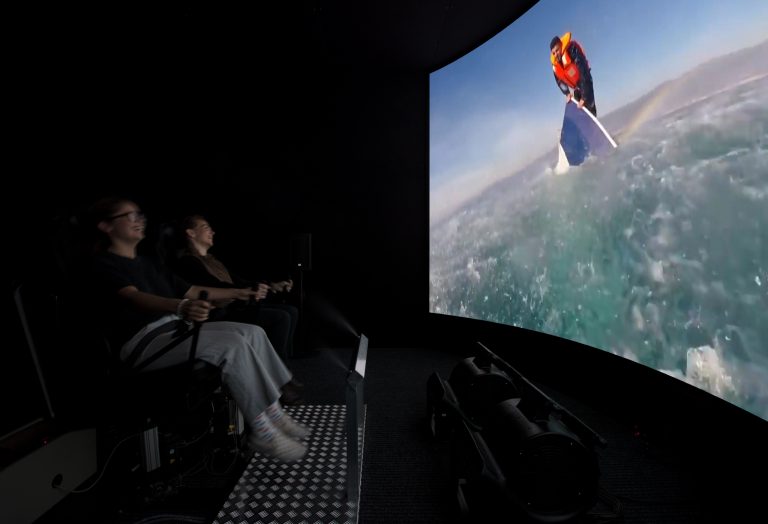
Exhibition view: Simon Fujiwara, Empathy I, Esther Schipper, Berlin, 2018
Courtesy the artist and Esther Schipper, Berlin
Photo: Andrea Rossetti
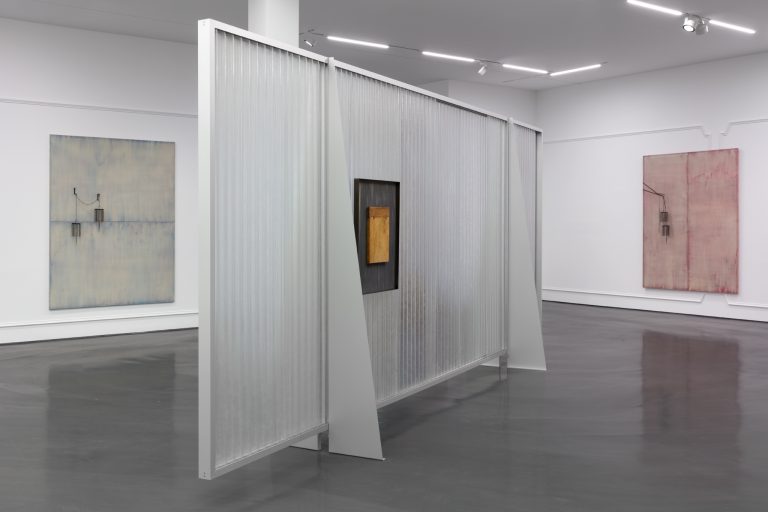
Exhibition view: Martin Boyce, The Light Pours Out, Esther Schipper, Berlin, 2018
Courtesy the artist and Esther Schipper, Berlin
Photo: Andrea Rossetti
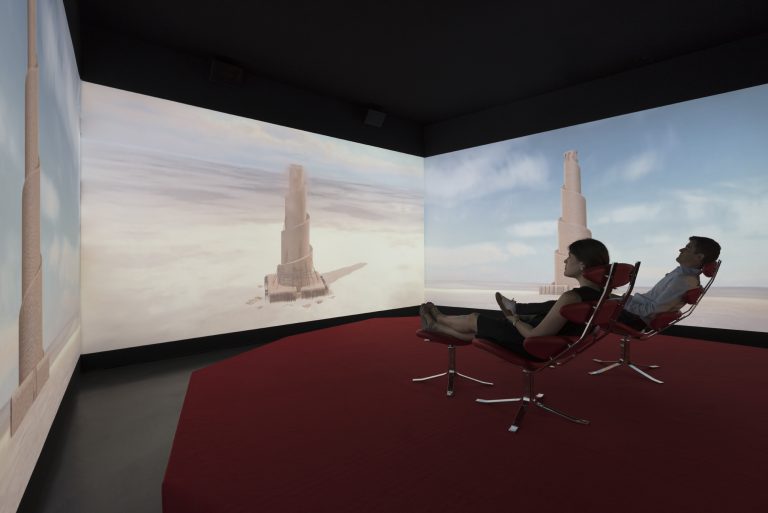
Hito Steyerl
The Tower, 2015
3 channel video installation, HD video
(color, sound), environment
Duration: 6:55 min
Exhibition view: Christoph Keller, Hito Steyerl, Tao Hui, Esther Schipper, Berlin, 2019
Courtesy the artist and Esther Schipper, Berlin
© VG Bild-Kunst, Bonn, 2021
Photo: Andrea Rossetti
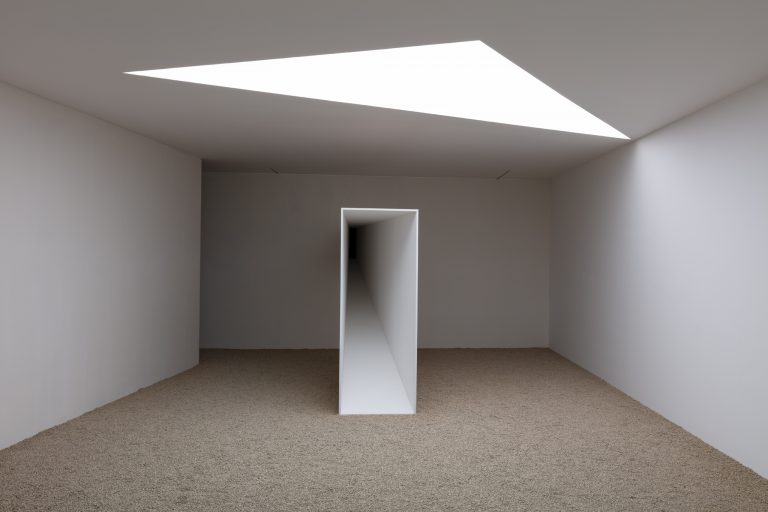
Exhibition view: Daniel Steegmann Mangrané, Fog Dog, Esther Schipper, Berlin, 2020
Courtesy the artist and Esther Schipper, Berlin
Photo: Andrea Rossetti
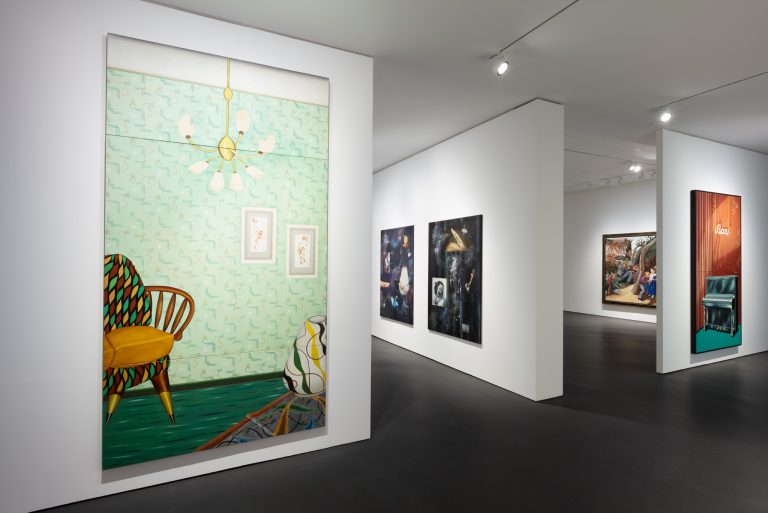
Exhibition view: L’Invitation au voyage, Esther Schipper, Berlin, 2021
Courtesy the artists and Esther Schipper, Berlin
Photo: Andrea Rossetti
Schipper owes the gallery’s steady growth to her thoughtful, considered approach, her cosmopolitan nature, and her aesthetic judgment. “In her case, the fortune of not belonging to a place or a country,” Heinz-Norbert Jocks once wrote, “is correlated with the freedom of an open-minded view of conceptual art from all over the world.” Schipper currently represents around 45 artists and estates, and the gallery’s roster continues to grow.
The gallery’s presence is no longer limited to Berlin, but extends to many places around the world. Esther Schipper has realized that today a good eye and a good programme are not enough; a global presence is essential for an international gallery. It is necessary to participate in major art fairs, while attributing equal importance to (pop-up) projects in new locations and digital platforms, online formats, and an active social media strategy.
Schipper’s biography has come full circle with the gallery’sexpansion into Korea and Taiwan, given that she was born in Taiwan to Dutch and French parents. “It’s like stepping back into a familiar place that I only half-remember. Supporting the gallery’s artists in Asia feels a little bit like introducing friends to my parents.”
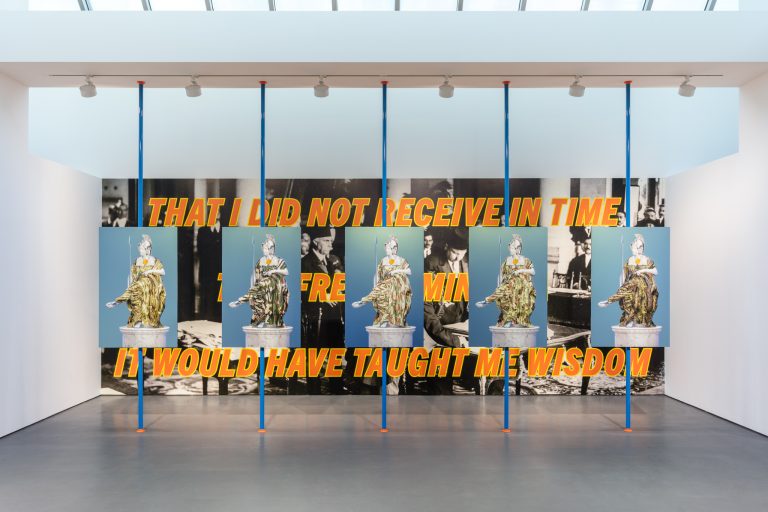
Exhibition view: Cemile Sahin, It Would Have Taught Me Wisdom, Esther Schipper, Berlin, 2021
Courtesy the artist and Esther Schipper, Berlin
Photo: Andrea Rossetti
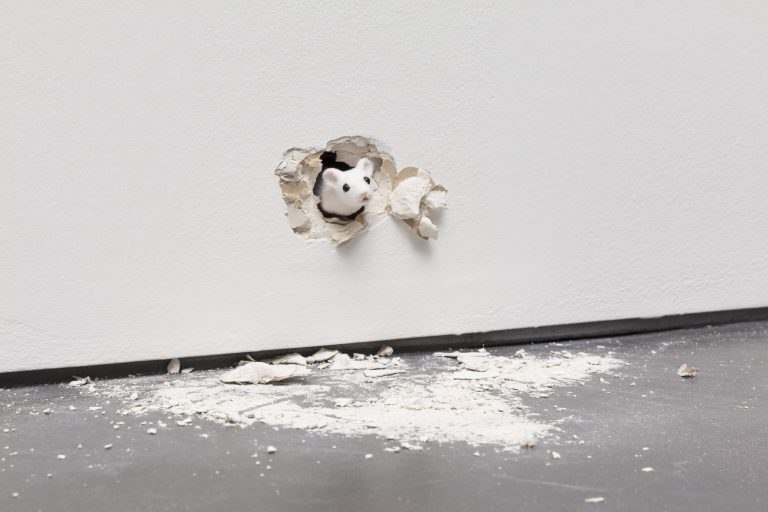
Ryan Gander
I… I… I…, 2019
Animatronic mouse, hole in a wall
19,4 x 24 x 28,2 cm (installation)
Duration (animatronics): 7 min approx.
Exhibition view: Ryan Gander, Some Other Life, Esther Schipper, Berlin, 2019
Courtesy the artist and Esther Schipper, Berlin
© VG Bild-Kunst, Bonn, 2021
Photo: Andrea Rossetti