

Gallery Portrait
Soy Capitán
by Beate Scheder
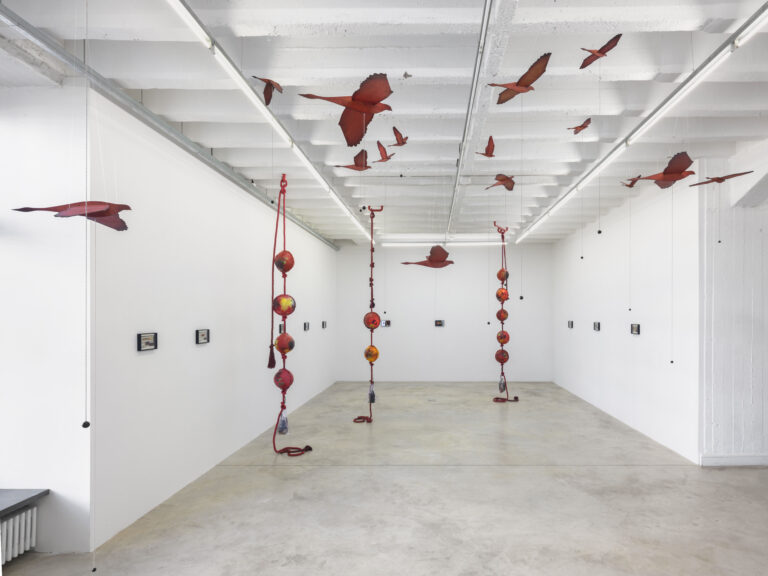
Installation view: Camilla Steinum, Perception Spot, Soy Capitán, Berlin 2026
Courtesy: artist and Soy Capitán, Berlin
Photo: Roman März
On the list of Berlin galleries with the most unusual names, Heike Tosun’s is undoubtedly at the top. As she tells it today, Tosun rented her first space on Friedelstraße in Neukölln on a whim in 2011. At that point, she did not know what her gallery would be called, but she knew that it wouldn’t bear her name: “Galerie Heike Tosun still doesn’t sound good today.” She preferred “Soy Capitán”—a line from the song “La Bamba”—as it seemed fitting: after years as an employee at other galleries, Tosun was finally at the helm herself, and also because of the cramped conditions in the space on Friedelstraße, where even her desk had to be placed at an angle. She refers to this as a “nice corset.” It helped her to concentrate on what was essential, because the gallerist is still convinced that this is normally better than getting lost in the details: “You can show the complete contents of a studio without saying anything—or you can refine and refine until the central idea becomes visible.”
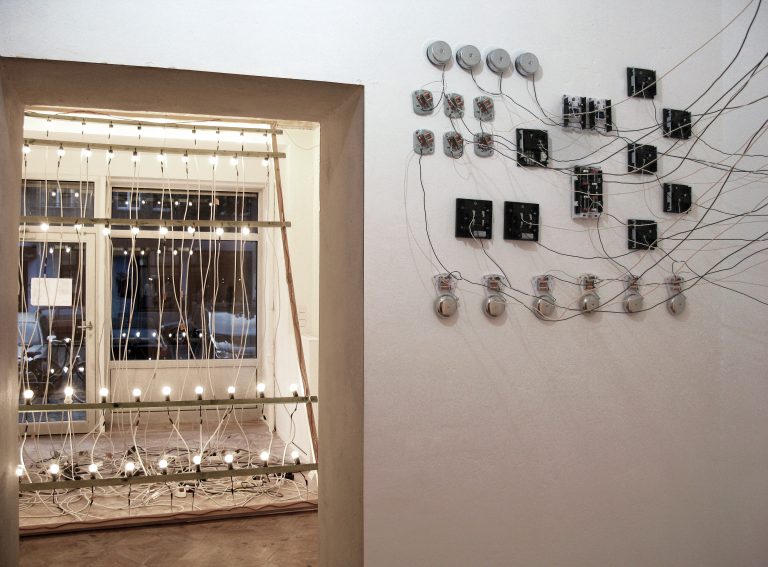
Klara Hobza, Prequel, 2011 at the gallery in Friedelstrasse:
For her exhibition, Klara has developed a signalling device and a simple doorbell installation as part of a nocturnal campaign that uses Morse code to get in touch with the citizens of Berlin.
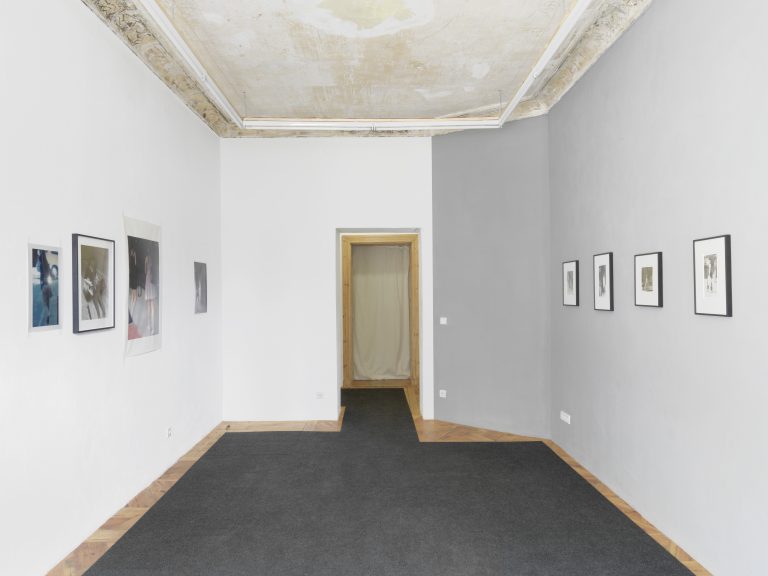
Shahin Afrassiabi, SEAM – a didactic model, 2011 (exhibition view), Photo: Roman März
For Soy Capitán’s first exhibition, Tosun juxtaposed works by Shahin Afrassiabi with photographs by Miroslav Tichy: Afrassiabi’s zoomed-in details from Google Street View were placed alongside the photographs of women secretly taken by Tichy on forays through the Czech town of Kyjov between the 1960s and the 1990s. The exhibition consisted of only nine works, but was “so to the point” that she still enjoys looking at the images. A short time later, Klara Hobza used her idiosyncratic art and above all her imagination to transform the gallery into a Morse code lab from which she broadcast out into the Neukölln night.
Both Afrassiabi and Hobza are still part of Soy Capitán’s program today. Eli Cortiñas, Matthias Dornfeld and Benja Sachau also came on board early on, during the first two years. The fact that she did not launch the gallery with a ready-made roster of artists is part of what Tosun calls “healthy growth,” as are the move to Prinzessinnenstraße in Kreuzberg in 2013 and, in 2023, the relocation to the Lindenhaus in Kreuzberg, where the gallery has since become part of a lively neighborhood of galleries.
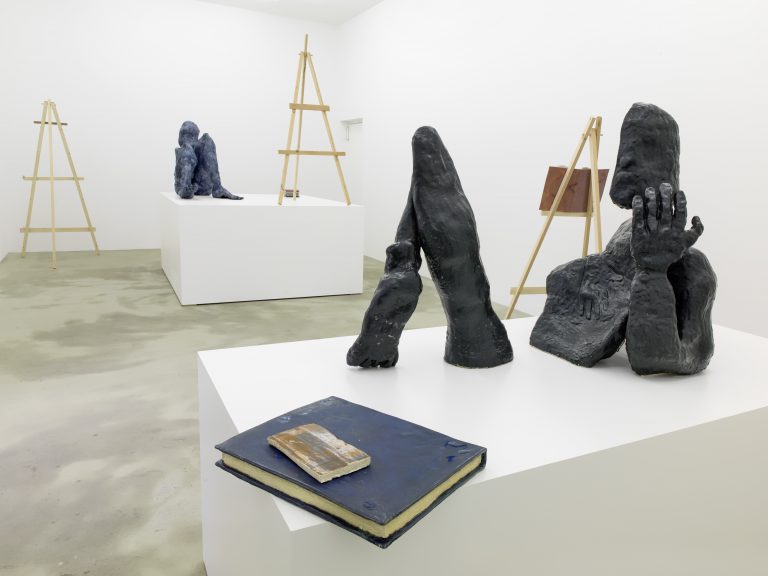
Jesse Wine, Wonderful Audience Member, invited by Melissa Canbaz, exhibition view, Photo: Roman März
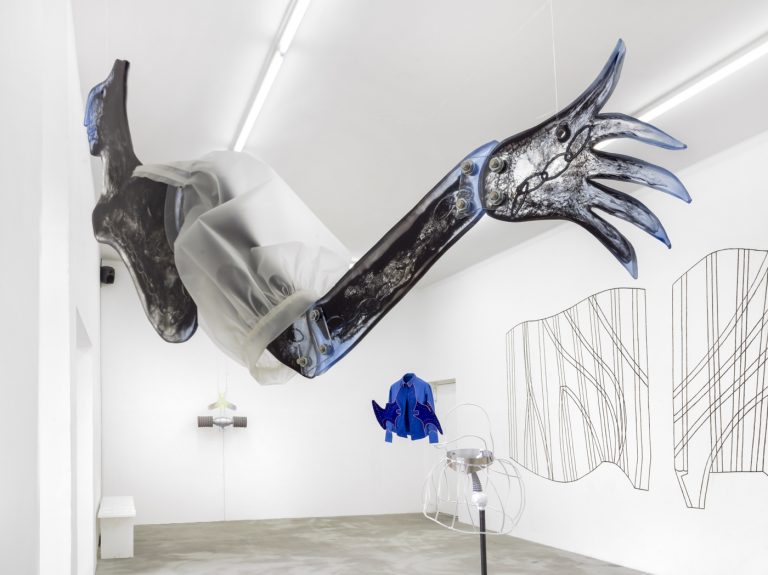
Proudfoot & Piesecka, Ensemble, 2021, exhibition view, Photo: Roman März
Soy Capitán now also represents the artists Grace Weaver, Camilla Steinum, and Paloma Proudfoot—more women than men, not out of principle, but—as Tosun herself explains—because she is attracted to strong female personalities. One such example is the American painter Grace Weaver, who had her first solo exhibition at Soy Capitán in 2015 when she was just twenty-five years old. It was a challenge for both parties: Weaver ended up painting the works for Skinny Latte—saccharine, daintily ironic “allegories of the everyday” not only for the digital native generation—in the rooms of the gallery during the summer recess.
This, too, is part of Soy Capitán’s winning formula: the openness to unconventional solutions and spontaneous ideas, but also the cooperative relationship between the artists and the gallerist.
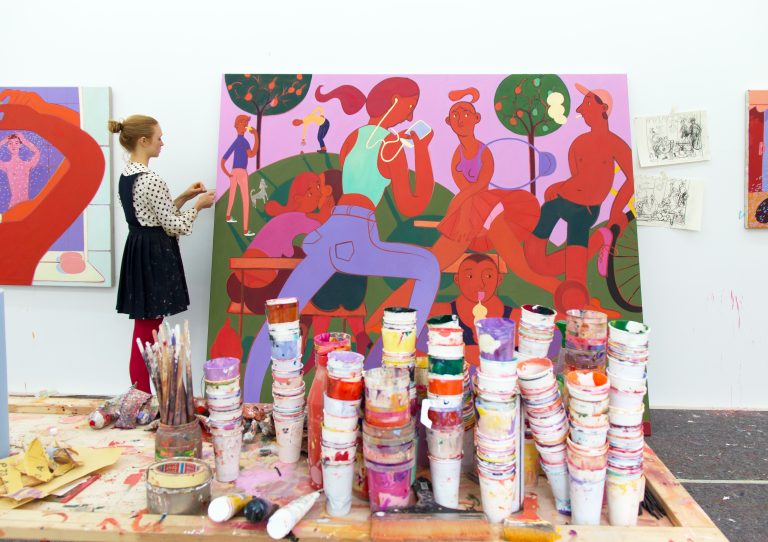
The gallery as a studio: Grace Weaver prepares her first solo exhibition with Soy Capitán in 2015 during the summer break in the gallery space.
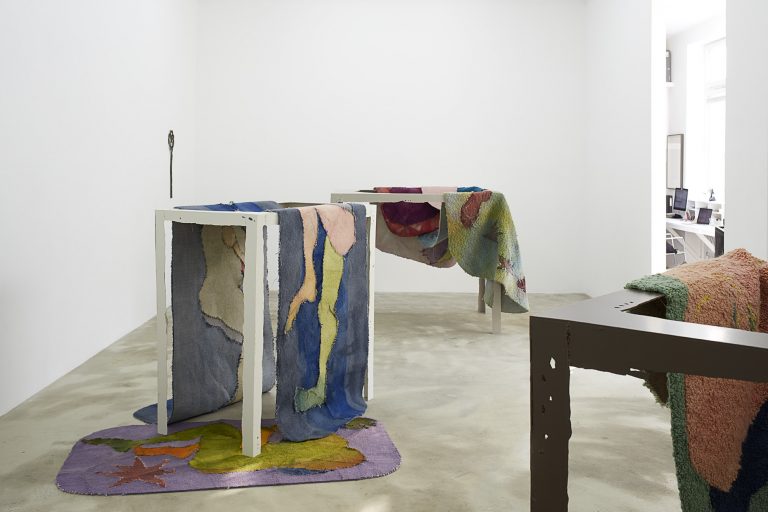
Camilla Steinum, In Spite of Chores, 2017, exhibition view, Photo: Nick Ash