Gallery portrait
Neu
by Kito Nedo
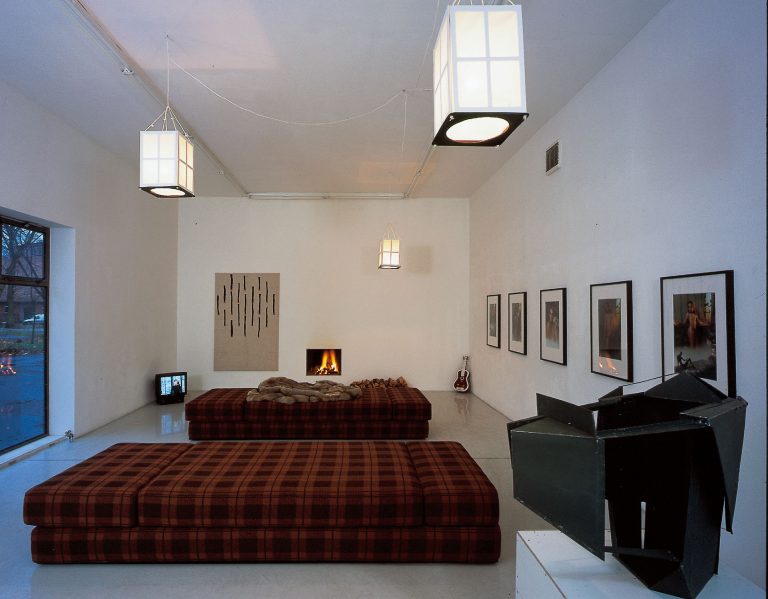
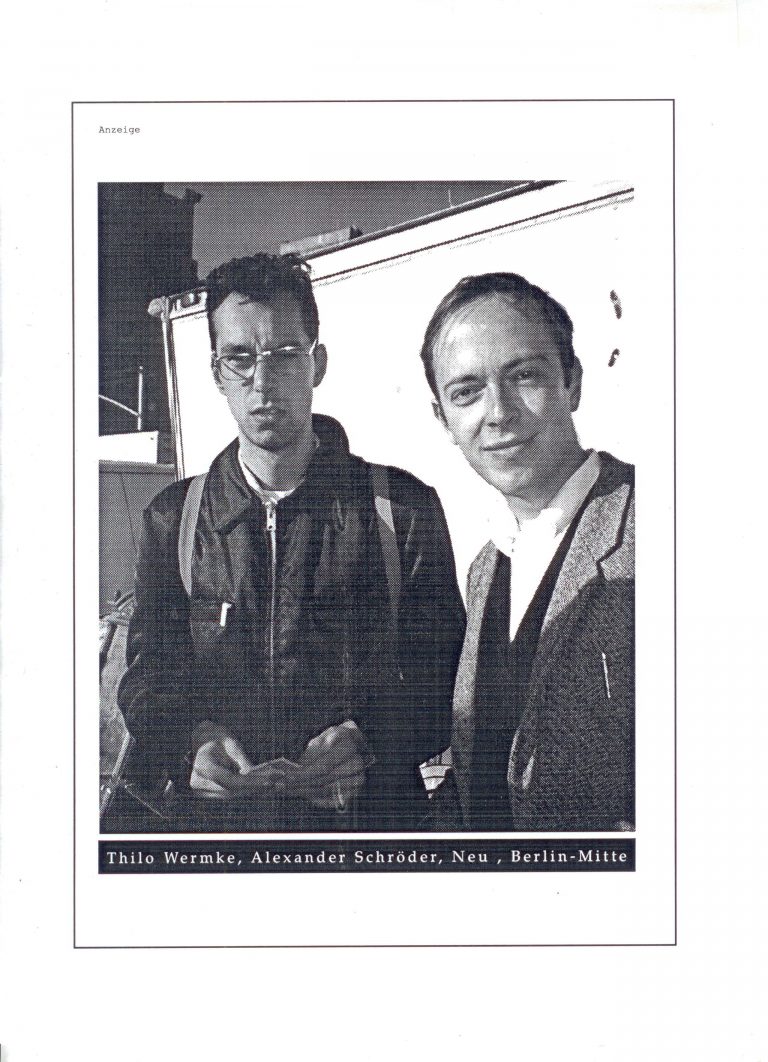
Alexander Schröder and Thilo Wermke were still students in their mid-twenties when they founded Galerie Neu on Auguststrasse in Berlin in 1994. At the time, say the gallery owners, it was all about “organizing yourself and not just accepting the existing system.” This hands-on philosophy of the early years included the founding of the gallery’s own techno label (Neu Records), with over thirty releases and evening events that at times blurred the boundaries between running a gallery and the nightlife scene. Today, more than two and a half decades later, Schröder (b. 1968) and Wermke (b. 1970)—along with their program—embody a living piece of Berlin’s art history. The gallery program currently represents around thirty internationally renowned artists, including Kai Althoff, Cosima von Bonin, Marc Camille Chaimowicz, Anne Collier, Jana Euler, Cerith Wyn Evans, Florian Hecker, Karl Holmqvist, Sergej Jensen, John Knight, Kitty Kraus, Klara Lidén, Victor Man, Birgit Megerle, Jill Mulleady, and Andreas Slominski.
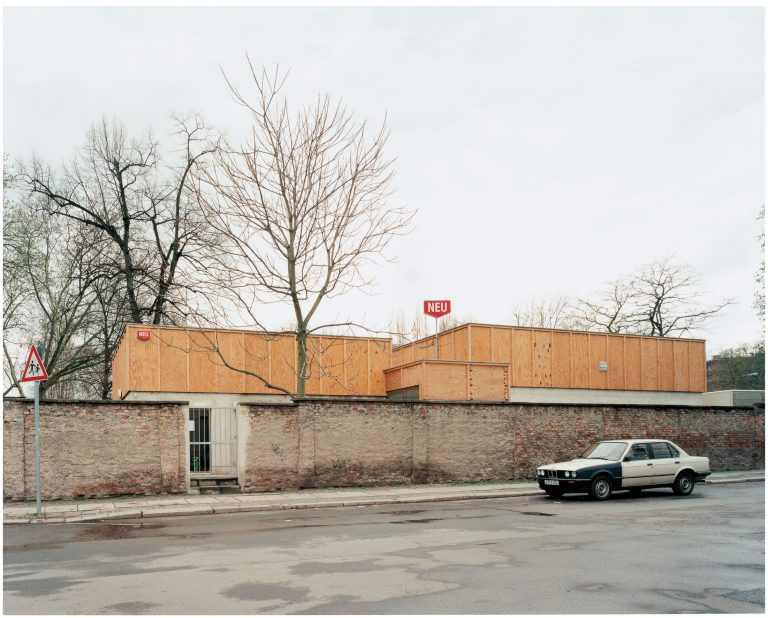
Galerie Neu (Exterior view location Philippstrasse)
Photo: Stefan Lux
Courtesy Galerie Neu, Berlin
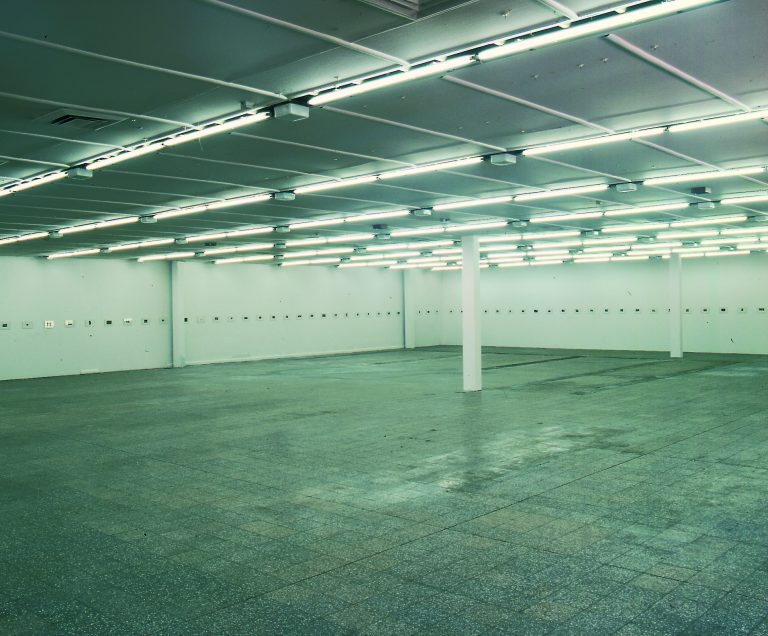
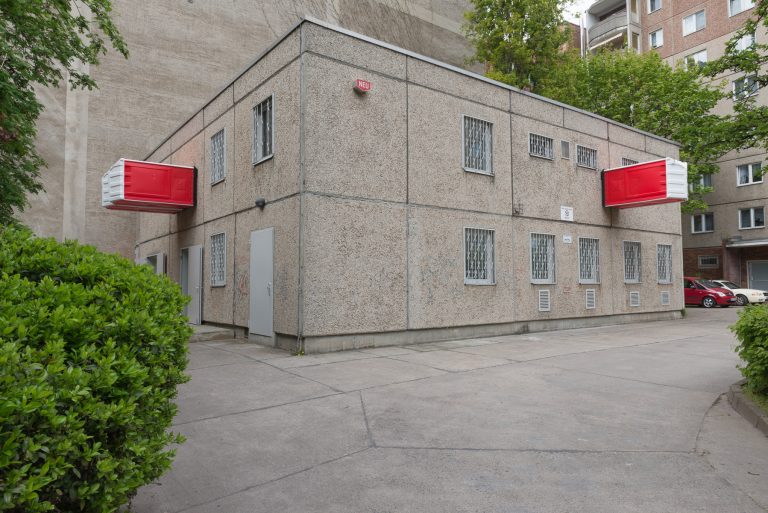
Since 2014, the gallery has occupied a converted combined heat and power plant in a rear courtyard on Linienstrasse. This unassuming building once supplied the surrounding GDR Plattenbauten (concrete tower blocks) with heat. Tom Burr’s 2012 sculpture Room Four is installed in the open space next to the gallery: a cast bronze open interior with a table, chair, and cupboard, in which the inside becomes the outside, and the viewer’s gaze wanders involuntarily toward the Berlin sky. On the building itself, a small pentagonal red light box glows at dusk with the striking Neu logo designed by Daniel Pflumm.
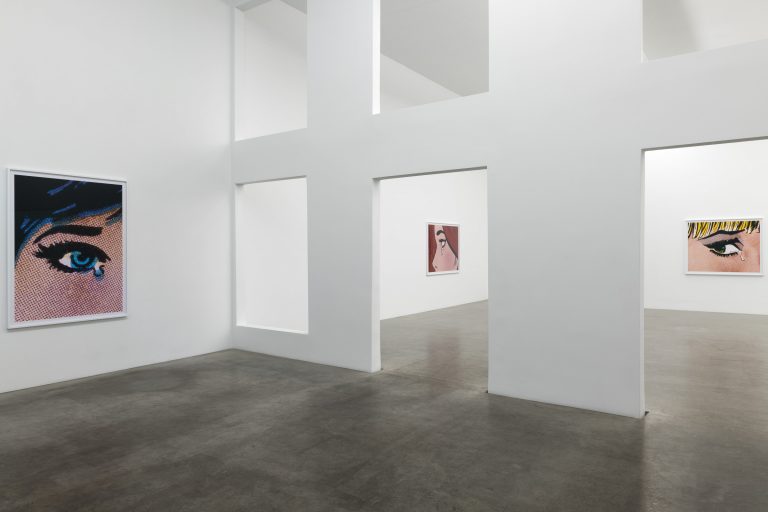
Andreas Slominski, transhumanistisch, Galerie Neu, 2017
Foto: Stefan Korte
Courtesy the artist and Galerie Neu, Berlin
Thilo Wermke and Alexander Schröder met in Hamburg. Wermke was born in Dresden and studied cultural studies, political sciences, and ethnology at Berlin’s Humboldt-Universität in the early nineties. Alexander Schröder studied in Katharina Sieverding’s class at Berlin’s Hochschule der Künste (now Universität der Künste, UdK) and was also associated with the Freie Klasse. The Freie Klasse was a self-organized group of artists within the academy. At the academy, Schröder met the photo artist Josephine Pryde, who is still represented by the gallery today, the painter Katharina Wulff, and the installation artist Manfred Pernice, among others.
The New York artist and gallerist Colin de Land (1955–2003) had a formative influence on Neu’s gallery model. Back in 1996 he invited Schröder and Wermke to the relatively young Gramercy International Art Fair in New York, which was named after its venue, the Gramercy Park Hotel. De Land had originally studied linguistics and philosophy at NYU. With his gallery, American Fine Arts, Co., he not only represented conceptual approaches to art; his own gallery practice was also predominantly conceptual and community-oriented.
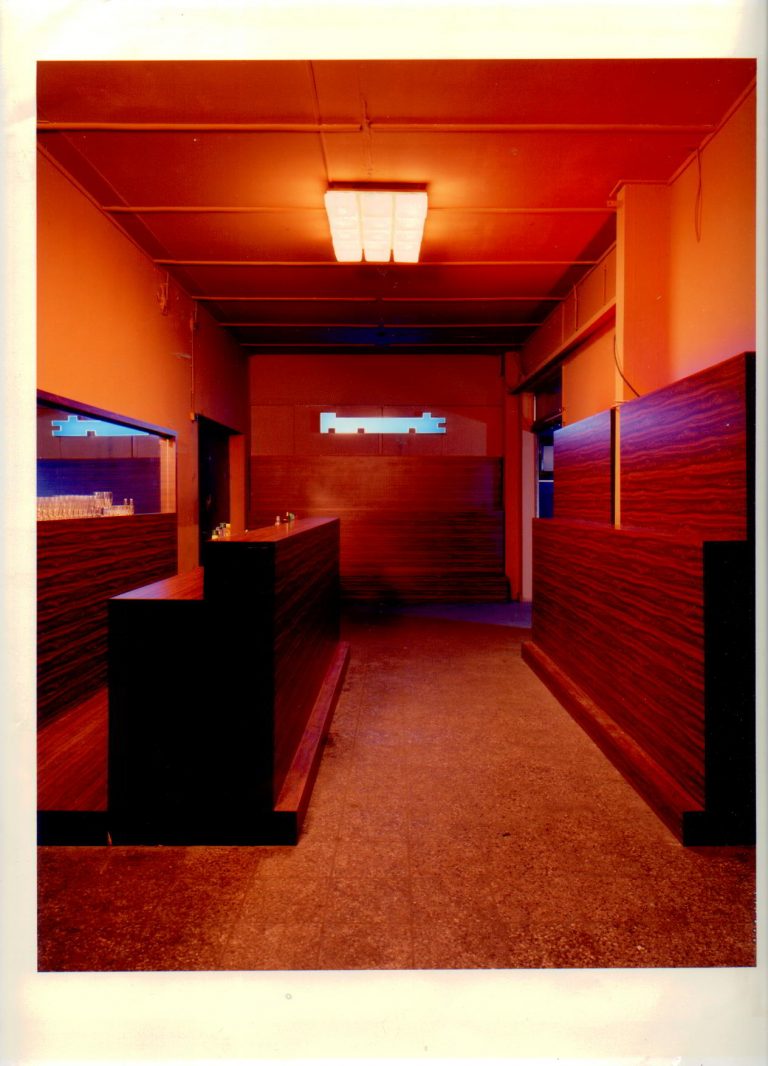
Neu’s gallery and exhibition work is often flanked by a range of other activities aimed at the social aspect of the art world. Schröder and Wermke were instrumental in the development of Berlin-specific networks such as the discontinued fair abc—art berlin contemporary (2008–2016) or even Berlin Gallery Weekend, which was founded in 2005. The history of Galerie Neu also includes the Kreuzberg project space MD72 on Mehringdamm, the INIT-Kunsthalle (1998–2000) on Chausseestrasse in Mitte, and the basement club Pelham, which existed briefly in the early 2000s. In the spring of 2007, Wermke was involved in founding the Grill Royal restaurant. Yet contemporary art has remained the central focus of the influential Berlin gallery duo to this day.