

Gallery portrait
Ebensperger
by Christian Ganzenberg
If we have a look around the gallery scene, logos that work independently from gallerists’ names appear only sporadically. Ebensperger, on the other hand, welcomes us with a casually deployed cigarette. It clearly expresses a nonchalant stance, a disposition for adventure in terms of content and space, as well as an affinity for all things strange. The gallery was founded as early as 2005 and its program can be briefly described as “off-beat.” Although the gallery’s emerging artists do not shy away from the traditional media of painting, drawing, and sculpture, their media-blasting and site-specific approaches make a more striking impression. Many of the gallery artists, including Hajnal Németh, Lea Draeger, Tim Etchells, David Moises, and Julius Deutschbauer, not only share a distinct affinity for film, space, and performativity as a political notion, they also seem to have internalized the gallerists’ explorative and experimental approach.
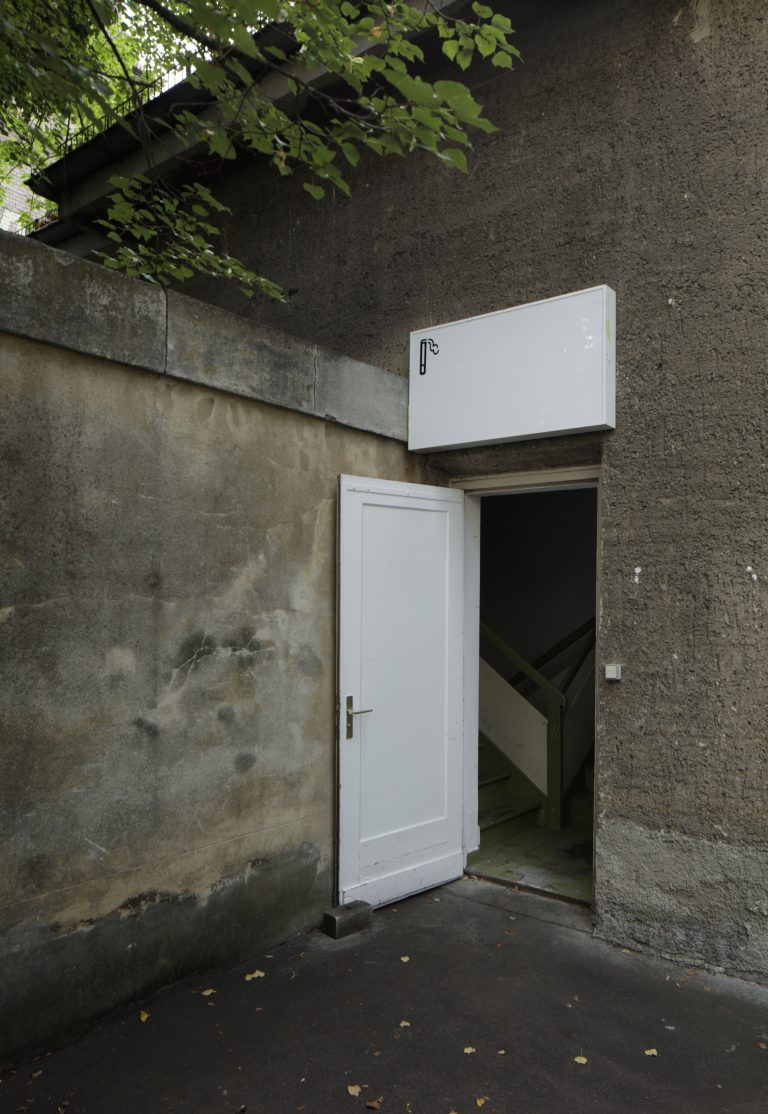
Ebensperger, Berlin-Wedding, Gallery entrance
© Photo: Ludger Paffrath
Whenever there is an appetite for adventure and new spaces become available, Patrick Ebensperger conceives extremely versatile and precise presentations in unusual locations. They are not mere “white cubes.” Besides the current Berlin branch at the Fichtebunker, past gallery presentations have been held in a former crematorium, a Greek tavern, an industrial building, a local pub, and a long-established hotel. It is hardly necessary for the gallery to participate in elaborate art fairs, although it occasionally does—and then to striking effect. The gallerist prefers to be on the road with his Trunk Shows, creating contemporary salon exhibitions to be closer to the gallery’s fans. This was the case, for example, with the playfully tongue-in-cheek exhibition series Neulich an der Salzach and Neulich in Hernals(Vienna’s 17th district), each of which was shaped by the character of its venue.
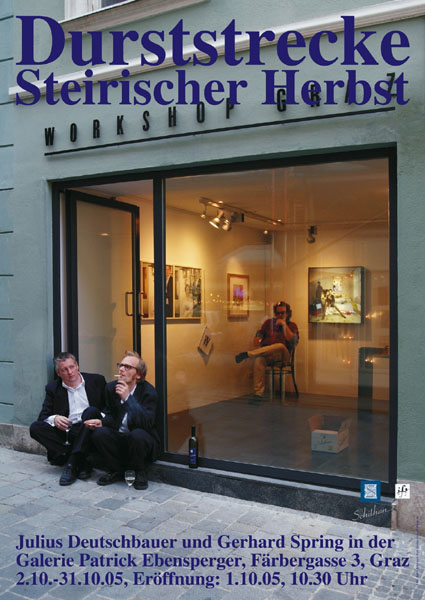
Julius Deutschbauer und Gerhard Spring
Durststrecke Steirischer Herbst 2005
Poster for the very first exhibition at the gallery in Graz
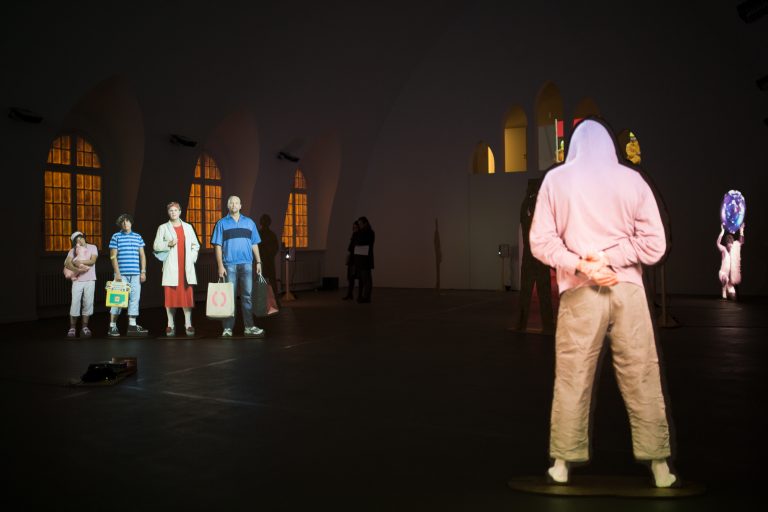
Bjørn Melhus
Liberty Park
November 2013 at the gallery in Berlin Wedding
Photo: Ludger Paffrath
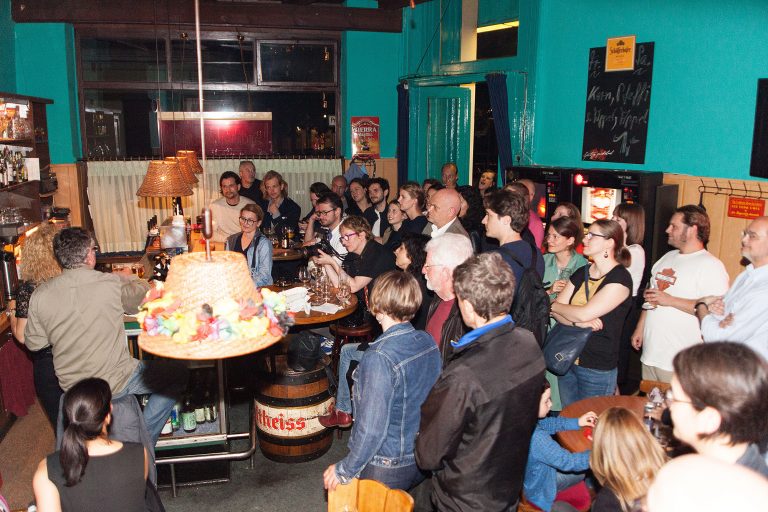
Julius Deutschbauer
Prost Mahlzeit
Performance in June 2015 at the local pub “Plantage” across from the gallery in Berlin Wedding
Photo: Anna Wasilewski
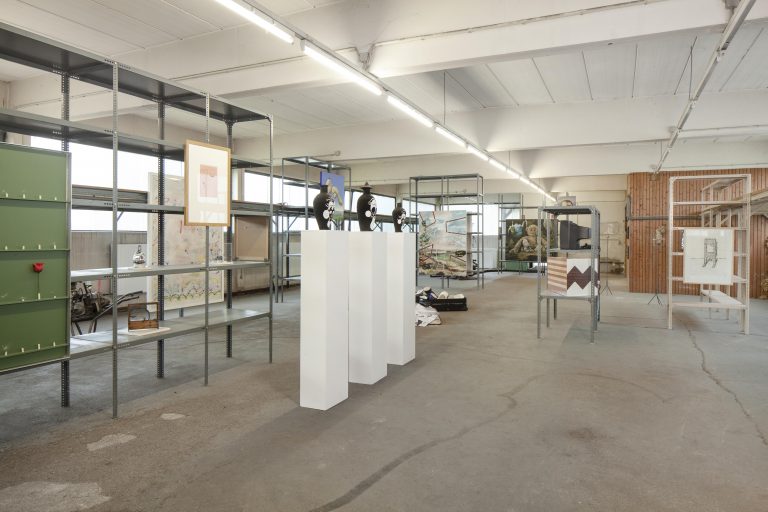
Played
Curated by Maria Thurn und Taxis and Sebastian Hoffmann
Pictured: works by FORT, Sigmar Polke, Nigin Beck, Sandro Kopp, John Bock, Henny Acloque, Hanakam & Schuller, Bill Copley et al.
July 2018 at “Neulich an der Salzach”, Salzburg
Photo: Ludger Paffrath
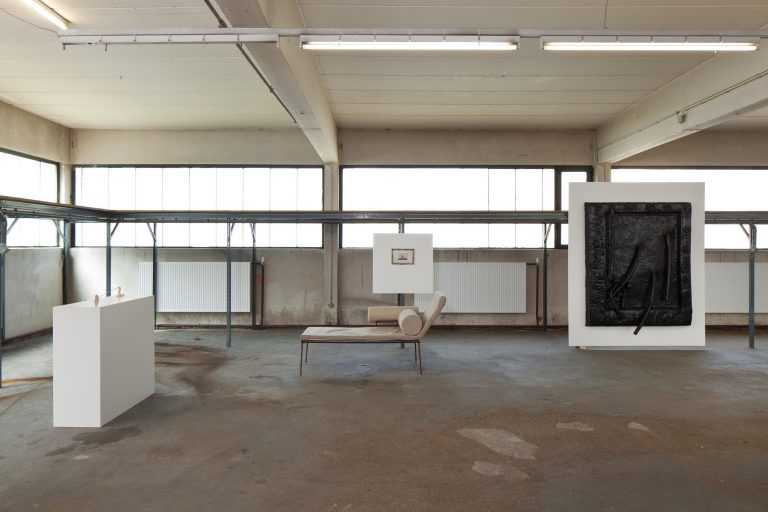
Kaputt
With works by Franz West, Alfred Kubin, Martin Kippenberger
March 2018 at “Neulich an der Salzach”, Salzburg
Photo: Ludger Paffrath
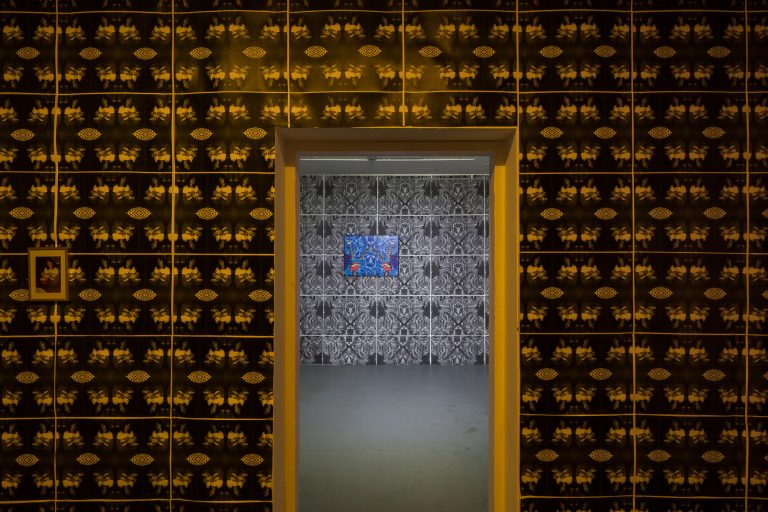
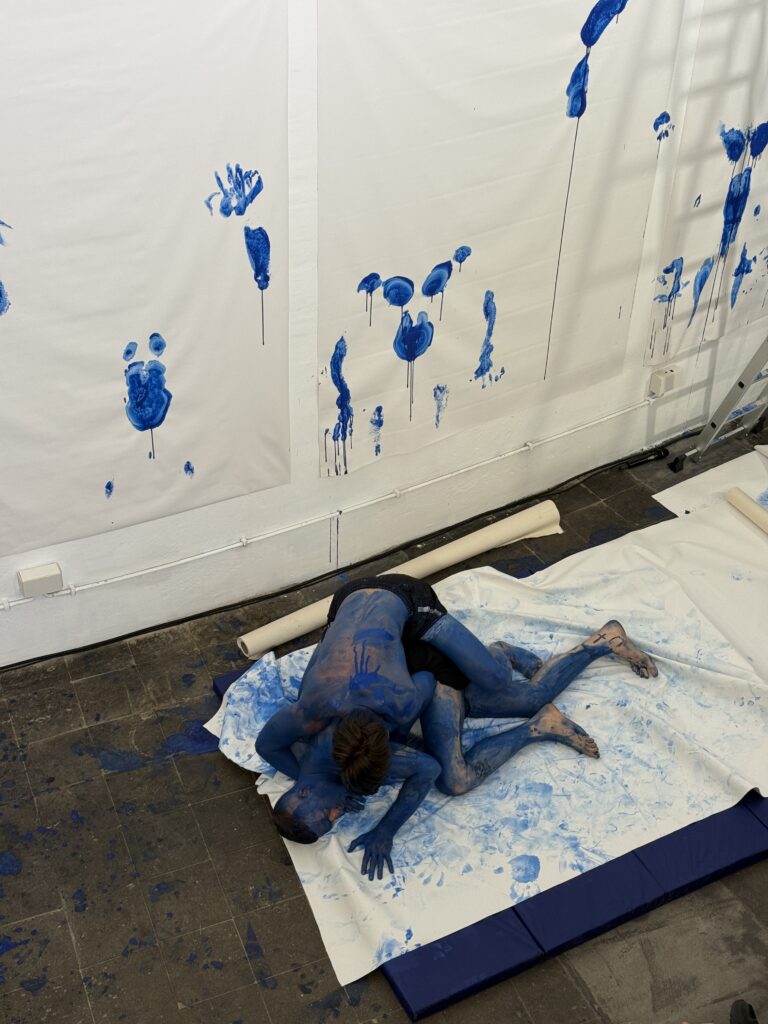
Göksu Kunak
Performance REMAINS
EBENSPERGER, Berlin 2026
Courtesy: the artist and EBENSPERGER, Berlin / Photo: Zlata Petrenko
The gallery’s history began in a five-by-five-meter room in Graz’s historic center; this location was followed by an apartment in one of the city’s townhouses, which to this day operates as a gallery showcase. Being distant from the Vienna and Berlin art scenes, Patrick Ebensperger was able to approach his work at the gallery in a rather unconventional and uncompromising way. An appetite for confrontation is still a hallmark of the gallery today, which has undertaken the task of “exploring art’s potential for action,” for political possibilities that can be experienced in terms of space and content. It is therefore not surprising that thematic exhibitions often juxtapose the represented artists with performative legacies—such as those of John Bock or Otto Muehl, with whose estate Ebensperger works closely. The gallery organizes equally astonishing, unconventional solo exhibitions, including those of film-maker Romuald Karmakar and theater-maker Marta Górnicka. For both, these were not only their first solo exhibitions but also their first exhibitions in a gallery. In these shows, as well as in presentations by Benjamin Heisenberg, Heiner Franzen, and Bjørn Melhus, Ebensperger showcases what “expanded cinema” can be in an art context, that is, a cinematic art that unfolds into space and needs to be physically grasped.
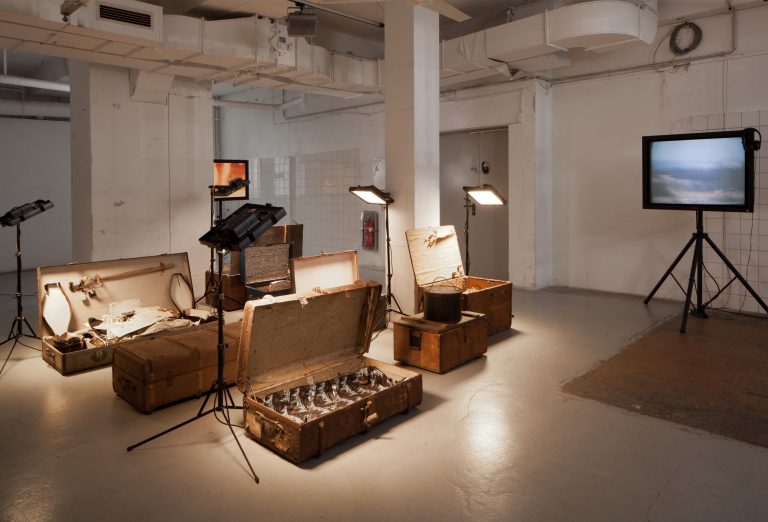
Benjamin Heisenberg
Twelve Angry Men (die zwölf Geschworenen)
September 2018 at Art Berlin, Airport Tempelhof
Photo: Ludger Paffrath
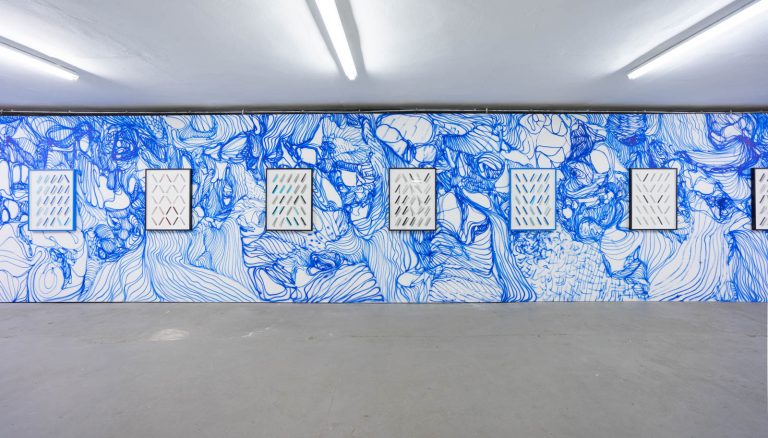
Christian Schwarzwald
LYRCS
November 2017 at the gallery in Berlin Wedding
Photo: Christian Schwarzwald
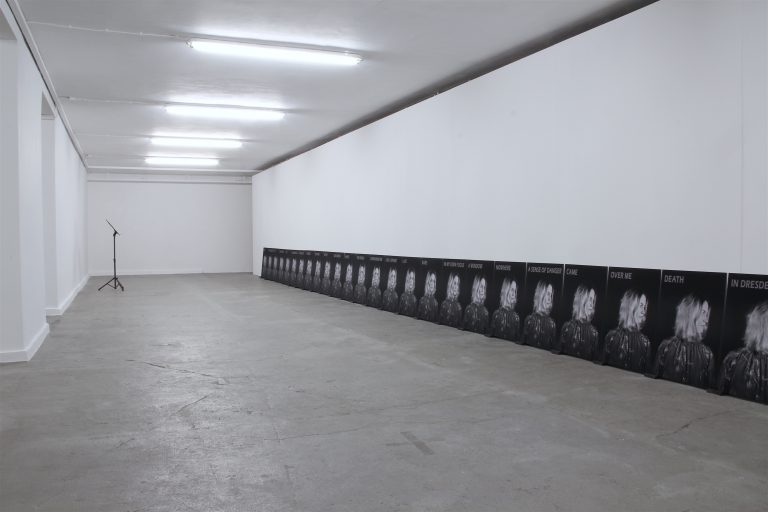
Hajnal Németh
Simultaneous City/Simultane Stadt
March 2019 at the gallery in Berlin Wedding
Photo: Hajnal Németh
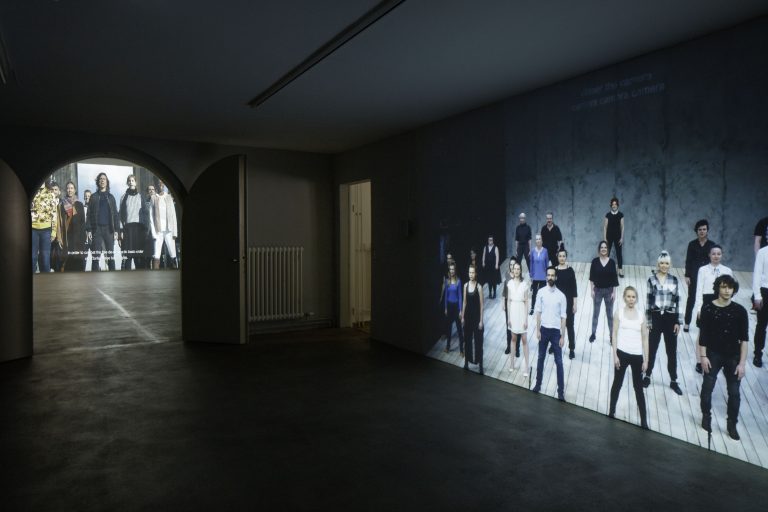
Marta Gòrnicka
Multitude
September 2020 at the gallery in Berlin Wedding
Photo: Ludger Paffrath
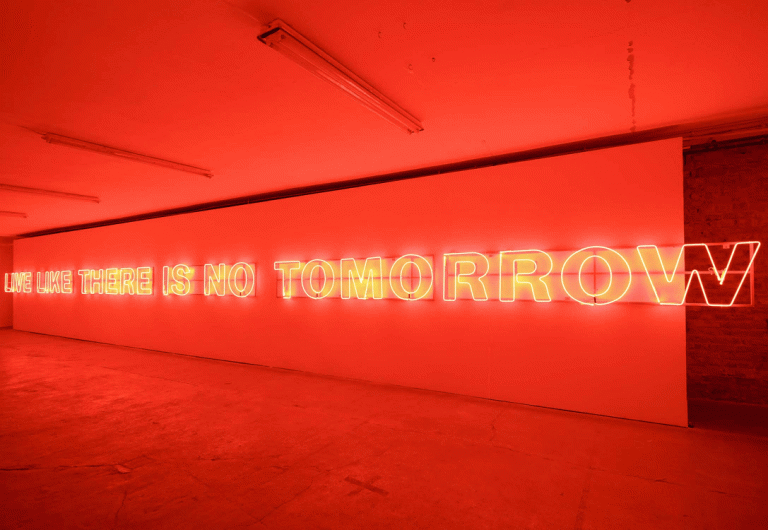
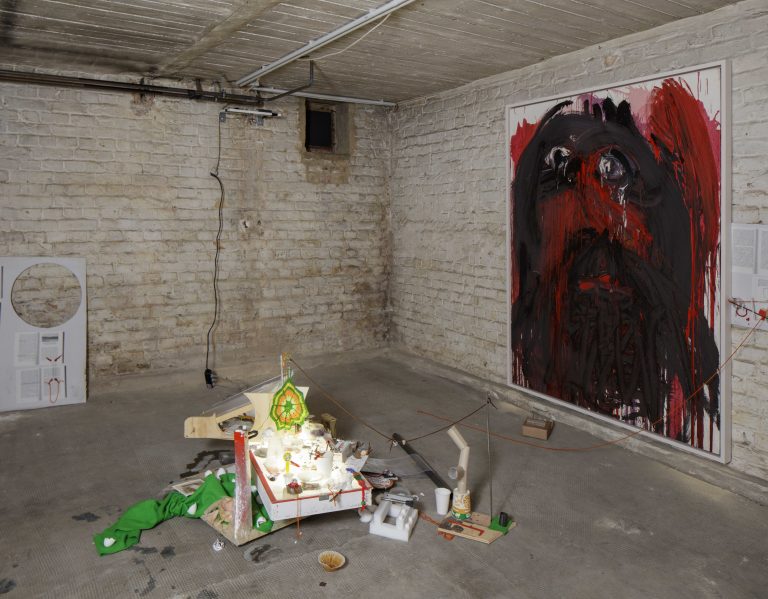
Freedom and Independence
Pictured: works by John Bock, Otto Muehl
November 2020 at the gallery in Berlin Wedding
Photo: Ludger Paffrath
Courtesy Sprüth Magers, The Estate Otto Muehl, Ebensperger
By the way: the logo is a found object. Curator Sebastian Hoffmann came across it in the Salzburg tavern mentioned above, and simply set it up afterwards. This is a lesson for us to keep our eyes peeled and listen to the space around us, because “art shouldn’t have to adapt to a building. Rather, spaces should provide art with new possibilities.”