

Gallery Portrait
alexander levy
by Beate Scheder
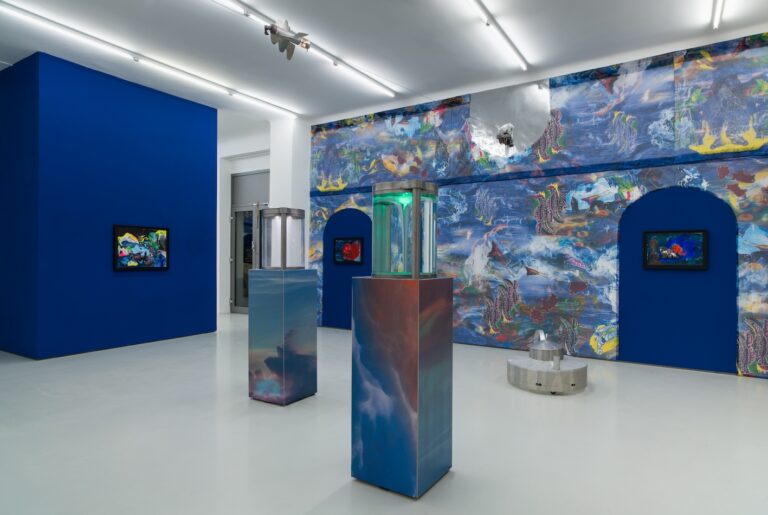
Anne Duk Hee Jordan, Riders on the Storm, 2026
Installation view alexander levy, Berlin
Courtesy: the artist and alexander levy, Berlin / Photo: Marcus Schneider
It all began with a small Seramis sphere. Felix Kiessling had hung it in the largest room in the gallery, accompanied by sound and illuminated in such a way that it seemed as if it were the moon. It was the first solo exhibition by Eliasson’s protégé, organized by Alexander Levy, who at that time, in the summer of 2010, was still running the Berlin branch of his father Thomas Levy’s Hamburg gallery. Instead of closing for the month of August, Levy used the time and space to realize the first project of his own with a young artist—and took a liking to it. Just under a year and a half later, he unscrewed the “Levy Galerie” sign on Rudi-Dutschke-Strasse and replaced it with one with his own name: alexander levy.
The newly founded gallery’s very first exhibition in January 2012 was a hit, literally. Levy presented Julius von Bismarck and his Punishment series: photographs and videos depicting the artist whipping seas and mountains in the manner of Xerxes. They don’t seem to have made any major mistakes. The show was received “insanely well” by the public as well as the press.
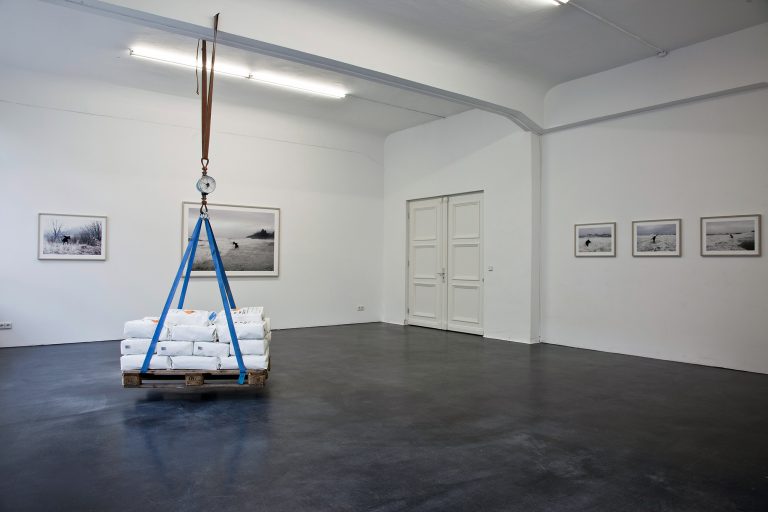
Julius von Bismarck, Punishment I, 2021
Installation view, erste Ausstellung von alexander levy, Berlin
Kiessling and von Bismarck are still part of Alexander Levy’s programme today, and impressive examples of what it represents: hardly any painting—Levy wouldn’t have a clue about it, anyway, as he freely admits—but frequent conceptual references to landscape and nature instead. A striking number of the gallery’s artists focus on their relationship with nature, or use nature in order to symbolically address other topics, like Ella Littwitz, for instance, who examines political issues. For her second solo exhibition at the gallery for Gallery Weekend 2021, the Israeli artist cast a bronze squill: a white-flowered medicinal plant that is inedible to animals and was therefore used to mark territory boundaries—including the border between Israel and Jordan explored by Littwitz. Levy describes such objects as “storytellers, representative of larger ideas and current discourses.”
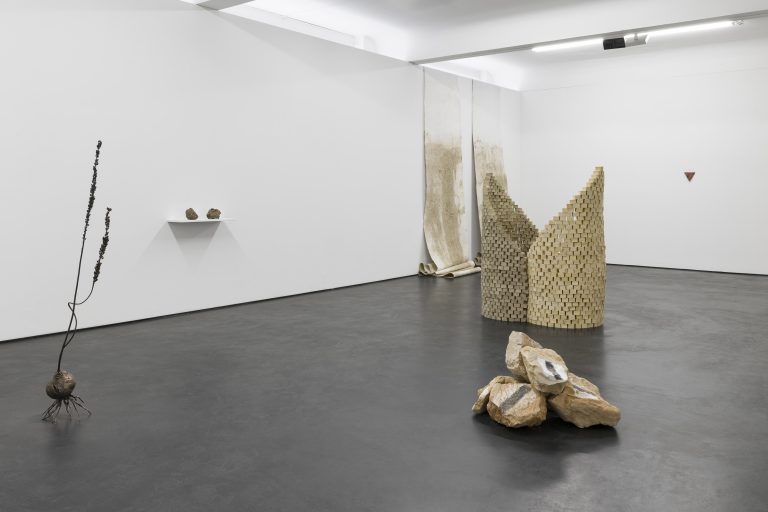
Ella Littwitz, Pillar of Salt, 2021
Installation view, alexander levy, Berlin
In fact, many of the works on view in the gallery’s exhibitions have already been through quite a lot. An essential part of the gallery is that it facilitates artists’ expeditions, larger projects that can take place anywhere in the world over a longer period of time, and whose results are then exhibited in the Berlin gallery space. For example, borders have been infiltrated during diving expeditions (Mischa Leinkauf), white cubes have been placed in nature (Fabian Knecht), and geoscientists have been accompanied in their work (Su Yu Hsin). Collectors also contribute to the projects, sometimes supporting them in advance.
With a program like this, Levy has long been forging his own path. Lydia Ahrens has been an additional managing director since 2019, continuing the family tradition in parallel. In 2022, Galerie alexander levy and his father’s LEVY Galerie moved into shared premises in Alt-Moabit. Under one roof, the two galleries have since continued to pursue their distinct programmes side by side.
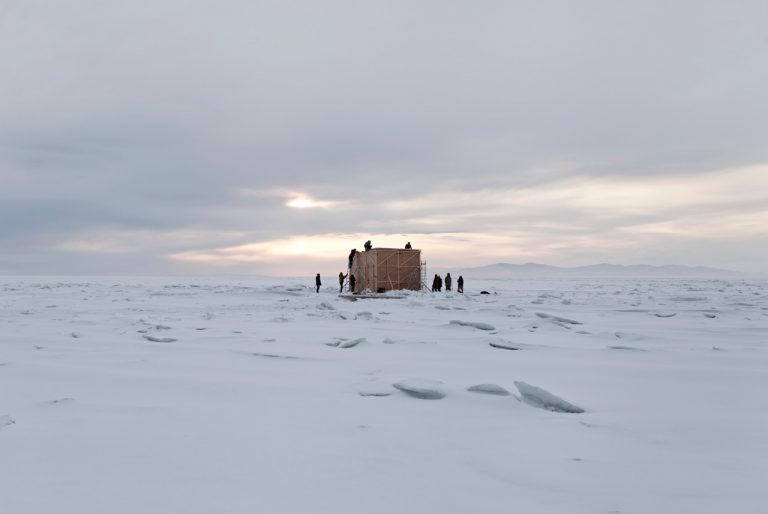
Fabian Knecht, Isolation (Eismeer), 2017
Documentation of the construction, Wladiwostok
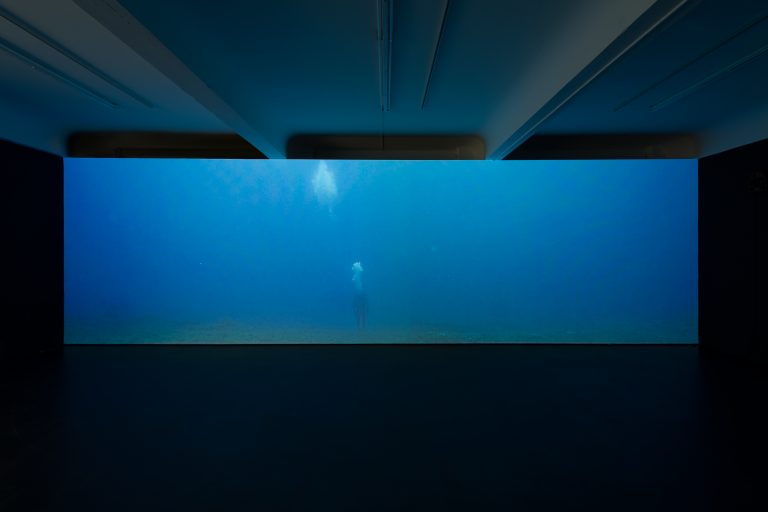
Mischa Leinkauf, Fiktion einer Nicht-Einreise, 2019
Installation view, alexander levy, Berlin