

Pakui Hardware
Thresholds
carlier | gebauer, Berlin, is pleased to announce Thresholds, Pakui Hardware’s third solo exhibition with the gallery.
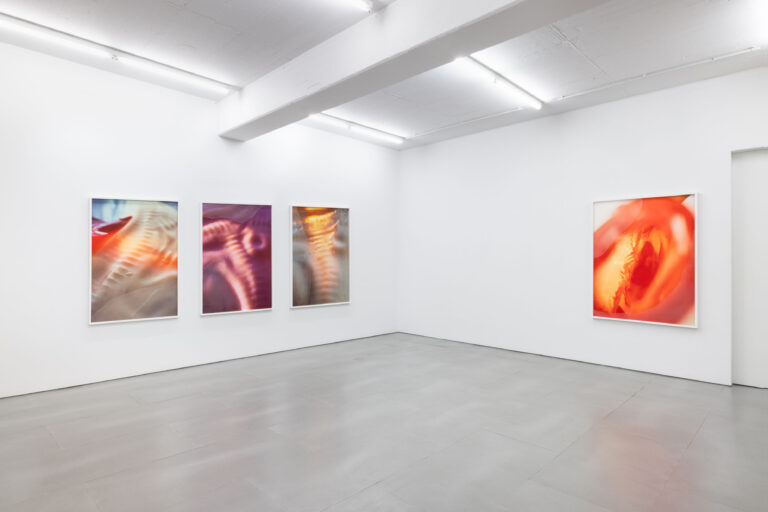
Pakui Hardware, Thresholds, exhibition view at carlier | gebauer, Berlin, 2025
Courtesy of the artists and carlier | gebauer, Berlin/Madrid
Photo © Andrea Rossetti
The exhibition is financed by the Lithuanian Council for Culture
Neringa Černiauskaitė and Ugnius Gelguda, known as Pakui Hardware, are an artistic duo from Lithuania, who will present new kinetic sculptures. Made of steel, glass, silicone, and elastic fabric, their creations move at a steady pace, creating an impression of autonomous beings.
First shown at Zachęta – National Gallery of Art, Warsaw, Thresholds focuses primarily on the metaphor of the filtering membrane, as well as on biological immunity. Organisms defend themselves by telling foreign objects from their own bodies. By drawing on references to medical imaging, biology and the materiality of the body, the artists explore its limits and vulnerability to outside influence.
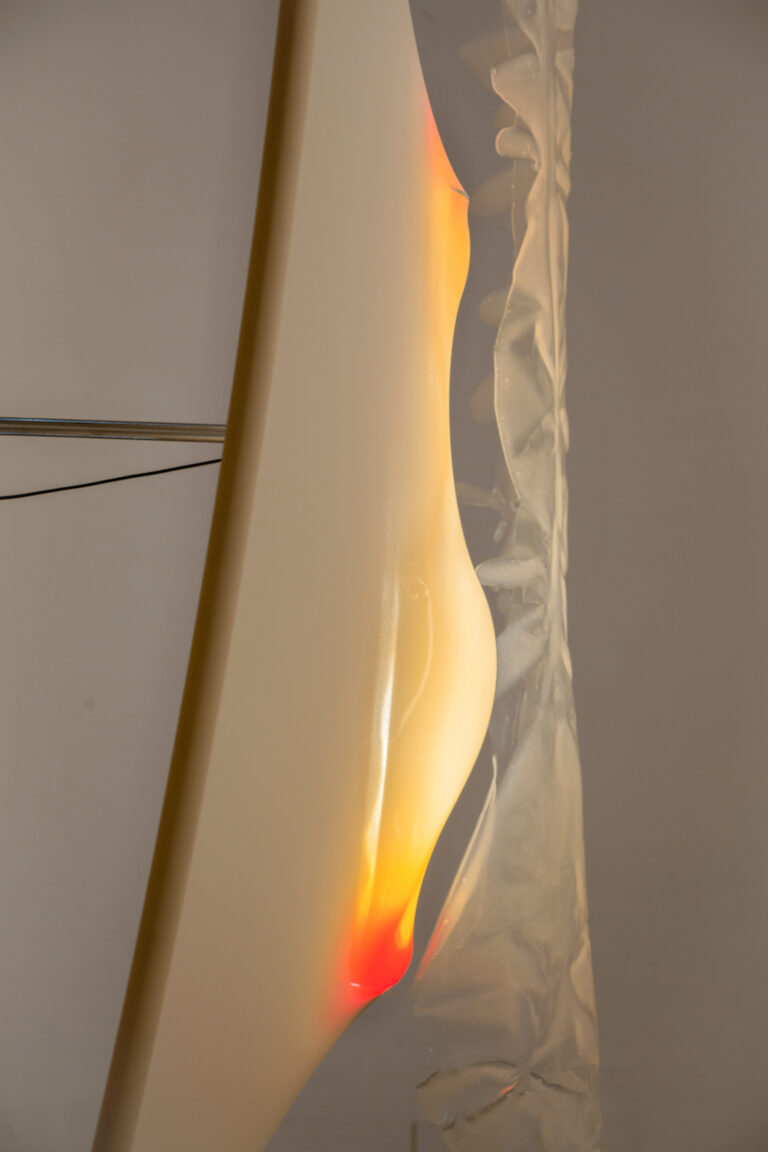
Pakui Hardware, Thresholds, 2025 (detail)
Exhibition view at at Zachęta National Gallery of Art, Warsaw, 2025
Photo © Pakui Hardware
The exhibition is financed by the Lithuanian Council for Culture
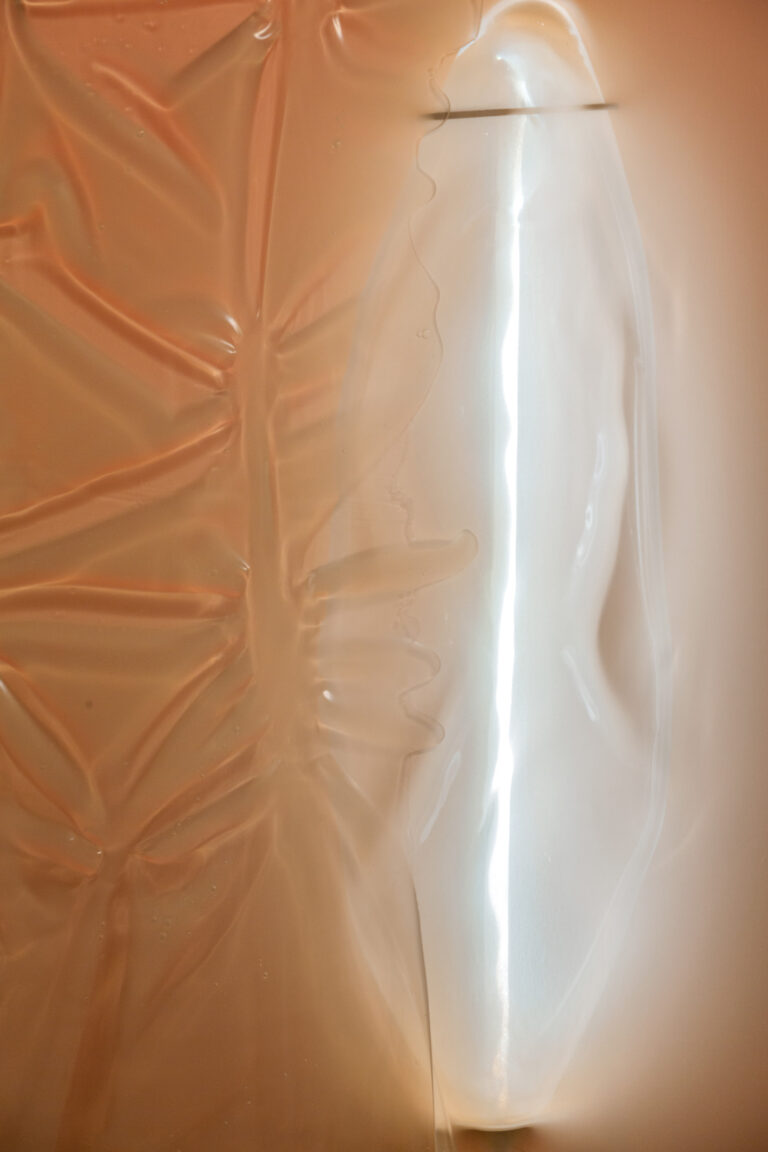
Pakui Hardware, Thresholds, 2025 (detail)
Exhibition view at at Zachęta National Gallery of Art, Warsaw, 2025
Photo © Pakui Hardware
The exhibition is financed by the Lithuanian Council for Culture
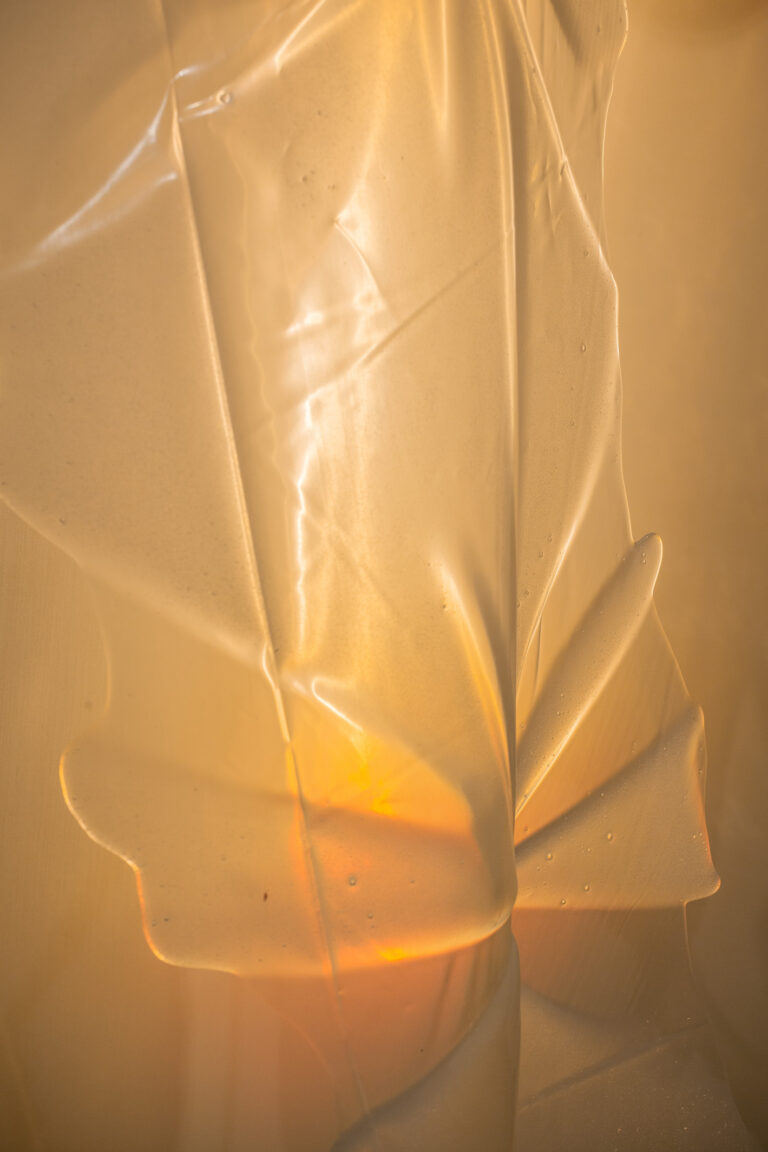
Pakui Hardware, Thresholds, 2025 (detail)
Exhibition view at at Zachęta National Gallery of Art, Warsaw, 2025
Photo © Pakui Hardware
The exhibition is financed by the Lithuanian Council for Culture
“With these materials, we can bring together themes that otherwise would require straightforward explanation: stainless steel is associated with medicine, silicone – with skin-like prostheses, and laboratory glassware – with scientific experiments. This is how we construct our own visual language.”
– Pakui Hardware
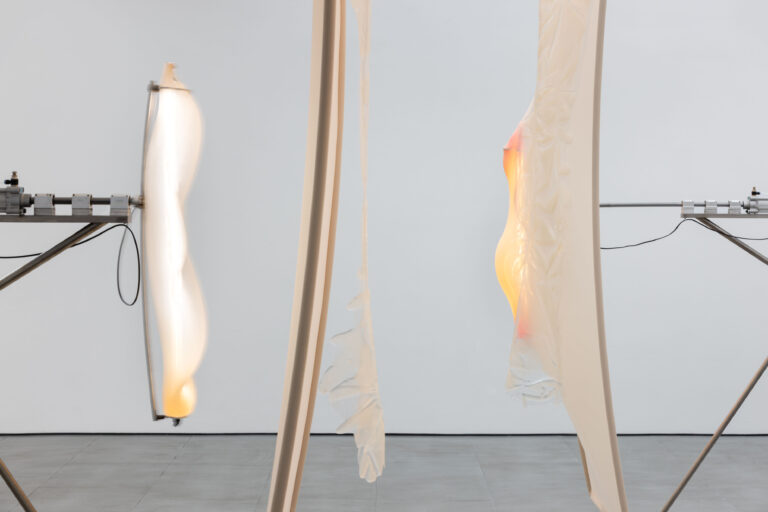
Pakui Hardware, Thresholds, exhibition view at carlier | gebauer, Berlin, 2025
Courtesy of the artists and carlier | gebauer, Berlin/Madrid
Photo © Andrea Rossetti
The exhibition is financed by the Lithuanian Council for Culture
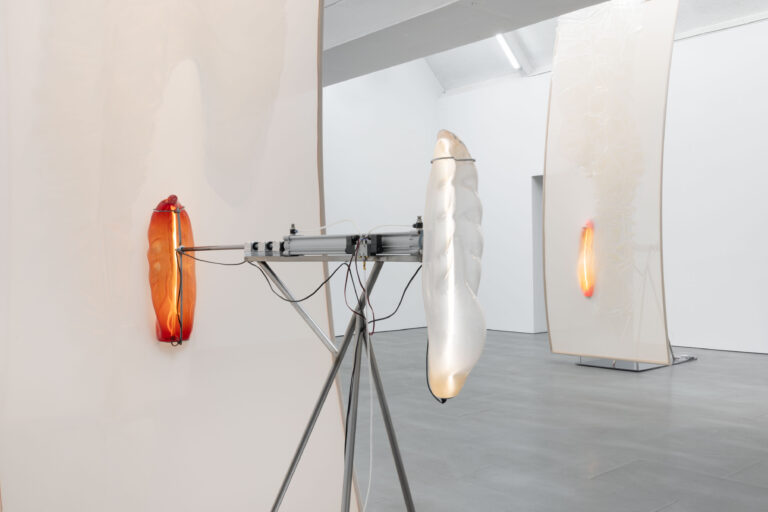
Pakui Hardware, Thresholds, exhibition view at carlier | gebauer, Berlin, 2025
Courtesy of the artists and carlier | gebauer, Berlin/Madrid
Photo © Andrea Rossetti
The exhibition is financed by the Lithuanian Council for Culture
Since 2023, Neringa Černiauskaitė and Ugnius Gelguda have been exploring the concepts of genetics, the nervous system, and the immune system as metaphors for management – both of the individual and of society. Their previous projects, such as THE BURN at carlier | gebauer, Berlin, or Inflammation, presented at the Lithuanian National Museum of Art in Vilnius and then at the 60th Venice Biennale, focused on topics such as illness and treatment. This allowed the artists to make references to regional and global social problems such as the climate crisis, droughts or migration. They believe that the body – both the human body and the body of the planet – remembers its history through genes, molecules or shapes.
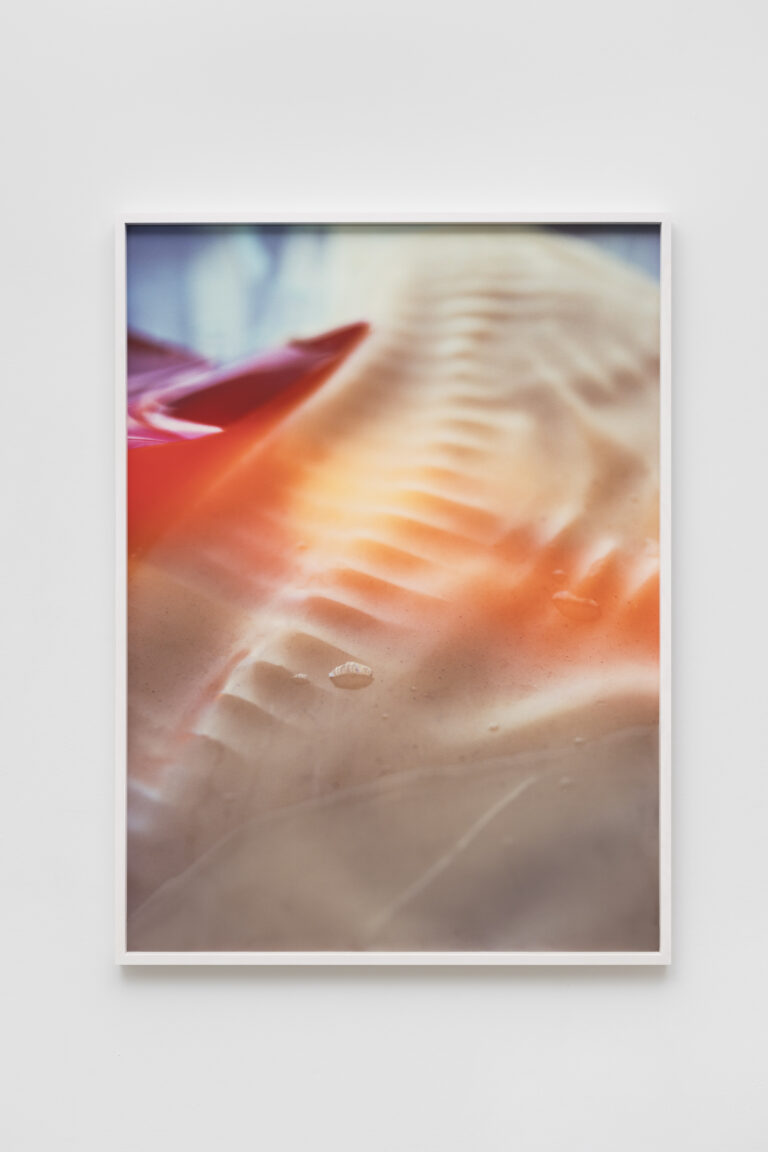
Pakui Hardware
Thresholds P05, 2025
from the series Thresholds
fine art print on aluminum, silicon on glass of the frame
150 x 110 cm
Courtesy of the artists and carlier | gebauer, Berlin/Madrid
Photos © Roman März
The exhibition is financed by the Lithuanian Council for Culture
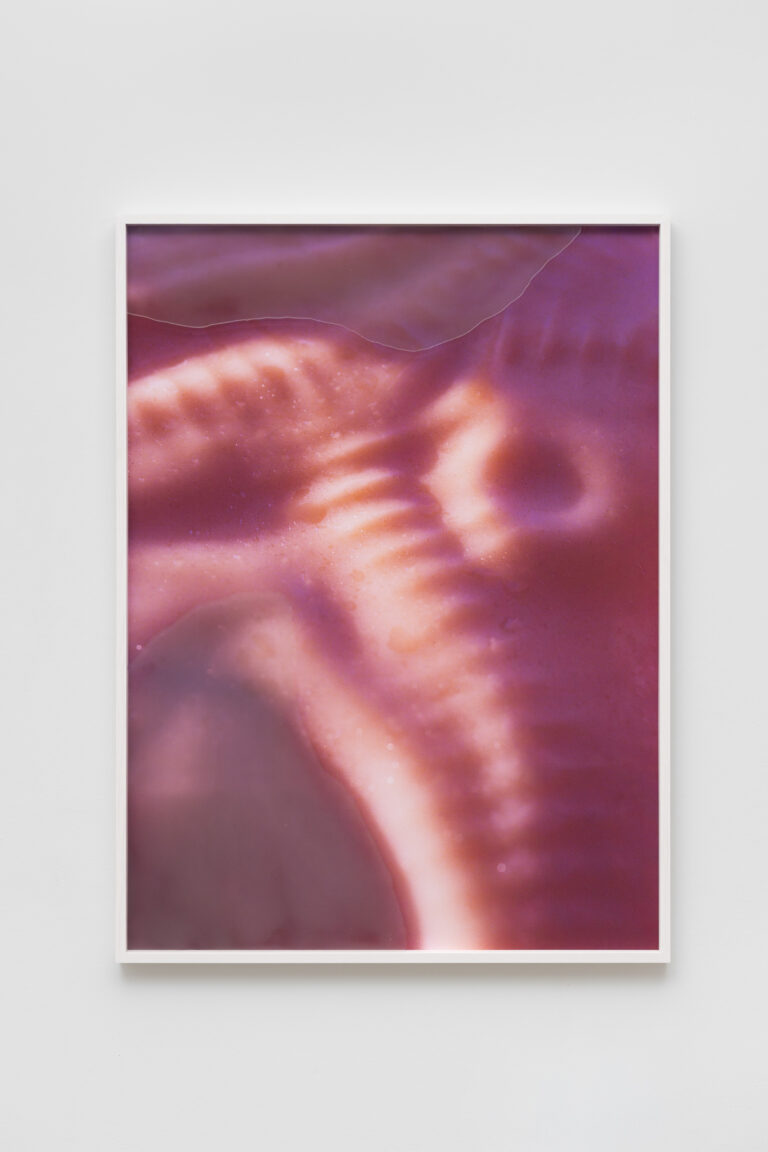
Pakui Hardware
Thresholds P01, 2025
from the series Thresholds
fine art print on aluminum, silicon on glass of the frame
150 x 110 cm
Courtesy of the artists and carlier | gebauer, Berlin/Madrid
Photos © Roman März
The exhibition is financed by the Lithuanian Council for Culture
The exhibition also enters a dialogue with the work of artists such as Zilia Sánchez Domínguez (1926–2024) or Aleksandra Kasuba (1923–2019), who explored relationships between the body, space, and materiality. The work of Pakui Hardware shows that not only does modern art explore the structure of ecosystems, but it also talks about the systems of control and supervision as well as the complex relations between the individual and society.
Text by Agnieszka Pindera
The exhibition is financed by the Lithuanian Council for Culture.