

Gallery Portrait
Galerie Guido W. Baudach
by Kito Nedo
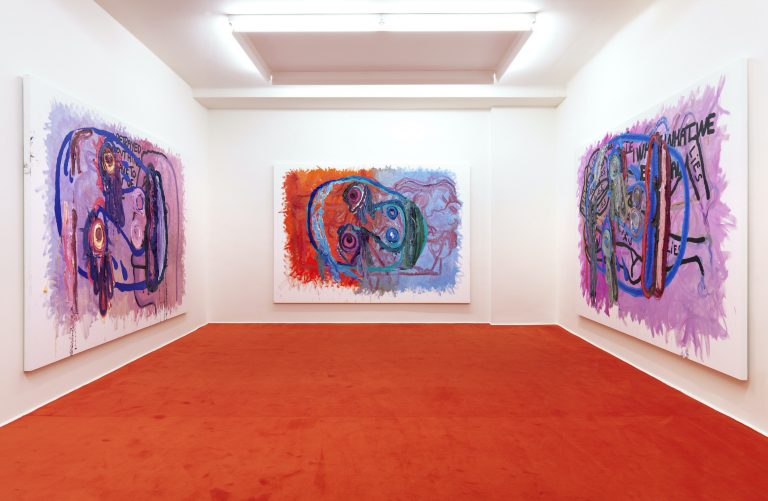
His gallery functions more like an “arthouse cinema,” says Guido Baudach. “I never wanted to run a bank or a department store.” Independence and flexibility are key for him, concentration on the essentials and programmatic twists. That’s how he continuously succeeds in making surprising exhibitions. One such exhibition is Auto-Paragone (2026), which brings together different artistic positions to engage with fundamental questions of image, material, and perception.
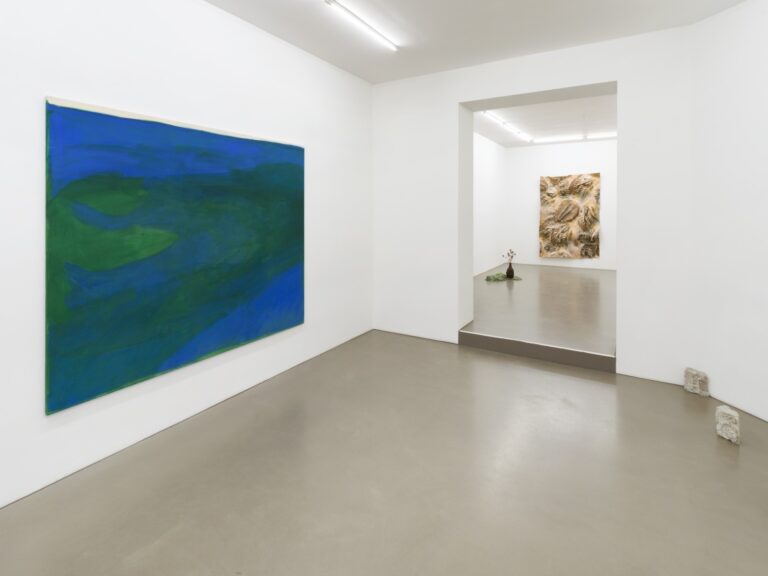
Installation view Auto–Paragone. Tamina Amadyar, Thomas Helbig, Andy Hope 1930, Hinako Miyabayashi & Markus Selg, Galerie Guido W. Baudach, 2026
Courtesy: the artists and Galerie Guido W. Baudach, Berlin
For example, Tamina Amadyar’s paintings reflect spaces and movements. This suits Baudach. After all, the programmatic relationship to space is a red thread running through his portfolio, just as it does through the gallery’s history. His business has its roots in the wild nineties, when Berlin’s cultural acceleration was primarily determined by converting or temporarily using spaces in the former East. Vacant commercial and industrial buildings sometimes became bars, clubs, studios, or galleries overnight.
Baudach was there when, in the winter of 1999, an abandoned store at the western end of Torstrasse in Mitte was revived in the form of a collaboratively run project space. The peculiar name “Maschenmode” came from the premises’ previous history as a haberdashery and was taken over without much hesitation. Berlin-Mitte had a magical appeal at the time. In 1998, the first Berlin Biennale was held; the freshly renovated Kunst-Werke had been reopened in the fall of 1999; and at the Volksbühne am Rosa-Luxemburg-Platz, Frank Castorf and stage designer Bert Neumann celebrated a radical stage aesthetic that also radiated into the art scene.
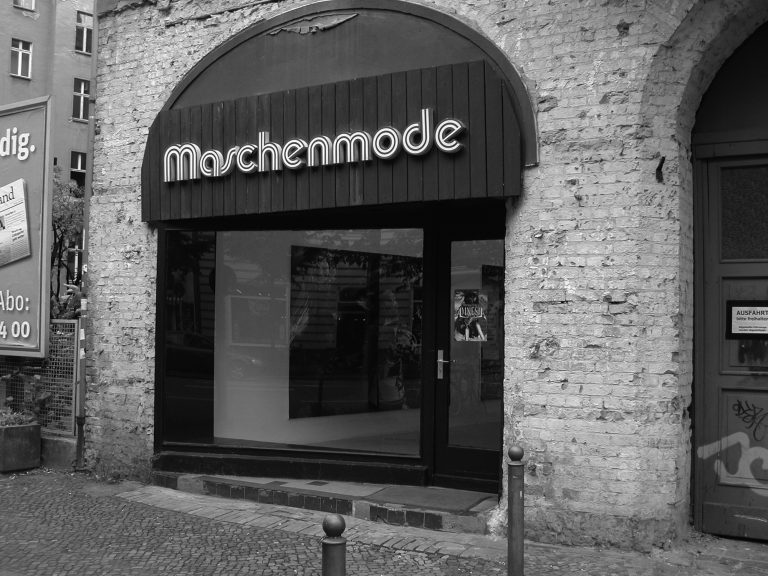
Exhibition- and Project Space Maschenmode, Berlin-Mitte, 2000
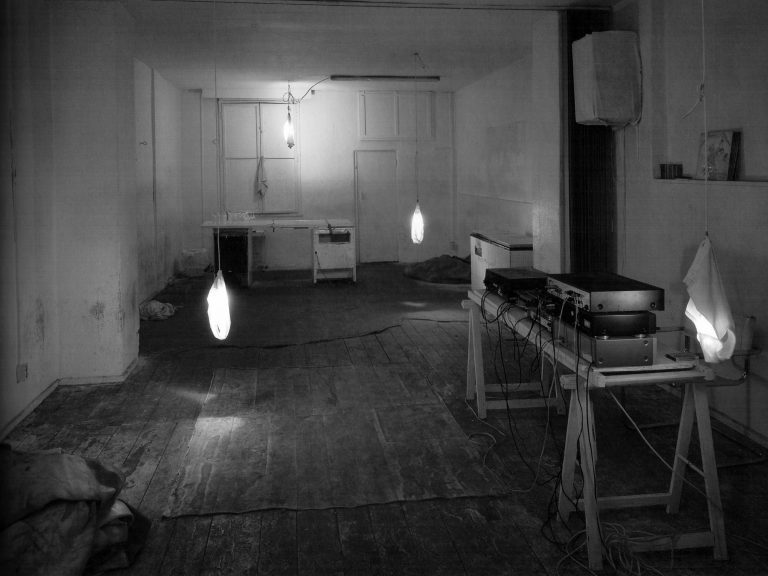
dirt, Berlin-Mitte, 2001
It was also Zipp and other artists who encouraged Baudach to evolve from operator of a non-profit project space to gallery owner in the spring of 2001. Why bother looking for a gallery when you could start one yourself? To this day, many artists from the founding phase—such as the aforementioned Thomas Zipp, as well as Andy Hope 1930, Markus Selg, and Björn Dahlem—are still represented by Baudach. Their art decisively shaped the gallery’s profile in the early days. The internationalization of the program coincided with the art boom around 2005. Baudach organized exhibitions with paintings by the Norwegian Bjarne Melgaard, with videos by the Dutchman Erik van Lieshout, and with the American video artist Aïda Ruilova. Early on, he brought the conceptual art of New York-based Rashid Johnson to the German capital.
Since 2013, the gallery owner has been exhibiting art on Potsdamer Strasse. Before that, he also ran his gallery in an industrial hall of around five hundred square meters in Berlin-Wedding for a while. He answered the question “industrial loft or cabinet?” in his own way. “Both have their charm.” But instead of talking about himself, he prefers to talk about art.
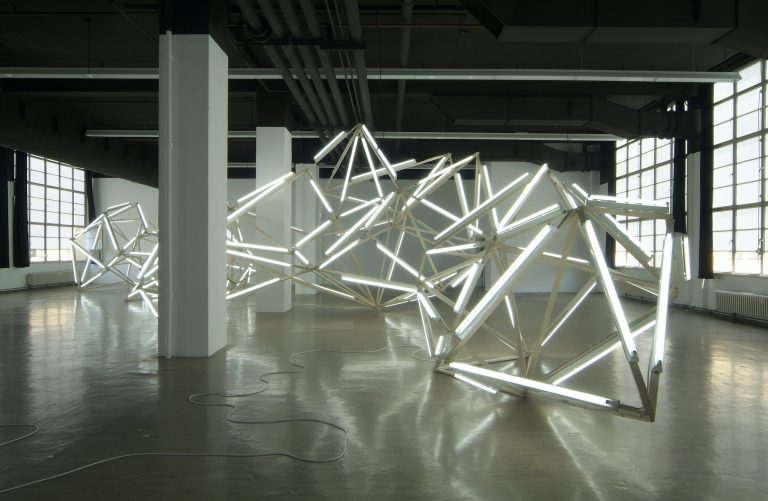
Björn Dahlem, The Milky Way
Exhibition view Galerie Guido W. Baudach, Berlin-Wedding, 2007
Bjarne Melgaard, The Night Within Us
Exhibition view Galerie Guido W. Baudach, Berlin-Charlottenburg, 2011