

Gallery Portrait
carlier | gebauer
Christian Ganzenberg, 2021
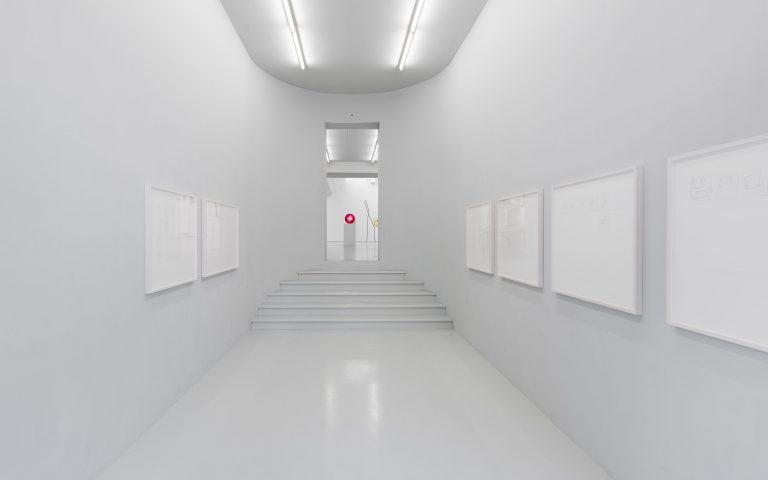
Up the steps! Sometimes anniversaries bring not only congratulations but also new challenges. Carlier | gebauer marked its thirtieth anniversary with a series of exhibitions conceived by curators and artists as gifts to the gallery. Dieter Schwarz started things off with an “improvisation without a fixed theme,” which brought together the works of eight artists from the gallery’s program and history. Even more representative of the work at carlier | gebauer was, however, the show The Youngest Day, conceived by Los Angeles-based artist Mathew Hale. With it, he turned his attention to his adopted home of Los Angeles. No effort, expense, or extra round was spared to realize this unusual group exhibition during the summer of the pandemic. This vividly illustrates the gallery’s ethos, which is without equal even outside of Berlin. carlier | gebauer understands itself as more than a purely commercial undertaking; since Gebauer founded the gallery in 1991 on the floor above a Turkish mosque in Kreuzberg, it has developed an experimental, institutional disposition in which the idea is paramount. In order to enable artists to realize complex and extensive projects, ways and means are sought, spaces are adjusted accordingly and occasionally the impossible is made possible. As was the case in Berlin in 1993 when Gebauer exhibited Armenier Sarkis, who was living in exile. The artist’s expansive installations were highly ambitious for a young gallery, so the necessary building materials had to be obtained through not entirely legal avenues. The opening of Leidschaft coinciding with a religious service at the mosque in the middle of a stormy Berlin autumn will remain a vivid memory for everyone in attendance.
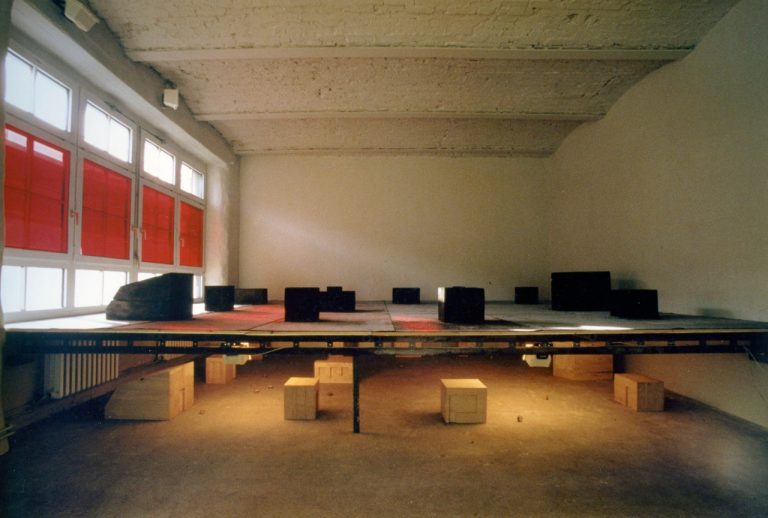
Sarkis, Leidschatz, Exhibition view at Gebauer und Günther, 1993.
Photo: carlier | gebauer
After an intermediate venue on Oranienburger Straße, the gallery moved its operations in 1995 to a flat on Torstraße. There too, the aspiration endured to offer something more than market-oriented exhibitions. They sought, instead, to experiment and collaborate in realizing extraordinary projects and placing the associated works in special collections. Presentations by Luc Tuymans, Tracey Emin and Tacita Dean are paradigmatic of the courage that infused those years. The gallery’s first appearance at Art Basel and sales to important museum collections in this period were crucial milestones as well. In 2008, the gallery moved into its current premises on Markgrafenstraße. The spacious former industrial building has since provided the ideal setting for the gallery’s often complex and large-scale projects.
The gallery’s characteristic affinity for curatorial experimentation certainly derives from Gebauer’s longstanding business partner Marie-Blanche Carlier. She had arrived in Berlin from Paris intending to become an auctioneer, but this was not what the future held in store. Carlier organized public exhibition projects with Bojan Šarčević and Jean-Luc Moulène, where she met Gebauer. Her entrance into Gebauer’s gallery began fluidly in the mid-90s until, in 1997, they established their equal partnership in the gallery’s name. The exhibition maker has never lost her passion for the public sphere; the spaces at their disposal still play a decisive role in developing the joint exhibition concepts.
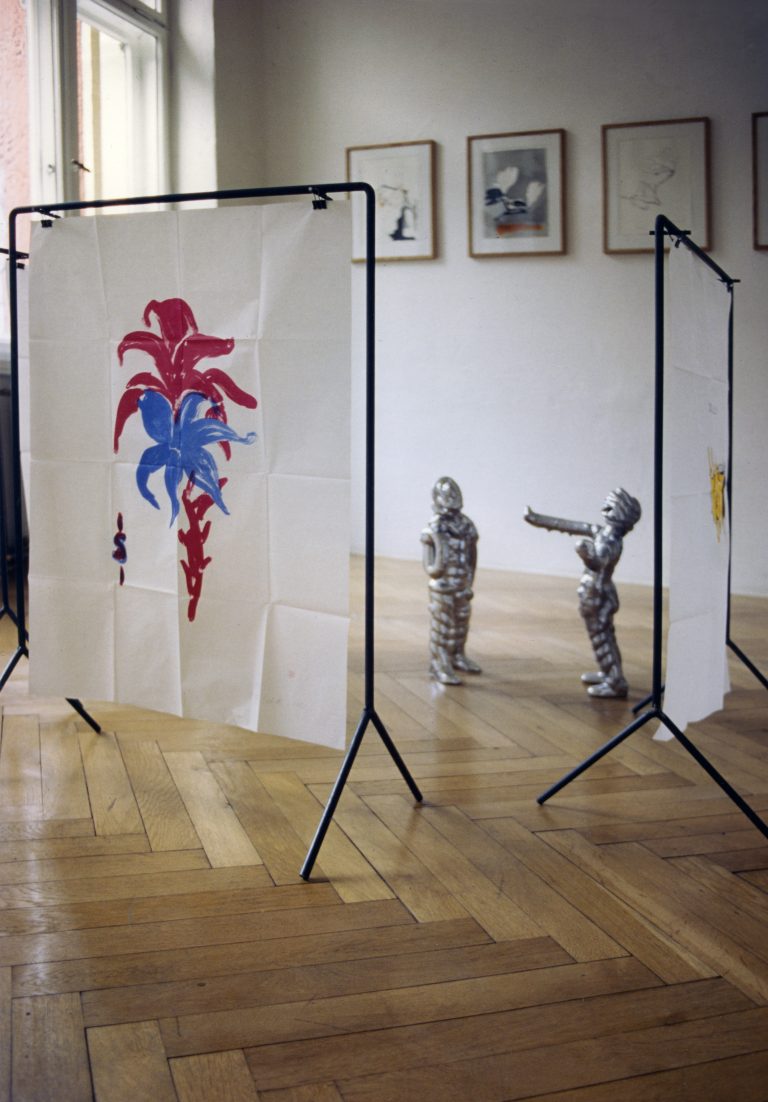
Thomas Schütte, Exhibition view at Gebauer, 1996.
Photo: carlier | gebauer
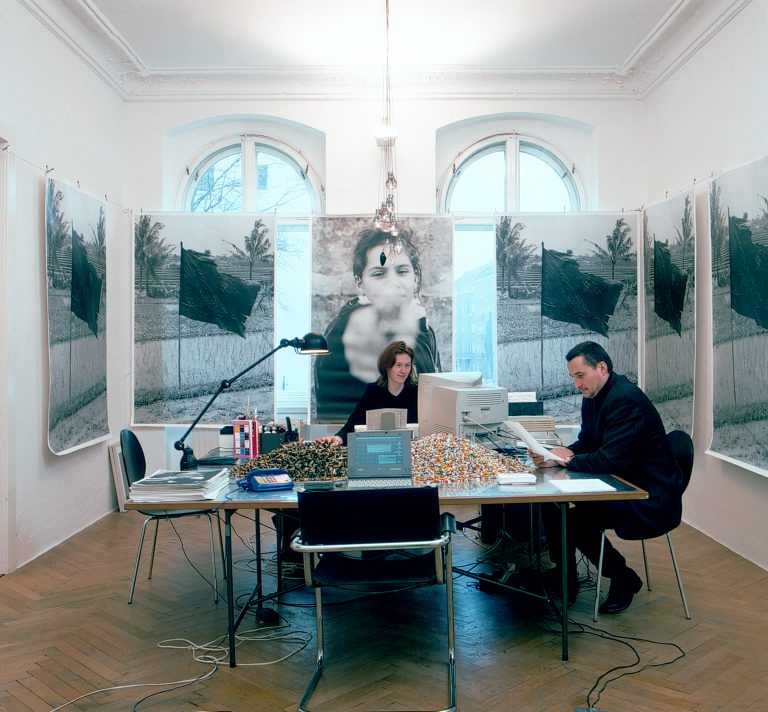
Michel François, Bureau Augmenté, exhibition view at carlier | gebauer, 1998.
Photo: carlier | gebauer
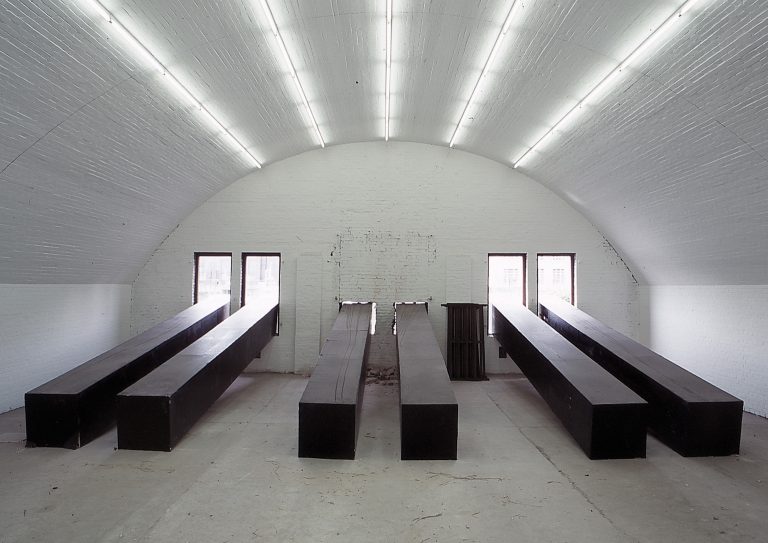
Santiago Sierra, Konstruktion und Installation von 12 mit Teer beschichteten Formen mit den Maßen 75 x 75 x 800 cm, angeordnet in 2 Räumen (site specific, Holzmarktstraße), exhibition view, 2002.
Photo: carlier | gebauer
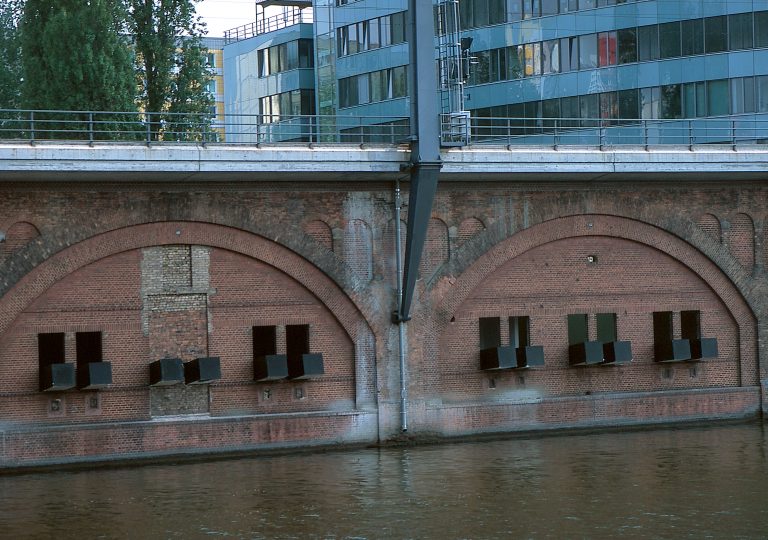
Santiago Sierra, Konstruktion und Installation von 12 mit Teer beschichteten Formen mit den Maßen 75 x 75 x 800 cm, angeordnet in 2 Räumen (site specific, Holzmarktstraße), exhibition view, 2002.
Photo: carlier | gebauer
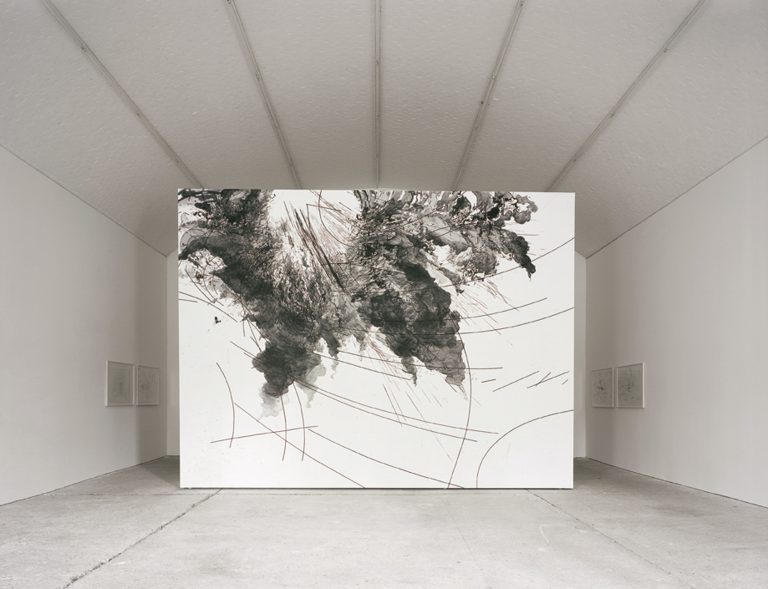
Julie Mehretu, exhibition view at carlier | gebauer, 2004.
Photo: carlier | gebauer
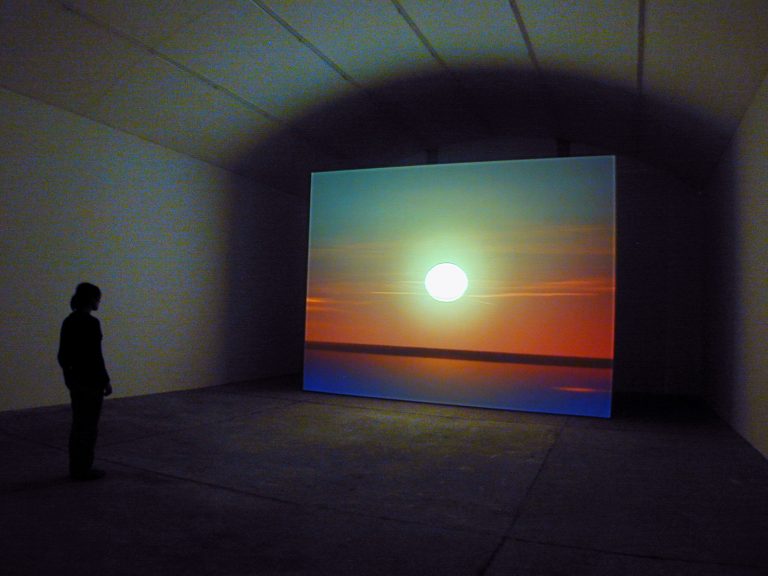
Paul Pfeiffer, Morning after the Deluge, exhibition view at carlier | gebauer, 2003.
Photo: carlier | gebauer
Time and again, Carlier and Gebauer facilitate exhibitions that consciously seek to destabilize their own spaces and given capacities. The gallery’s premises have never had the neutral character of a white cube. On the contrary, the two gallerists placed greater emphasis on the distinctive character of the spaces—and their artists gladly accepted the challenge. In 2002 Santiago Sierra transformed the newly renovated gallery on Holzmarktstraße into a minimalist sculpture extending into the outdoor space with twelve tar-coated beams. This attracted the attention not only of the water police but also courageous collectors. The fact that the gallery employees had to work in hats and gloves for the exhibition’s duration illustrates the gallery’s uncompromising approach. Similarly spectacular was Nida Sinnokrot’s first solo exhibition, in which he cut a shipping container into eleven slices by hand. The container had previously served as a caravan for Israeli settlers and then as a Palestinian construction site office. After discovering Jonah’s Whale at the Sharjah Biennial, this striking installation was brought to Germany and presented in several exhibitions.
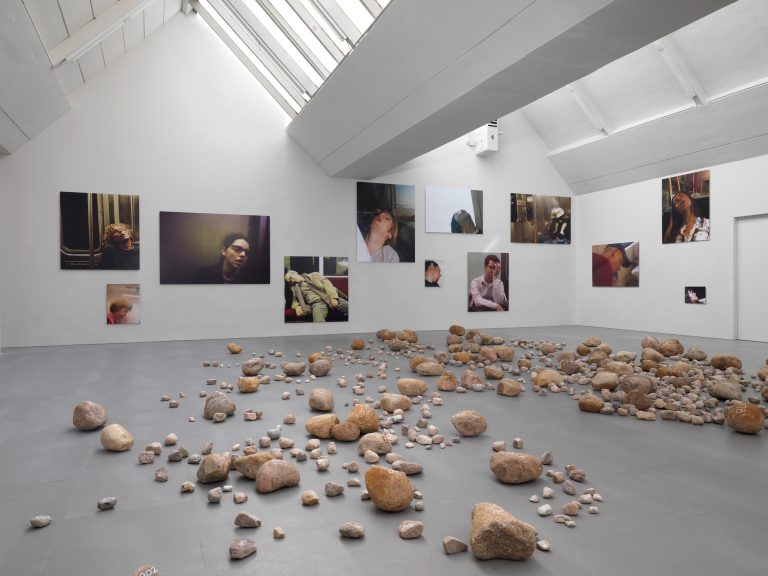
Mark Wallinger, exhibition view at carlier | gebauer, 2010.
Photo: carlier | gebauer
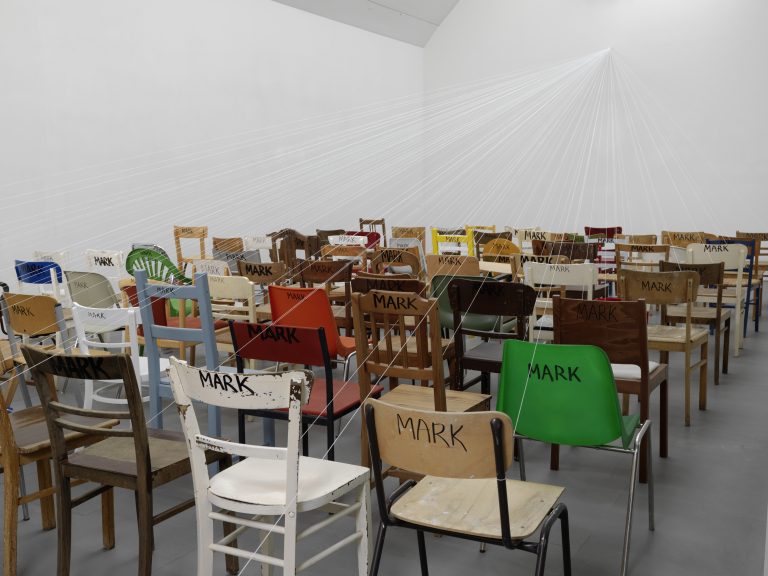
Mark Wallinger, exhibition view at carlier | gebauer, 2010.
Photo: carlier | gebauer
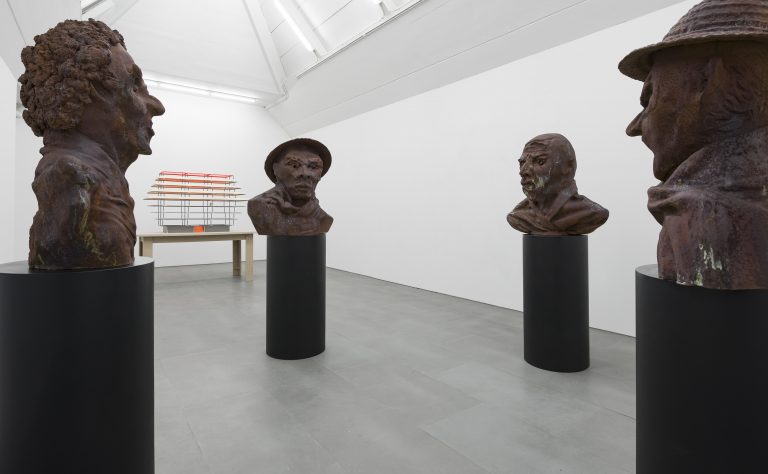
Thomas Schütte, exhibition view at carlier | gebauer, 2017.
Photo: Trevor Good
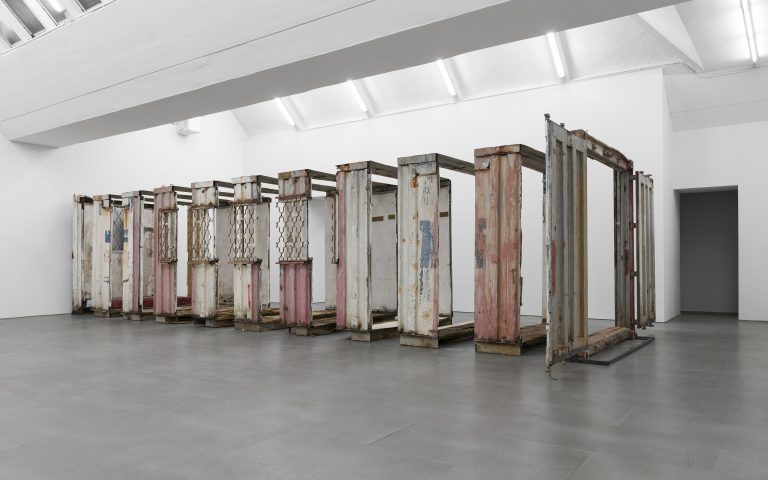
Nida Sinnokrot, Expand Extract Repent Repeat, exhibition view at carlier | gebauer, 2018. Photo: Trevor Good
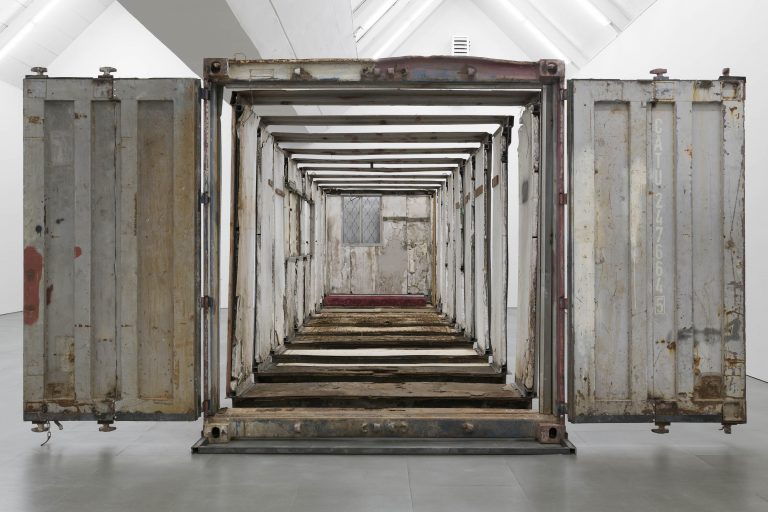
Nida Sinnokrot, Expand Extract Repent Repeat, exhibition view at carlier | gebauer, 2018. Photo: Trevor Good
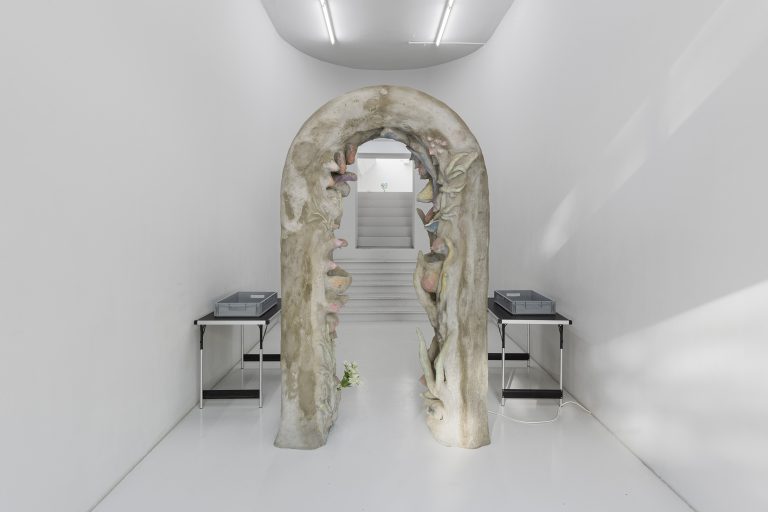
Laure Prouvost, In Reflection We Rest, exhibition view at carlier | gebauer, 2019.
Photo: Trevor Good
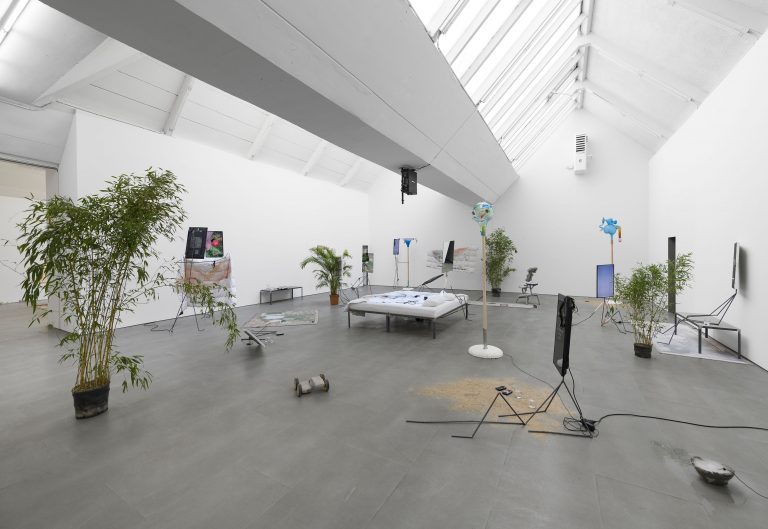
Laure Prouvost, In Reflection We Rest, exhibition view at carlier | gebauer, 2019.
Photo: Trevor Good
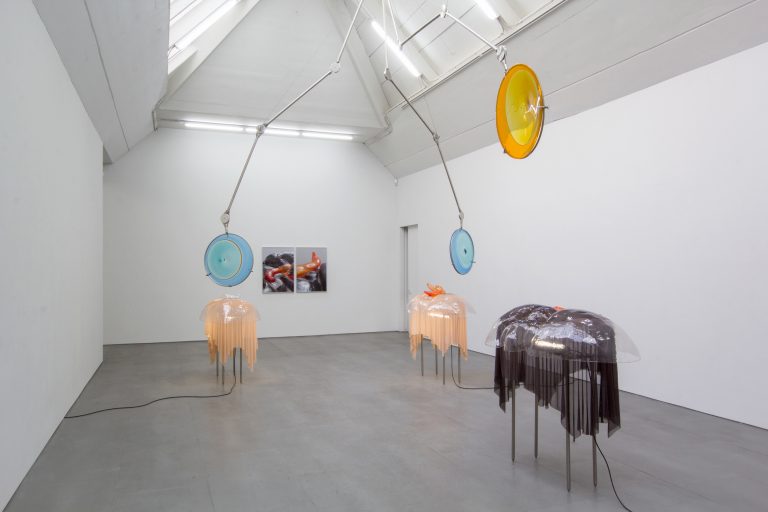
Pakui Hardware, Absent Touch, exhibition view at carlier | gebauer, 2020.
Photo: Trevor Good
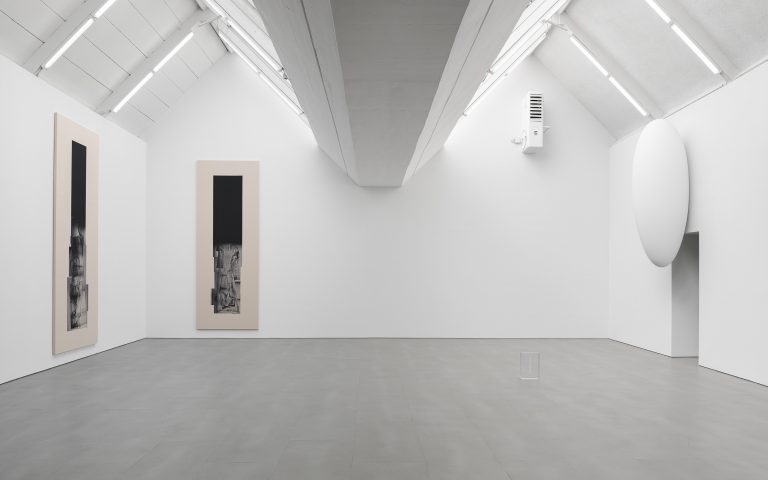
Tarik Kiswanson, Surging, exhibition view at carlier | gebauer, 2021.
Photo: Trevor Good
Alongside such extraordinary projects, carlier | gebauer has accompanied artists over many years, supporting key stages in the development of their careers. This is exemplified in their longstanding collaborations with Michel François, Julie Mehretu and Thomas Schütte. Fearlessness, poise, perseverance and a willingness to embrace challenges are qualities also evident in the gallery’s choice of a second venue: In 2019, carlier | gebauer opened a second location on Calle de José Marañón in Madrid. Kaspar König invited the gallery to ARCO for the first time in 1994. Since then, it has developed a special connection to the city, its institutions and collections. It is perhaps indicative that almost all carlier | gebauer gallery spaces are only accessible via a more or less prominent set of stairs. This detail can be taken figuratively to stand for the aspiration and challenges of carlier | gebauer: to the artists, to the visitors, to the collectors and, above all, to themselves. Take the seven steps that lead into the Berlin exhibition spaces, and you will experience for yourself what this means.
The Youngest Day, curated by Mathew Hale, with Nancy Buchanan / Jedediah Caesar / Fiona Connor / Tacita Dean / Thomas Demand / Fred Eversley / Morgan Fisher / Aaron Fowler / Nikita Gale / Piero Golia / Alexandra Grant / Mathew Hale / Margaret Honda / Luchita Hurtado / Joey Kötting / Sharon Lockhart / Nicole Miller / Eamon Ore-Giron / Laura Owens / Glen Rubsamen / Eddie Ruscha / Betye Saar / Asha Schechter / Rosha Yaghmai.
Exhibition view at carlier | gebauer, 2021.
Photo: Trevor Good