

Gallery Portrait
Capitain Petzel
Published on 6 JUN 2024
The story of Capitain Petzel begins in Cologne and New York as much as it does in Berlin, and it reads like a piece of recent art history. When Gisela Capitain met Martin Kippenberger in 1977, she moved in with the artist. Fascinated by the intensity of the artist’s life and work, Capitain immersed herself in West Berlin’s scene while keeping her day-job as a teacher—long before the city was considered cultural (or political) capital of Germany. Her engagement with contemporary art became an education in taste, arguably a significant characteristic for art dealers. She later said that her main criterion for quality was artistic intelligence, which, she explains, has to do with the way artists build their own world, weaving unspoken narratives into their works.
When Kippenberger obtained a vast loft in Kreuzberg and started his now legendary office „Büro“ – a 1980s version of Andy Warhol’s Factory, sort of – Capitain managed the space. Her stint in Berlin lasted until she moved to Cologne in 1983. Although Capitain admits that she thought Cologne was ugly at first, she started her own gallery only a few years later, and it remains an important player in the West German and international market.
As if new galleries often grow out of established ones, Capitain’s assistant, Friedrich Petzel, eventually went on to open his own gallery. Petzel, who is originally from northern Germany and studied in Munich, opened his gallery in SoHo, New York, in 1994, which would soon become one of the centers of the contemporary art world. Later, Petzel moved to Chelsea, then expanded to a townhouse on the Upper East Side.
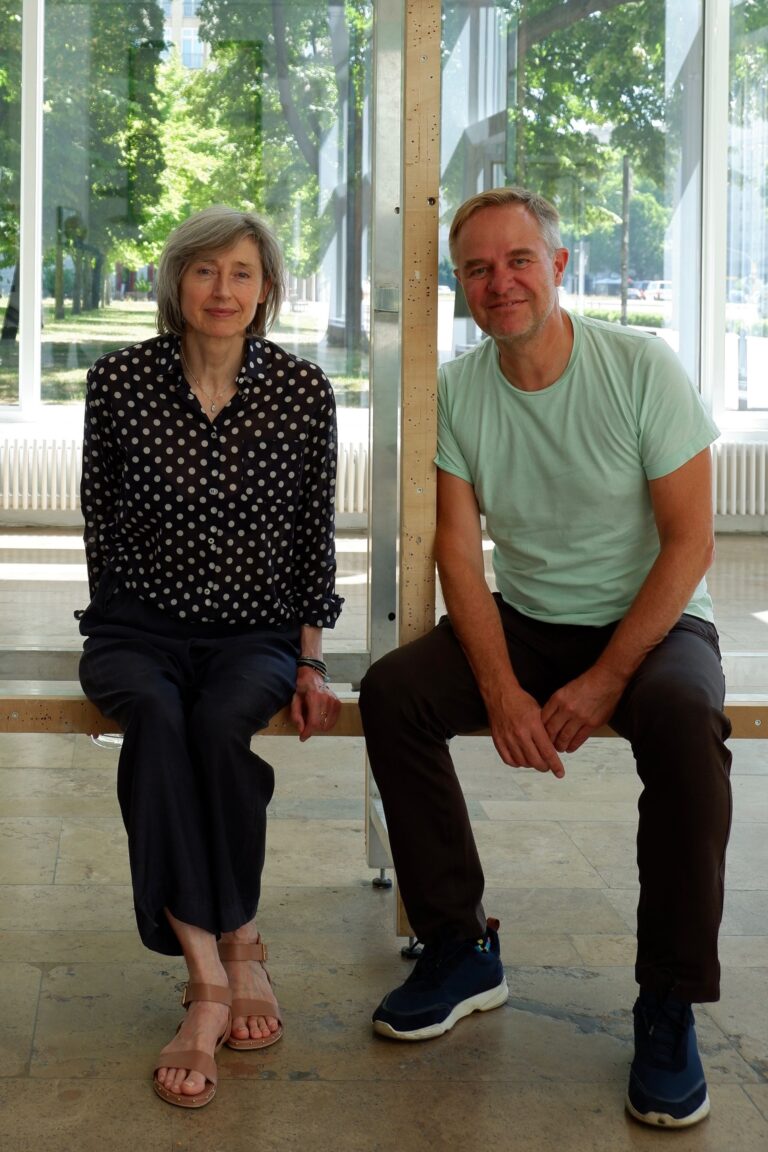
Gisela Capitain and Friedrich Petzel
Capitain and Petzel, now colleagues working across two cities with closely connected art scenes, remained friends, and in 2008 decided to open a space in Berlin. At the time, the city was emerging from the famously hedonistic 1990s as a cultural center. Young artists and curators founded institutions, as if they felt an urge to get serious. Since 2004, the city has had its own biennial, and many dealers opened Berlin branches or started from scratch. They were ready to experiment, and the mythology around the German capital was powerful. Capitain and Petzel went their own way, however. Instead of creating a showroom or a project space, they decided to establish a third, independent gallery – Capitain Petzel was born.
The Italian architect Aldo Rossi once called Karl-Marx-Allee the last great road in Europe, and even in Berlin, a city known for its spaciousness, it feels especially generous. It was once named after Stalin, the Soviet leader, and from the 1950s onward, it served as the sumptuous thoroughfare to Alexanderplatz, the political and urban heart of the Socialist East. Capitain Petzel set up their space in this historically charged neighborhood, in a section of the boulevard designed in the 1960s, when GDR architecture loosened up and departed from the rigid classicism of earlier years. Instead, the structures recall what would become known in the West as the International Style. Right angles, large windows, light construction, and simple, inviting volumes speak the modernist Esperanto of those years.
The new gallery moved into a pavilion built in 1964, which, post-reunification, had seen different uses like so many places in Berlin’s former East. Although its history does not reach far back, it is difficult to trace. The structure housed a nightclub in the 1990s, some neighbors agree, while others have no memory of it – maybe because of their different perception of the city, as if different people populate urban space at night. Later, it housed a car dealership, which installed shiny metal panels on the ceiling. Otherwise, little is known about its previous tenants.
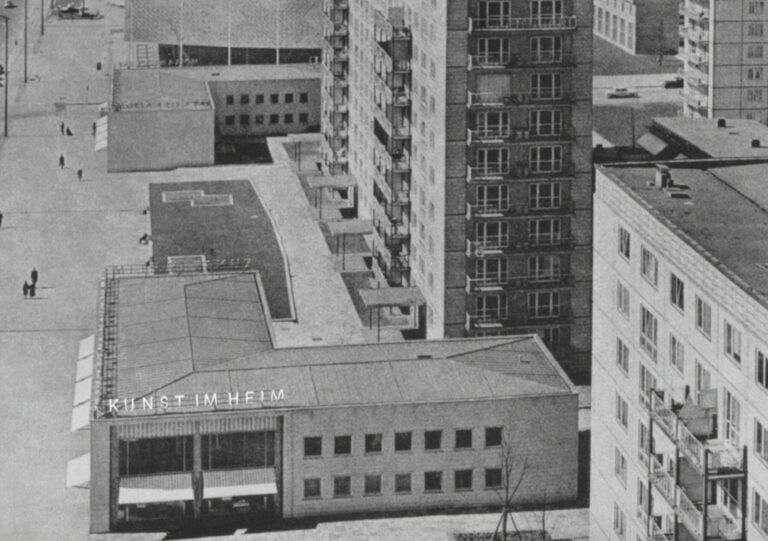
Kunst im Heim
View from 1960s
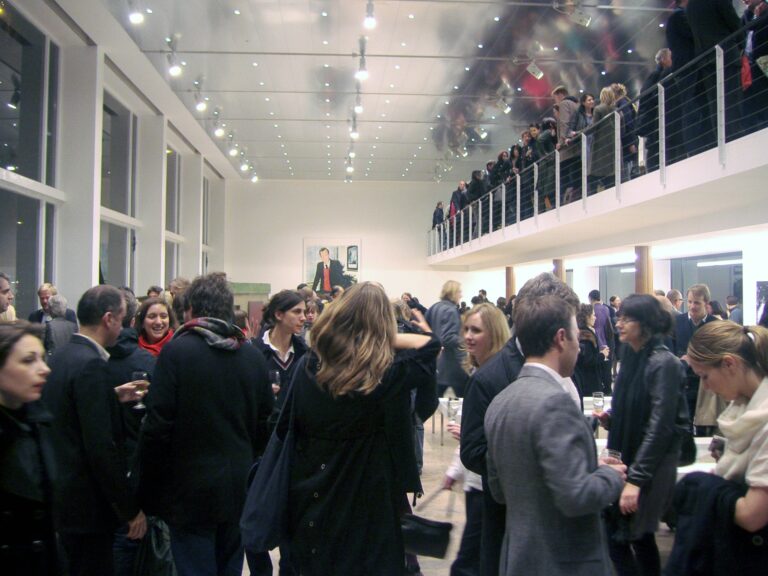
Opening Inaugural Exhibition Kunst im Heim Berlin
Capitain Petzel 2008
he gallery’s first exhibition, a group show, was titled Kunst im Heim, referring to the original use of the building – in Socialist times, it served as a showcase for crafts and home design. The tall windows looking out to the four-lane boulevard with its ample sidewalks invite natural light. The main room features a balcony and spans two levels, while the back wing of the L-shaped building is tucked away from view and has space for offices and storage. On the 13th floor of an adjacent building, overlooking Alexanderplatz and its vast open spaces, a dance school is used for the gallery’s opening parties, and in 2023, Galeria Plan B, moved into the neighborhood and joined the celebrations.
The gallerists from Cologne and New York come to every exhibition opening. They maintain a close connection, but at the same time, the Berlin space is an independent gallery. Artists like the painter Charline von Heyl or Stephen Prina are represented by both Capitain and Petzel, and are also part of the Berlin program—there is some overlap. But the Berlin gallery is distinct from the others, and each member of the young team contributes their own perspective. The program is constantly evolving, too. Take the artist Leyla Yenirce, who already has a substantial history of shows. Her presentation at Capitain Petzel in 2023 was very painterly, but her practice is at home in video and sound. It makes sense that her large-scale works make images and styles clash like a montage in avant-garde cinema.
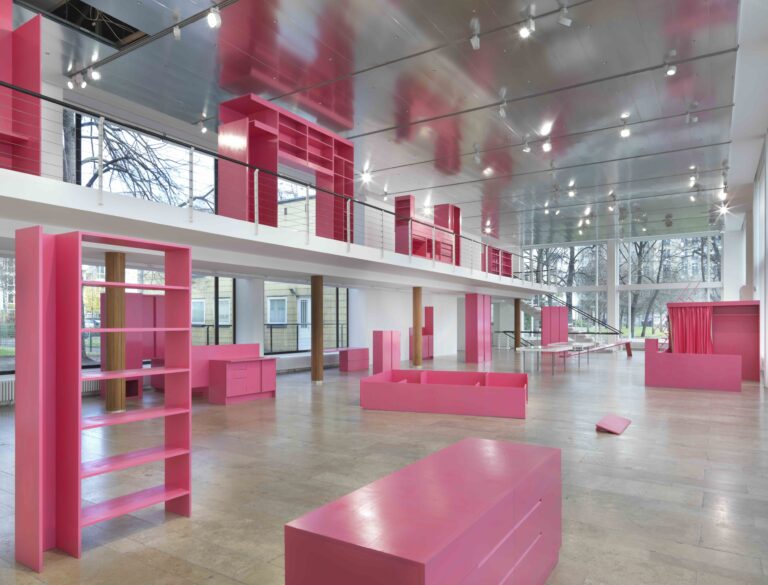
Installation View
Stephen Prina As He Remembered It
Capitain Petzel 2018
The heritage-protected, dual-aspect structure poses many challenges to exhibition-making. For Yenirce’s show, the front windows were blocked, so the ample showroom resembled a large corridor. The gallery uses a modular system of walls that can be placed without drilling a hole anywhere and whose dimensions are variable. If the need arises, large objects can be suspended from the ceiling, such as Stefanie Heinze‘s very large-scale paintings in a show in 2022. They hovered just a little over the polished stone floor. In the run-up to her pavilion at the Venice Biennale, Yael Bartana screened a selection of her video work in the basement, which lends itself to projections, almost like a little secluded cinema. The building proves to be surprisingly adaptable.
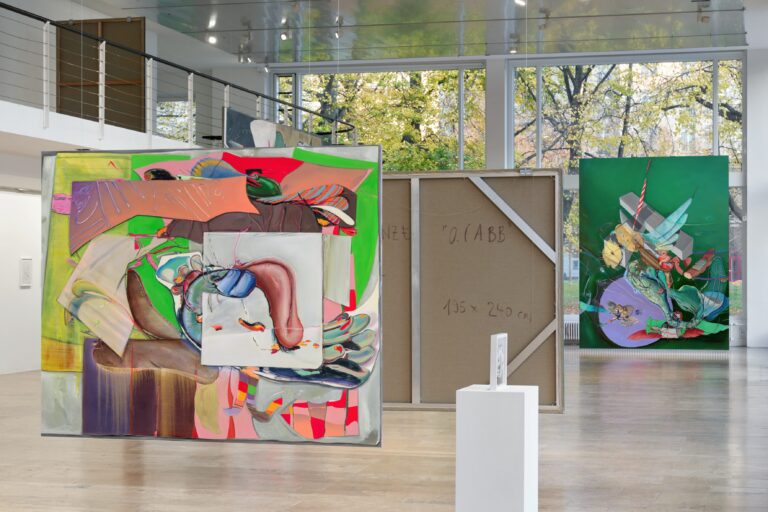
Installation View
Stefanie Heinze Dimensions of the Fool
Capitain Petzel 2022
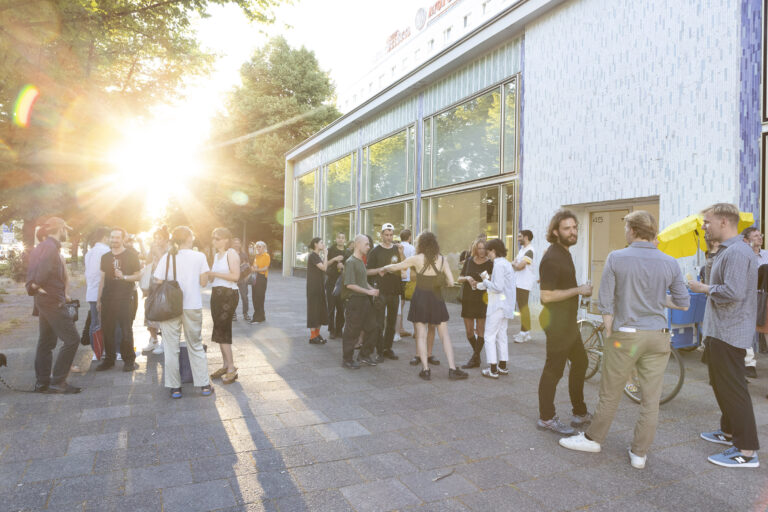
Opening Reception the state I am in
Capitain Petzel 2022
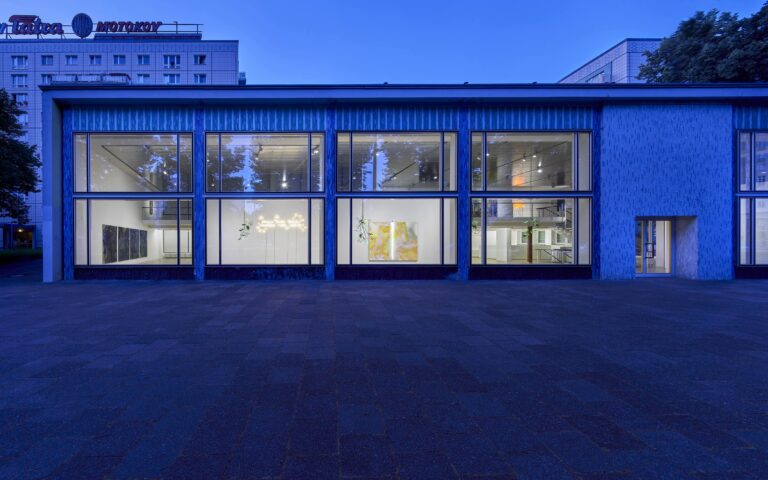
Installation View
Andrea-Bowers and Mary Weatherford Drink the Wild Air
Capitain Petzel 2023
This is a good thing, especially given the different media in which the gallery’s artists work, and Capitain Petzel’s group shows attest to that. In 2023, the exhibition Sweet Sixteen featured 18 artists, among them Sarah Morris with a new canvas, historical positions like Maria Lassnig, and Austin Martin White, who makes painterly mixed-media pieces and was a recent addition to the roster. The title referred to the gallery’s 16th anniversary, and to a celebration of, if not exactly adulthood, then a step out of youth – an age full of potent
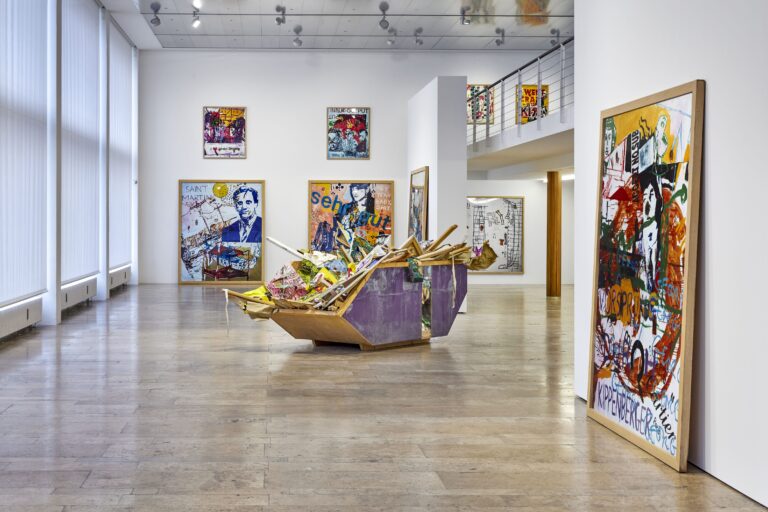
Installation View
Martin Kippenberger Heavy Burschi
Capitain Petzel 2023
Capitain Petzel
Karl-Marx-Allee 45
10178 Berlin