

Published on 29 APR 2026
Duncan Ballantyne-Way
Gallery Portrait
Galerie Isabella Bortolozzi
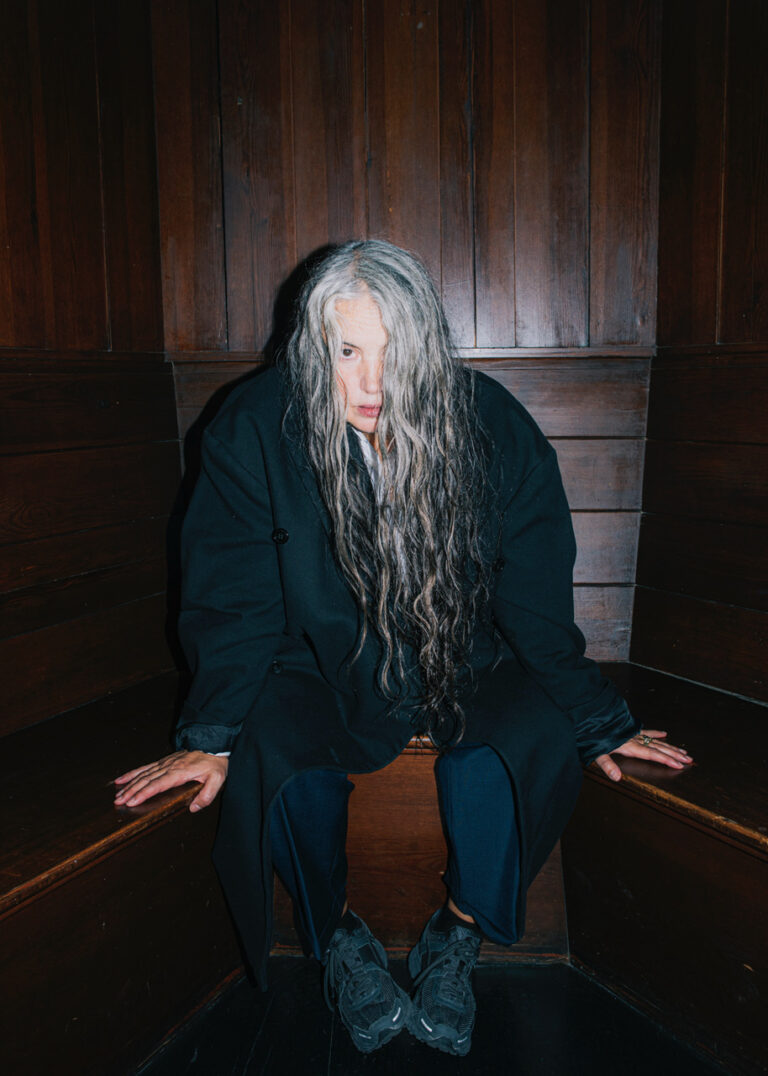
Portrait Isabella Bortolozzi, 2023 by Tobias Kruse
Galerie Isabella Bortolozzi gilt als eine der angesehensten und einflussreichsten Galerien für zeitgenössische Kunst in Berlin. Das Programm umfasst mehr als 30 Künstler*innen aus jungen, etablierten sowie historisch relevanten Positionen – darunter Wu Tsang, Ed Atkins sowie das Nachlassarchiv von Carol Rama – und zeichnet sich durch Offenheit gegenüber neuen ästhetischen Ausdrucksformen sowie durch ein Engagement für künstlerische Praktiken aus, die sich gängigen Narrativen entziehen. Fragen nach Körperlichkeit, Sprache, Verletzlichkeit und politischer Spannung prägen die Ausstellungen der Galerie mit einer Dringlichkeit, die zentrale Fragen der Gegenwart aufgreift. Die Galerie wurde 2004 von der aus Italien stammenden Galeristin Isabella Bortolozzi in Berlin-Mitte gegründet und zog später ans Schöneberger Ufer, wo sie bis heute ansässig ist. 2014 eröffnete zudem der zweite Projektraum Eden Eden in der nahegelegenen Bülowstraße.
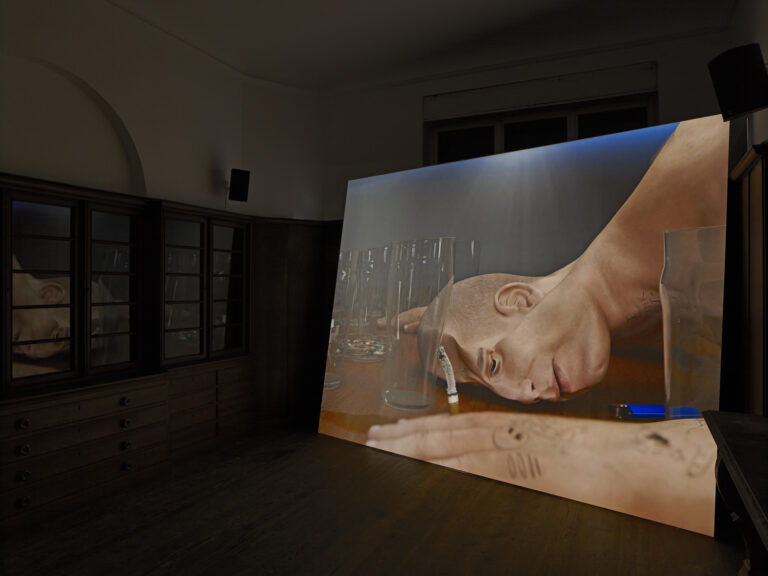
Exhibition view,
Ed Atkins, Ribbons,
Galerie Isabella Bortolozzi, Berlin, 2014.
Courtesy the artist and Galerie Isabella Bortolozzi, Berlin.
Photo: Nick Ash
„Ich mag Arbeiten, die sich auf gewisse Weise einer Vereinnahmung entziehen.“
Isabella Bortolozzi
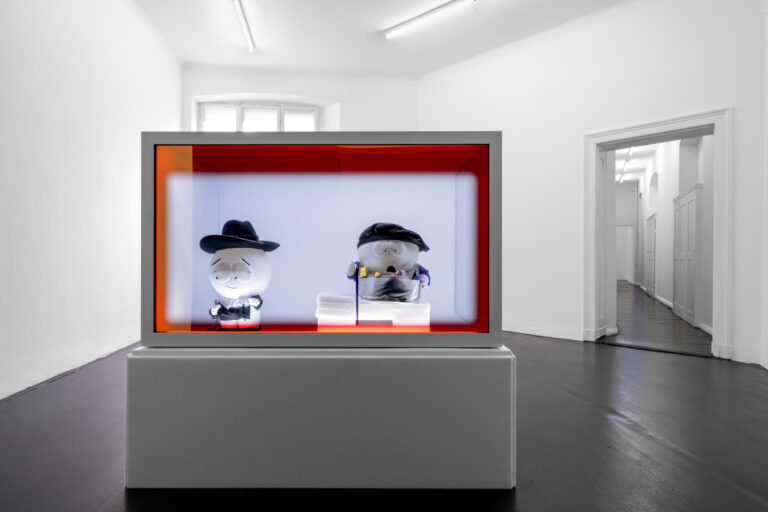
Exhibition view,
Marc Kokopeli, Now we are on Easy Street,
Galerie Isabella Bortolozzi, Berlin, 2025.
Courtesy the artist and Galerie Isabella Bortolozzi,
Berlin. Photo: Graysc
Obwohl Ihre Galerie seit über 20 Jahren existiert, haben Sie einmal gesagt, dass Sie sich immer noch als „Außenseiterin“ fühlen. Ist das noch immer so?
Das habe ich früher gesagt, aber rückblickend denke ich, dass sich dieses Gefühl weniger auf Berlin selbst bezieht, sondern vielmehr auf mein Verhältnis zur vorherrschenden Kultur im Allgemeinen. Angesichts der aktuellen globalen politischen und kulturellen Situation glaube ich, dass viele Menschen dieses Empfinden teilen.
Ihr Programm vereint häufig Künstler*innen, deren Praxis sich gängigen Kategorien entzieht – Gisèle Vienne etwa bewegt sich zwischen unterschiedlichen Disziplinen. Was reizt Sie an dieser Arbeit?
Es gibt eine Vielheit von Perspektiven und Praktiken, und um als Künstler*in relevant zu sein, gilt es, diese Realität auf gewisse Weise zu verkörpern. Gisèle Vienne ist Dramaturgin, Choreografin, Regisseurin und Bildhauerin. Ihre Praxis ist vielschichtig und komplex, genau das hat mich ursprünglich an ihrer Arbeit fasziniert. All diese Ebenen erschaffen eine eigene Welt, weder zentral noch peripher, und genau das interessiert mich. Um Gabriela Achas Rezension von Gisèles Ausstellung This Causes Consciousness to Fracture (2024) in Frieze zu zitieren: “Vienne is a choreographer, narrating with bodies even when they are static objects. Vienne uses this voicelessness, the radical stillness in her teenage puppets to develop a discourse around violence.” (Vienne ist eine Choreografin, die mit Körpern erzählt, selbst wenn diese statische Objekte sind. Sie nutzt die Sprachlosigkeit und radikale Starre ihrer jugendlichen Puppen, um einen Diskurs über Gewalt zu entwickeln.)
Ihre erste Einzelausstellung in der Galerie eröffnet im September während der Art Week und verspricht ebenso präzise und radikal zu werden wie ihre bisherigen Ausstellungen.
Sie sagten einmal, der „politisch verwundete Körper“ ziehe Sie an. Welche Künstler*innen verkörpern das für Sie?
Was ich in diesem Interview meinte, war: Mich interessiert die politische Wunde am Körper. Es gibt nur Körper, und die Körper von Objekten und Ideen, die ebenfalls von Körpern hervorgebracht werden. Man könnte sagen, dass mich bestimmte Formen bürgerlicher Eleganz und jene Ornamente, die oft als Kunst gelten, weniger interessieren.
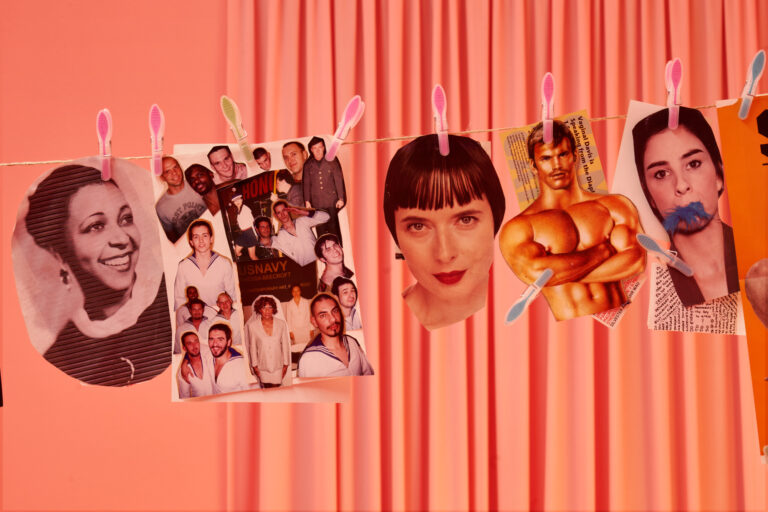
Exhibition view,
Vaginal Davis, The Wicked Pavilion,
Galerie Isabella Bortolozzi, Berlin, 2022.
Courtesy the artist and Galerie Isabella Bortolozzi, Berlin.
Photo: Graysc
Viele Ausstellungen Ihrer Galerie vermitteln ein Gefühl von Verletzlichkeit oder Sensibilität. Würden Sie sagen, das hat sich intuitiv entwickelt?
Man könnte sagen, Verletzlichkeit ist eine Grundbedingung unserer Zeit. Künstler*innen beschäftigten sich damit zum Beispiel in der letztjährigen Gruppenausstellung Bedroom, Christmas Morning mit Arbeiten von Ellen Cantor sowie Annie Ernaux & Marc Marie. Wir zeigten originale handabgezogene Fotografien von Ernaux & Marie neben Cantors Video If I Just Turn and Run (1998). Die Fotos entstanden parallel zu Ernaux’ Buch Auf den Bildern. Zu dieser Zeit unterzog sich Ernaux einer Chemotherapie wegen Brustkrebs und hatte gleichzeitig eine Liebesbeziehung mit dem Journalisten Marie. Sie schreibt:
“(…) as if making love were not enough and we needed to preserve a material representation of the act, we continued to take photos. Some we took immediately after lovemaking, others the next morning. The morning pictures were the most moving. These things cast off by our bodies had spent the whole night in the very place and position in which they’d fallen, the remains of an already distant celebration. To see them again in the light of day was to feel the passage of time.” (Stillschweigend machten wir weiterhin Fotografien, als wäre es nicht genug, miteinander zu schlafen, als müssten wir eine materielle Spur dieses Akts bewahren. Manche Bilder entstanden unmittelbar nach dem Liebesakt, andere am nächsten Morgen. Die Fotos vom Morgen waren die bewegendsten. Diese Dinge, die unsere Körper abgestreift hatten, hatten die ganze Nacht genau an dem Ort und in der Lage verbracht, in der sie gefallen waren – Überreste eines bereits vergangenen Festes. Sie im Tageslicht wiederzusehen bedeutete, den Lauf der Zeit zu spüren.)
Wie entwickelte sich das Galerieprogramm in den Anfangsjahren?
Ich glaube, das ist etwas sehr Persönliches, verbunden mit dem, was einen interessiert, und damit, wie sich das im Laufe der Zeit verändert. Ein Programm spiegelt eher die eigene Haltung und Verfassung wider als ständig der nächsten kommerziellen Möglichkeit hinterherzulaufen – solche Versuche gehen selten gut aus. Als ich die Galerie 2004 eröffnete, hatte ich keinen Businessplan; ich entschied mich einfach, ins kalte Wasser zu springen. Die Galerie eröffnete mit einer Ausstellung des slowakischen Künstlers Julius Koller. Sein Symbol war das Fragezeichen, und ich bat ihn, eines in den Raum zu zeichnen – ein Fragezeichen schien mir ein guter Beginn für eine Galerie.
Worauf achten Sie bei der ersten Begegnung mit der Arbeit eines Künstlers oder einer Künstlerin?
Ich mag Arbeiten, die sich einer Vereinnahmung entziehen. Arbeiten, die nicht offensichtlich im Dienst einer vertrauten intellektuellen, formalen oder ästhetischen Agenda stehen. Wenn ich an Ed Atkins, Hannah Black oder Seth Price denke, aber auch an Diamond Stingily, Vaginal Davis, Steve Reinke oder Calla Henkel, verbindet viele der Künstler*innen, mit denen ich arbeite, das Interesse an Schreiben und Sprache. Meine Rolle als Galeristin besteht darin, offen für das Unbekannte zu bleiben und Bedingungen zu schaffen, unter denen andere diese Erfahrung teilen können. Ich versuche, Raum für das Entstehen von etwas Neuem zu schaffen.
To what extent do risk and difficulty guide your decisions about who you work with?
Inwiefern spielen Risiko und Herausforderung bei Ihren Entscheidungen eine Rolle?These attractions are not strategies, they are not the means by which you fashion your position, they are drives that carry you forward. The direction is determined by the drives, wherever it leads.
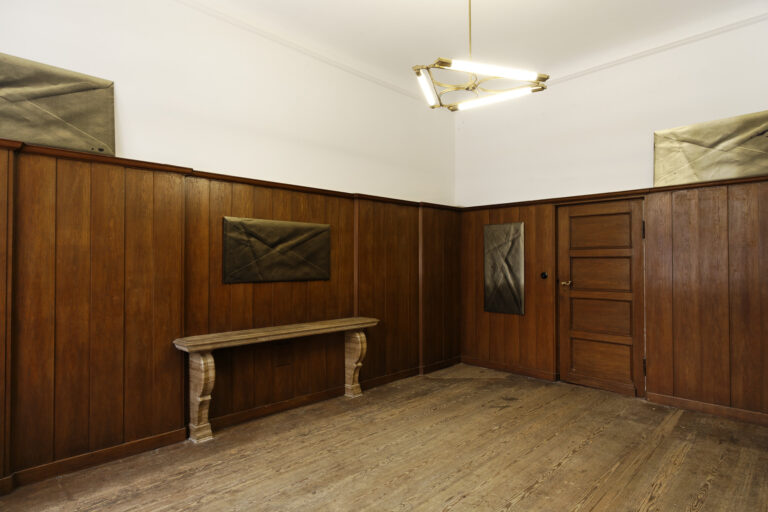
Exhibition view,
Seth Price, Die Nuller Jahre,
Galerie Isabella Bortolozzi, Berlin, 2010.
Courtesy the artist and Galerie Isabella Bortolozzi, Berlin.
Photo: Nick Ash
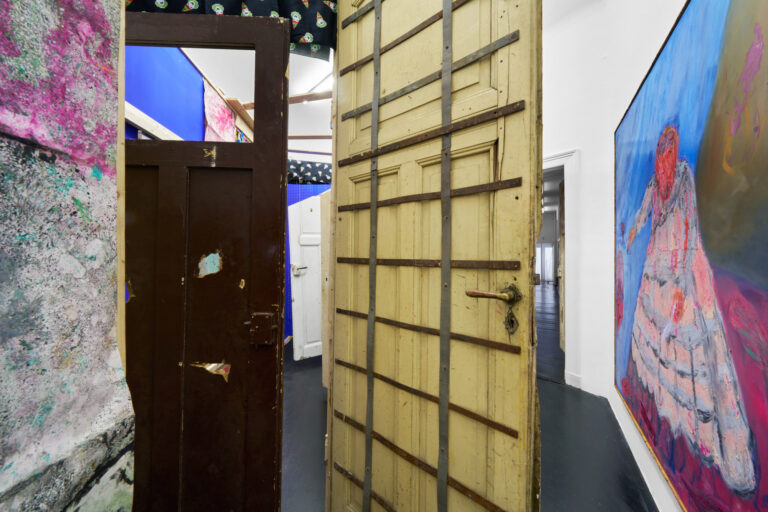
Exhibition view,
Stephen G. Rhodes, Hinge: 23 hours: ajar,
Galerie Isabella Bortolozzi, Berlin, 2023.
Courtesy the artist and Galerie Isabella Bortolozzi, Berlin.
Photo: Graysc
Sie arbeiteten mit Carol Rama, lange bevor sie breitere Anerkennung fand. Was haben Sie in ihrer Arbeit erkannt?
Eine ihrer frühen Ausstellungen in der Galerie trug den Titel Autorattristatrice („Selbst-Traurig-Macherin“), nach einem frühen Gemälde, das wie eine Gummiblume aussah. Carol Rama erhielt 2003 den Goldenen Löwen für ihr Lebenswerk auf der Biennale von Venedig. Sie gehört zur großen europäischen Kultur des 20. Jahrhunderts, wurde jedoch jahrzehntelang marginalisiert und unterdrückt, besonders in Italien. Es war unsere Aufgabe, Frieden mit ihr zu schließen, über sie zu schreiben und ihre Geschichte neu zu erzählen. Ramas Geschichte zu erzählen, heißt auch, von jener verdrängten und alternativen Strömung italienischer Kunst zu sprechen, die neu geschrieben und neu erzählt werden musste: radikal anders, aufrichtigund komplex. Carol Rama mochte übrigens kein natürliches Licht, interessant für eine Malerin. Sie arbeitete immer bei künstlichem Licht. Der italienische Schriftsteller Giorgio Manganelli beschrieb ihre Gemälde 1979 als etwas, das aus der Nacht hervorkommt, wie Fluoreszenz oder ein kaltes Glimmen. Er bezeichnete Carol Rama als mächtig und verängstigtzugleich. Als ich sie einige Jahre vor der Eröffnung der Galerie kennenlernte, war sie zwar bereits bekannt, dennoch hatte ich das Gefühl, dass es eine Retrospektive brauchte, um ihre Geschichte neu zu erzählen. Deshalb begann ich ein Gespräch mit Paul B. Preciado am MACBA in Barcelona. Daraus entstand 2014 die Retrospektive The Passion According toCarol Rama am MACBA, die 2016 im GAM Torino in Turin ihren Abschluss fand. Heute vertrete ich gemeinsam mit Hauser & Wirth den Nachlass.
Sie waren auch maßgeblich daran beteiligt, Vaginal Davis erneut ins Blickfeld großer Institutionen zu rücken. Was überzeugte Sie von der Bedeutung ihrer Arbeit?
Amelia Jones bezeichnet Davis’ Praxis als „anarchischen Überfluss“, José Esteban Muñoz sprach von „terroristischem Drag“. Eine „Terroristin“ bewegt sich naturgemäß nicht leicht in Institutionen. Ihre besondere Sicht auf die Welt entsteht durch permanente Destabilisierung – durch Übertreibung, Vulgarität und Widerspruch legt sie offen, was unter sozialen Normen verborgen liegt. Wie Bojana Kunst in ihrem Essay Precarious Glitter: The Many Revolutions of Vaginal Davis schreibt:
“Vaginal Davis is not just one, she is always more than one. Vaginal Davis is plural with her multitude of appearances avoiding the appropriation under singular value. Her early bands, collectives, friendships and alliances are not just anecdotes or life stories of the artist’s biography, they are the social essence of her work. (…) It is precisely through the exuberance of desire, alliances and love that Vaginal Davis’s work resists the emotional poverty and misery that characterises contemporary modes of life under late capitalism and its control over the creative forces of life.” (Vaginal Davis ist nicht nur eine Person, sie ist immer mehr als eine. Vaginal Davis ist plural; mit ihrer Vielzahl an Erscheinungsformen entzieht sie sich der Vereinnahmung durch einen singulären Wert. Ihre frühen Bands, Kollektive, Freundschaften und Allianzen sind nicht bloß Anekdoten oder biografische Episoden, sondern bilden die soziale Essenz ihrer Arbeit. (…) Gerade durch den Überschwang von Begehren, Bündnissen und Liebe widersetzt sich Vaginal Davis’ Werk der emotionalen Armut und dem Elend, die gegenwärtige Lebensweisen im Spätkapitalismus und dessen Kontrolle über die schöpferischen Kräfte des Lebens prägen.)
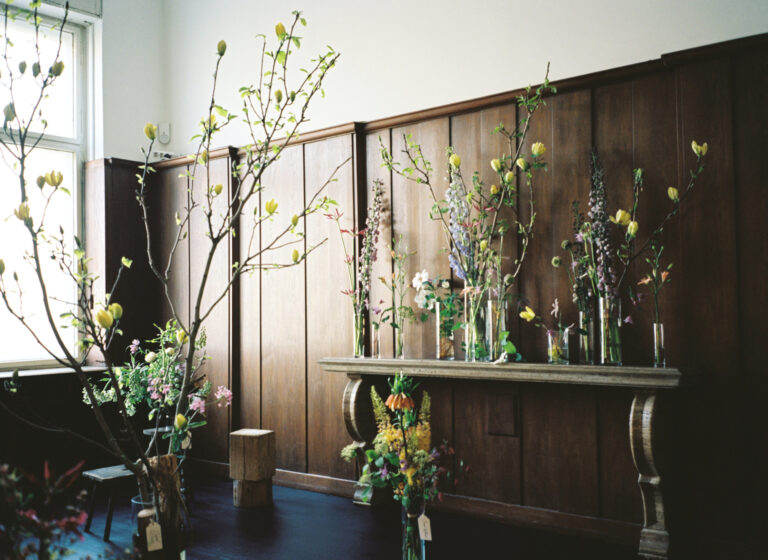
Exhibition view,
Fugue,
Galerie Isabella Bortolozzi, Berlin, 2022.
Courtesy Galerie Isabella Bortolozzi, Berlin.
Photo: Gabriele Mišeikytė
Ihre Galerie wurde oft eher als ein sich entwickelndes Gefüge von Ideen denn als ein festes ästhetisches Programm beschrieben. Stimmen Sie dem zu?
„Ein sich entwickelndes Gefüge von Ideen“ gefällt mir als Beschreibung sehr, das stimmt durchaus. Außerdem entstehen viele Verbindungen und Kollaborationen zwischen den Künstler*innen des Programms. James Richards und Steve Reinke arbeiteten beispielsweise schon lange zusammen, bevor wir mit ihnen arbeiteten; Wu Tsang und Vaginal Davis kennen sich ebenfalls gut, Calla Henkel und Max Pitegoff arbeiteten mit Diamond Stingily und Leila Hekmat zusammen. Die sich entwickelnden Verbindungen zwischen den Künstler*innen selbst wie auch innerhalb des Programms spiegeln genau diese Dynamiken wider.
Wie stark begleiten Sie Künstler*innen bei der Entwicklung einer Ausstellung?
Natürlich bin ich gern beteiligt. Manchmal mehr, manchmal weniger. Gelegentlich lasse ich Dinge lieber geschehen und gebe dem Ereignis Raum, seinen eigenen Moment zu finden.
Sie zeigen gelegentlich auch Künstler*innen außerhalb Ihres festen Programms, etwa Chakaia Booker. Interessiert Sie, wie solche Positionen neben Ihren Künstler*innen funktionieren?
Manchmal haben sie gar nicht so viel gemeinsam, aber genau das macht die Begegnung spannend. Im Fall von Chakaia Booker und Carol Rama arbeiteten beide mit Autoreifen. Doch während Booker Reifen als Metapher für Postkolonialismus, Sklaverei, Klasse, Raceund Arbeit verwendet, haben Reifen bei Rama eine eher subjektive Bedeutung, verbunden mit ihrer persönlichen Geschichte.
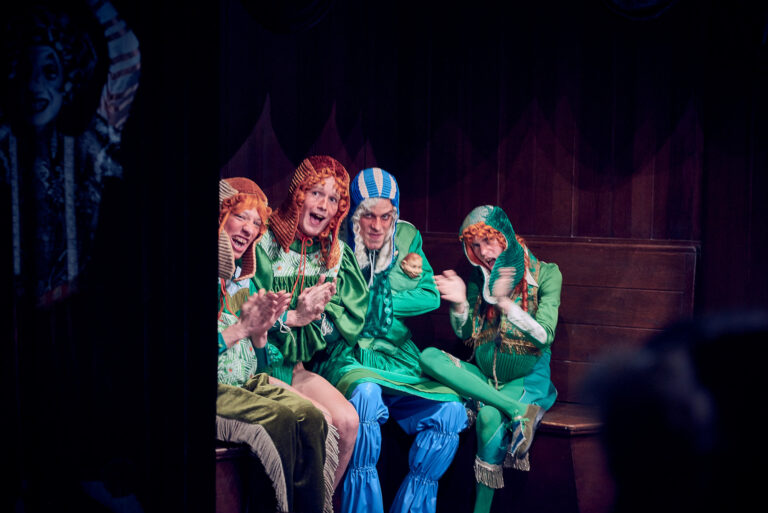
Performance,
Leila Hekmat, CROCCOPAZZO!,
Galerie Isabella Bortolozzi, Berlin, 2020.
Courtesy the artist and Galerie Isabella Bortolozzi, Berlin.
Photo: Claude Gerber.
Zum Gallery Weekend Berlin zeigen Sie den Maler Adam Gordon. Was erwartet die Besucher*innen?
Die Ausstellung wirkt wie ein einziger Organismus, in dem jedes Werk zu einer subtilen Spannung zwischen Anwesenheit und Abwesenheit beiträgt. Genau diese stille Instabilität macht seine Praxis so faszinierend. Gordon versteht Malerei eher räumlich und erfahrungsbezogen als rein bildhaft. Seine Werke zeigen Räume nicht nur – sie aktivieren sie und hinterlassen eine Atmosphäre, als würden Räume psychologische Spuren tragen. Mich interessiert besonders, wie er diesen Effekt durch Schichtung, Inszenierung und die Kontrolle von Wahrnehmung erzeugt – sowohl innerhalb der Gemälde als auch in ihrer Installation.